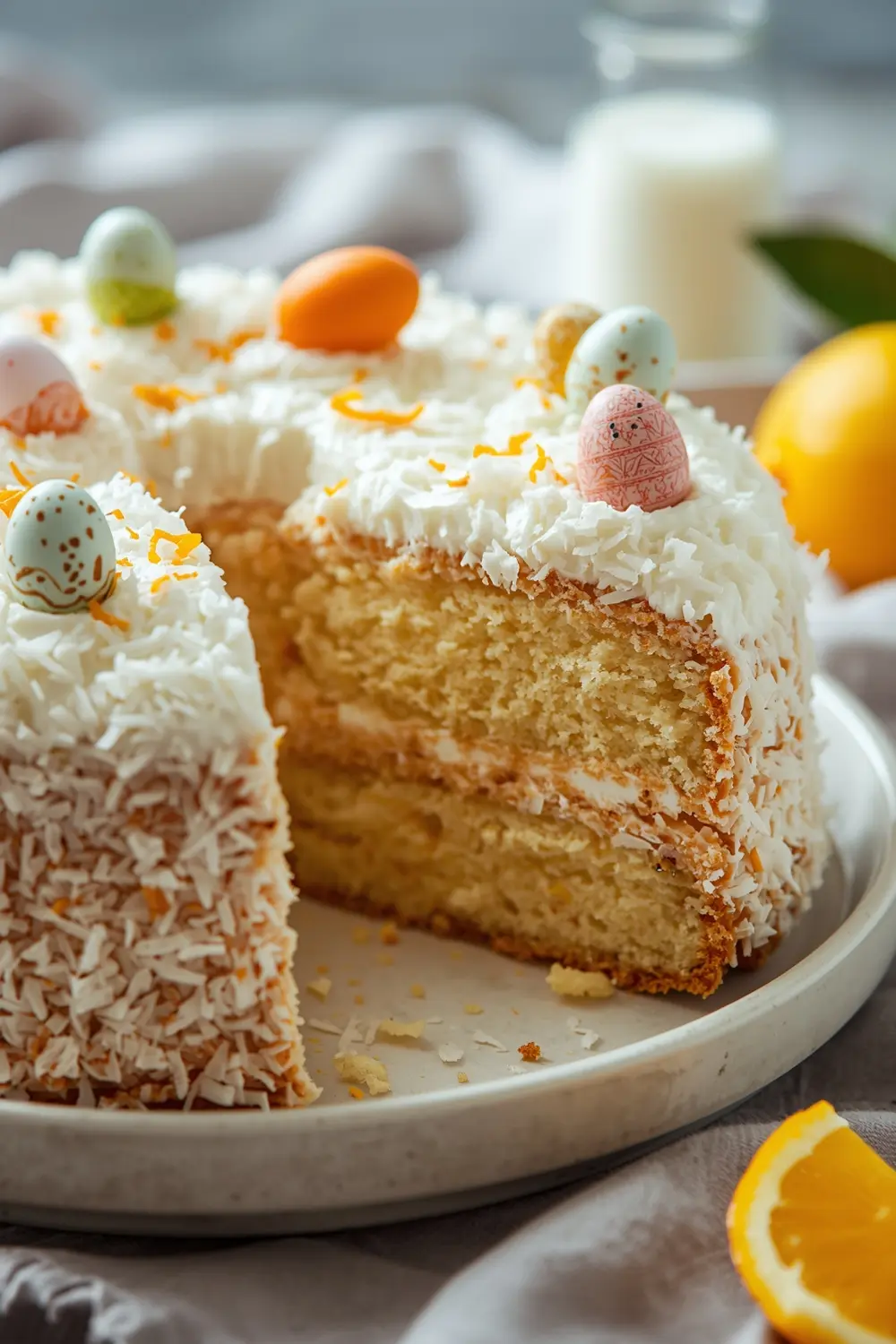
Looking for a show-stopping spring dessert that’ll make everyone at the table ask for seconds? This Easter coconut cake recipe delivers the perfect balance of fluffy texture and tropical flavor without hours in the kitchen. I’ve made this for three Easter brunches now, and it’s become the dessert everyone requests. If you love coconut desserts, you’ll also want to try this lemon coconut cake that’s equally delightful.
Why this Easter coconut cake recipe works
Ever wonder why some coconut cakes taste dry while others melt in your mouth? The secret’s in combining coconut milk and coconut cream, which keeps every bite incredibly moist while delivering intense coconut flavor throughout.
- Double coconut richness from both coconut milk and cream creates unmatched moisture
- Orange zest brightens the sweetness and adds a subtle citrus note
- Honey enhances the natural coconut flavor without making it overly sweet
- Simple two-layer design looks elegant but requires zero decorating skills
| Prep Time | Cook Time | Calories | Servings | Cuisine |
|---|---|---|---|---|
| 25 minutes | 35 minutes | 385 per serving | 12 servings | American |
Ingredients for Easter coconut cake recipe
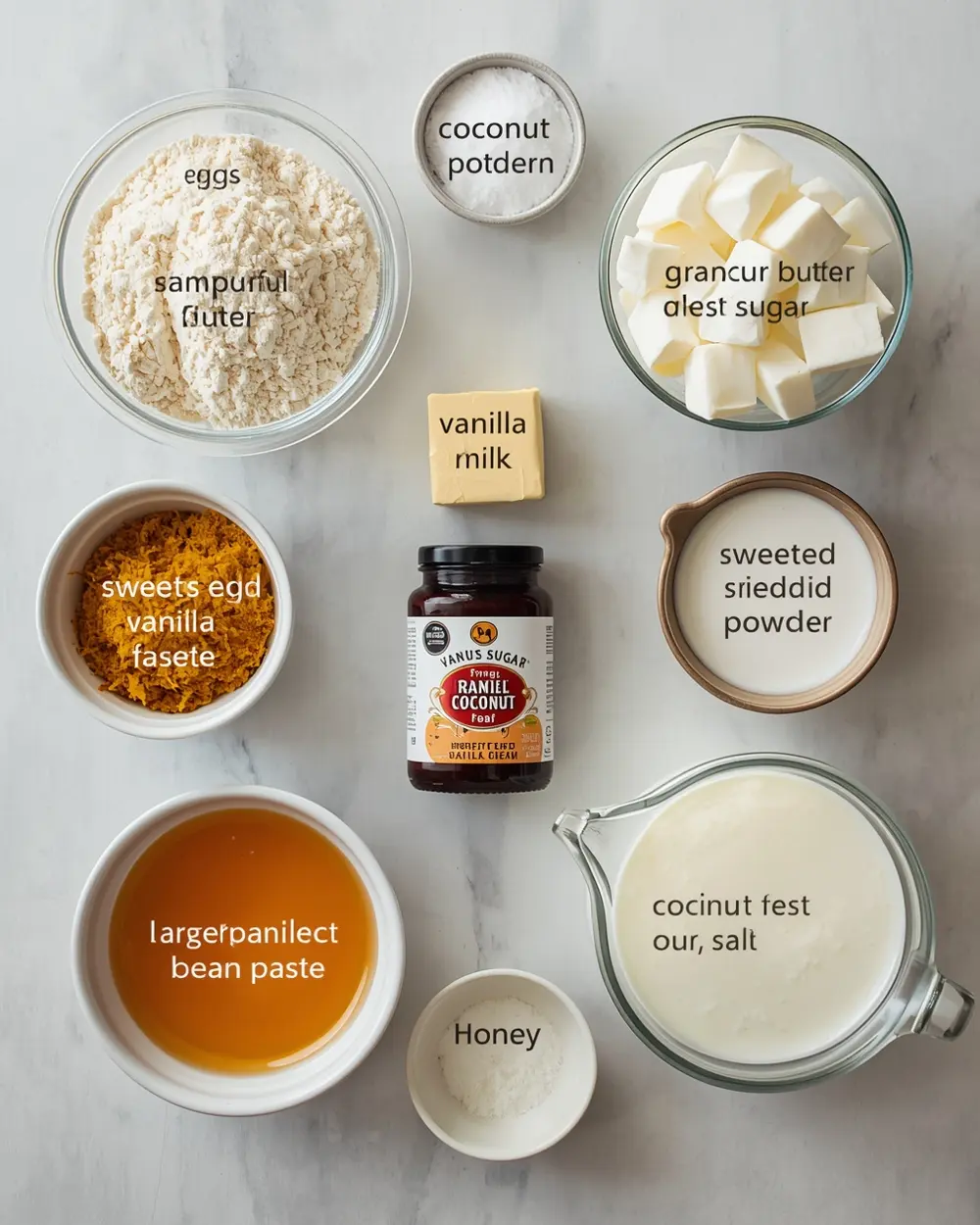
- 2 cups all-purpose flour
- 1 cup granulated sugar
- 1/2 cup unsalted butter
- 2 large eggs
- 1 tsp vanilla bean paste
- 1/2 cup coconut milk
- 1 cup sweetened shredded coconut
- 2 tsp baking powder
- 1/4 tsp salt
- 1/2 cup milk
- 1 cup coconut cream
- 1 tsp orange zest
- 2 tbsp honey
You can swap vanilla bean paste for regular vanilla extract if that’s what you’ve got on hand. Honestly, I prefer vanilla bean paste because those little specks look gorgeous against the white cake. If you’re dairy-free, substitute the milk with additional coconut milk and use coconut oil instead of butter. The coconut cream is essential for this Easter coconut cake recipe, so don’t skip it or replace it with regular heavy cream. Fresh orange zest makes a noticeable difference, but bottled will work in a pinch.
Step-by-step instructions
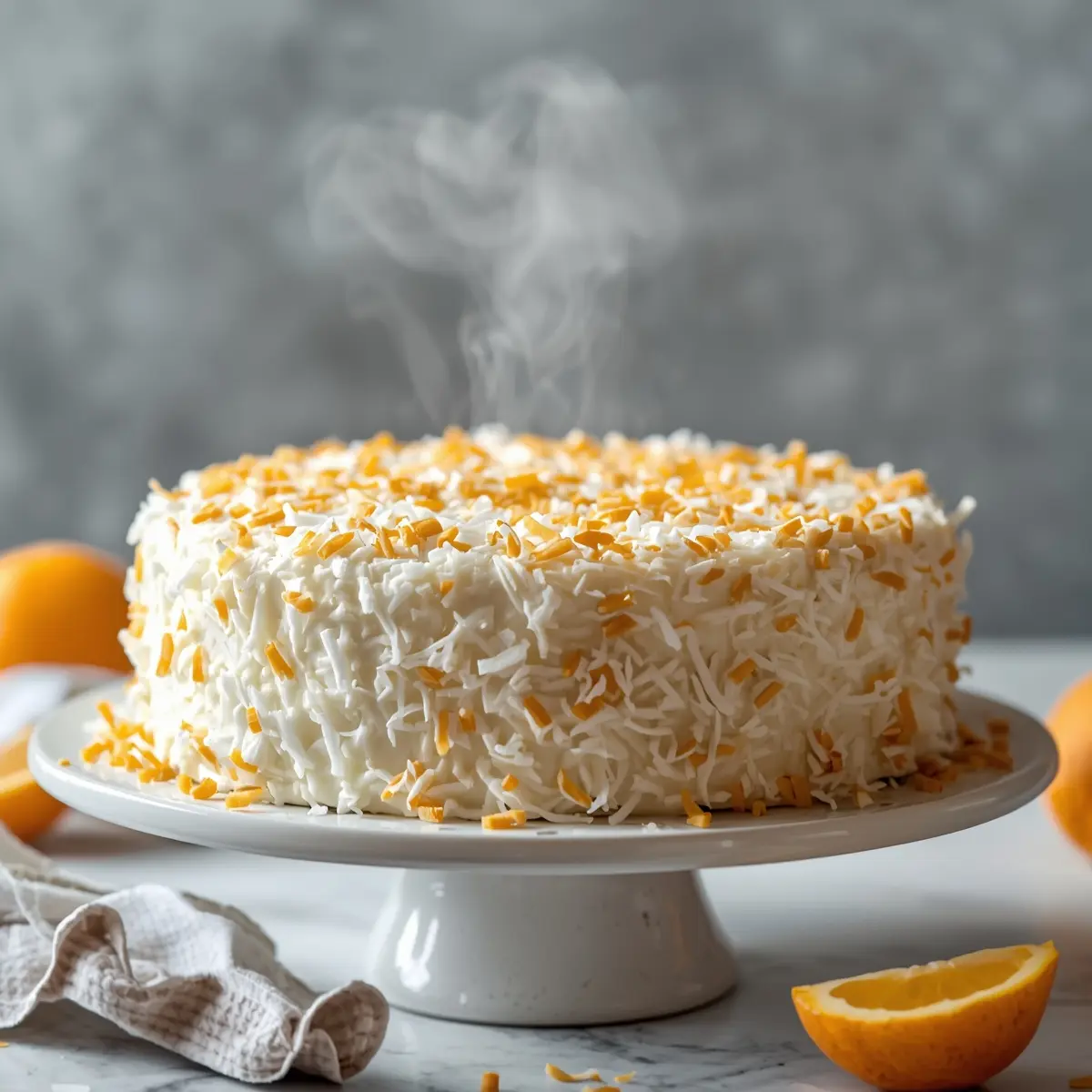
1. Preheat your oven to 350°F and prepare two 9-inch round cake pans by greasing them generously with butter and dusting with flour. This prevents sticking and ensures clean release later. Line the bottoms with parchment paper circles for extra insurance. Trust me, you don’t want this beautiful fluffy layer cake stuck to the pan.
2. Cream the softened butter and sugar together in a large bowl using an electric mixer on medium-high speed for about 3-4 minutes. The mixture should turn pale and fluffy, which incorporates air for a lighter texture. Add eggs one at a time, beating well after each addition. Mix in the vanilla bean paste and orange zest until evenly distributed throughout.
3. Whisk together the flour, baking powder, and salt in a separate bowl. This ensures even distribution of leavening agents throughout your Easter coconut cake recipe. Set this dry mixture aside while you prepare the wet ingredients. Proper mixing prevents pockets of baking powder that can create an uneven rise.
4. Combine the coconut milk, regular milk, and honey in a small bowl or measuring cup. Stir until the honey dissolves completely into the liquid. You’ll alternate adding this mixture with the dry ingredients to create the perfect batter consistency. Start and end with the flour mixture, mixing on low speed.
5. Gently fold in the shredded coconut using a spatula, being careful not to overmix the batter. Overmixing develops gluten and makes the cake tough instead of tender. Divide the batter evenly between your prepared pans, using a kitchen scale for precision if you’ve got one. Smooth the tops with an offset spatula.
6. Bake for 30-35 minutes until a toothpick inserted in the center comes out clean. The tops should spring back when lightly touched, and the edges will pull away slightly from the pan sides. Don’t open the oven door before 25 minutes or you’ll risk the layers sinking in the middle.
7. Cool the cakes in their pans for 15 minutes, then carefully turn them out onto wire racks to cool completely. While they’re cooling, warm the coconut cream slightly and brush it over the warm cake layers. This soaks into the crumb and creates incredible moisture. Once completely cool, frost with your favorite frosting and coat the outside with more shredded coconut.
Serving ideas for Easter coconut cake recipe
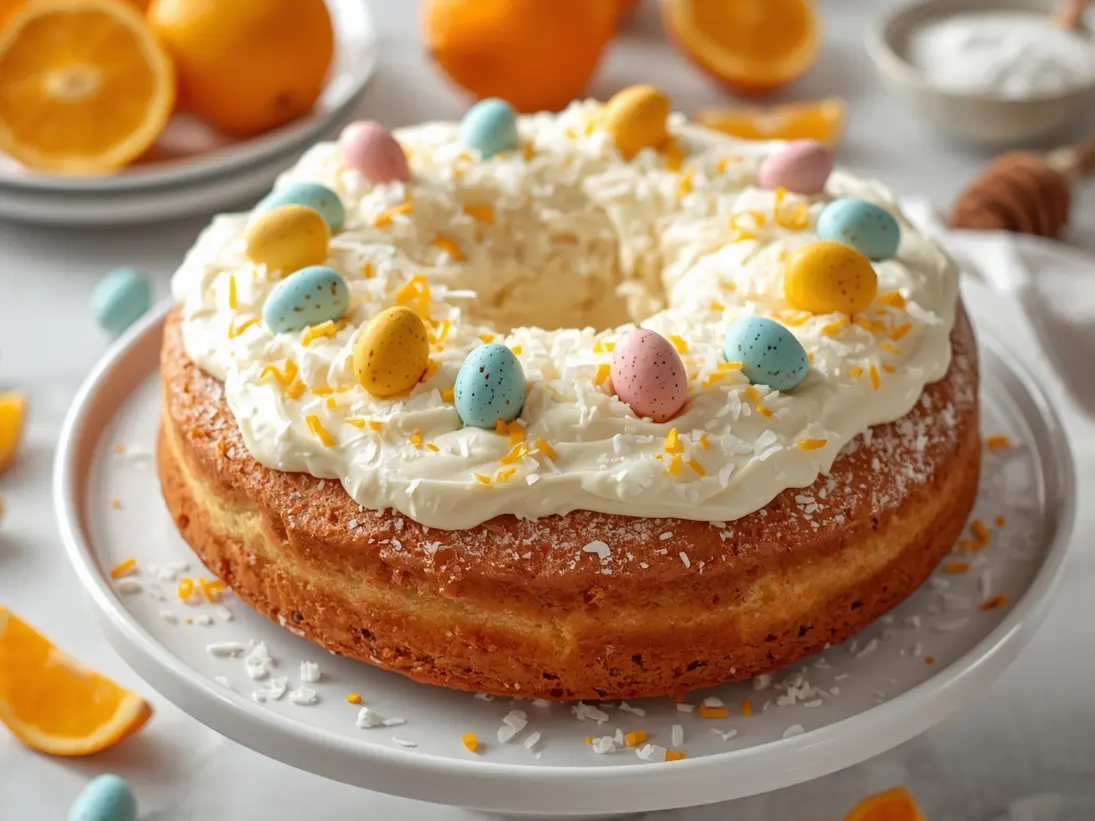
Pair this celebration cake with complementary flavors that enhance its tropical character.
Fresh Berries and Whipped Cream
Serve generous slices alongside a bowl of mixed berries like strawberries, blueberries, and raspberries. The tartness cuts through the rich coconut beautifully and adds a pop of color to your Easter table. A dollop of freshly whipped cream on top creates a classic spring dessert elegant enough for any gathering. I usually macerate the berries with a tablespoon of sugar for 10 minutes beforehand.
Tropical Fruit Salad
Create a colorful fruit salad with pineapple chunks, mango slices, and kiwi pieces tossed with a lime-honey dressing. The citrus notes echo the orange zest in the cake while adding refreshing contrast. This pairing works especially well for brunch settings when you want something lighter alongside your cake. The combination feels festive without being too heavy.
Coffee or Tea Service
This Easter coconut cake pairs wonderfully with a hot cup of medium-roast coffee or Earl Grey tea. The coffee’s slight bitterness balances the cake’s sweetness, while Earl Grey’s bergamot complements the coconut and orange flavors. For an extra-special touch, serve it with vanilla chai latte that brings warm spices to the party. I’ve found guests love having options at dessert time.
Pro tips for perfect Easter coconut cake recipe
Storage tips
– Store covered at room temperature for 2 days if unfrosted
– Refrigerate frosted cake for up to 5 days in an airtight container
– Wrap individual slices in plastic wrap for grab-and-go treats throughout the week
– Bring to room temperature before serving for the best flavor and texture
Make-ahead instructions
– Bake cake layers up to 2 days ahead and wrap tightly
– Freeze unfrosted layers for up to 3 months wrapped in plastic and foil
– Thaw frozen layers overnight in the refrigerator before frosting
– Prepare and brush with coconut cream right before assembling
Variations
– Add 1/2 cup crushed pineapple for a piña colada twist on this coconut cake recipe
– Mix in 1/2 cup white chocolate chips for extra richness and sweetness
– Replace orange zest with lemon zest for brighter citrus notes
– Toast the coconut before adding for deeper, nuttier flavor throughout
Troubleshooting
– Dry cake means you overbaked, reduce time by 3-5 minutes next time
– Dense texture indicates overmixing, fold ingredients gently until just combined
– Sunken centers happen from opening oven too early or underbaking
– Cake sticking to pans means insufficient greasing, use butter and flour liberally
Frequently asked questions
Can I freeze this Easter coconut cake recipe?
Absolutely, this cake freezes beautifully for up to three months. Wrap unfrosted cake layers individually in plastic wrap, then aluminum foil to prevent freezer burn. I recommend freezing layers separately rather than the assembled cake for easier thawing and better texture. Thaw overnight in the fridge, then bring to room temperature before frosting and serving. The coconut stays moist and the texture remains fluffy even after freezing, making it perfect for advance Easter prep.
What can I substitute for coconut milk in this spring dessert elegant recipe?
You can use regular whole milk or even almond milk, but you’ll lose some coconut flavor intensity. For the best results without coconut milk, I’d add an extra 1/4 cup of coconut cream and reduce the regular milk by the same amount. Another option is mixing 1/2 cup of cream of coconut with water to create a coconut milk substitute. The cake will still turn out moist and delicious with these swaps, just slightly less tropical in taste.
How do I store leftover Easter coconut cake?
Keep your cake in an airtight container at room temperature for up to two days if it’s unfrosted. Once frosted, refrigerate it covered for up to five days to maintain freshness and prevent the frosting from spoiling. Bring refrigerated slices to room temperature about 30 minutes before serving for the fluffiest texture and best flavor. You can also wrap individual slices in plastic wrap and freeze them for quick dessert portions later.
Can I make this as cupcakes instead of a layer cake?
Sure thing! This batter works perfectly for cupcakes and makes about 24 standard-sized ones. Fill cupcake liners two-thirds full and bake at 350°F for 18-22 minutes until a toothpick comes out clean. The coconut cake recipe adapts beautifully to this format and actually bakes faster than the layers. Top with coconut cream frosting and rolled in shredded coconut for adorable individual servings that are perfect for Easter celebrations.
Final thoughts
This Easter coconut cake recipe brings together everything you want in a celebration cake: impressive presentation, incredible flavor, and surprisingly simple preparation. The combination of coconut milk and cream creates unbeatable moisture that stays fresh for days. Whether you’re hosting Easter brunch or bringing dessert to a spring gathering, this fluffy layer cake delivers every single time. For more spring inspiration, check out this carrot cake recipe that’s equally festive. Drop a comment below with your favorite frosting choice!
Easter Coconut Cake Fluffy and Elegant

Easter coconut cake delivers a delightful coconut cake recipe ideal for spring celebrations, combining ease and flavor. Discover how to create a stunning des…
- 2 cups all-purpose flour
- 1 cup granulated sugar
- 1/2 cup unsalted butter
- 2 large eggs
- 1 tsp vanilla bean paste
- 1/2 cup coconut milk
- 1 cup sweetened shredded coconut
- 2 tsp baking powder
- 1/4 tsp salt
- 1/2 cup milk
- 1 cup coconut cream
- 1 tsp orange zest
- 2 tbsp honey
- Preheat your oven to 350°F and prepare two 9-inch round cake pans by greasing them generously with butter and dusting with flour. This prevents sticking and ensures clean release later. Line the bottoms with parchment paper circles for extra insurance. Trust me, you don’t want this beautiful fluffy layer cake stuck to the pan.
- Cream the softened butter and sugar together in a large bowl using an electric mixer on medium-high speed for about 3-4 minutes. The mixture should turn pale and fluffy, which incorporates air for a lighter texture. Add eggs one at a time, beating well after each addition. Mix in the vanilla bean paste and orange zest until evenly distributed throughout.
- Whisk together the flour, baking powder, and salt in a separate bowl. This ensures even distribution of leavening agents throughout your Easter coconut cake recipe. Set this dry mixture aside while you prepare the wet ingredients. Proper mixing prevents pockets of baking powder that can create an uneven rise.
- Combine the coconut milk, regular milk, and honey in a small bowl or measuring cup. Stir until the honey dissolves completely into the liquid. You’ll alternate adding this mixture with the dry ingredients to create the perfect batter consistency. Start and end with the flour mixture, mixing on low speed.
- Gently fold in the shredded coconut using a spatula, being careful not to overmix the batter. Overmixing develops gluten and makes the cake tough instead of tender. Divide the batter evenly between your prepared pans, using a kitchen scale for precision if you’ve got one. Smooth the tops with an offset spatula.
- Bake for 30-35 minutes until a toothpick inserted in the center comes out clean. The tops should spring back when lightly touched, and the edges will pull away slightly from the pan sides. Don’t open the oven door before 25 minutes or you’ll risk the layers sinking in the middle.
- Cool the cakes in their pans for 15 minutes, then carefully turn them out onto wire racks to cool completely. While they’re cooling, warm the coconut cream slightly and brush it over the warm cake layers. This soaks into the crumb and creates incredible moisture. Once completely cool, frost with your favorite frosting and coat the outside with more shredded coconut.