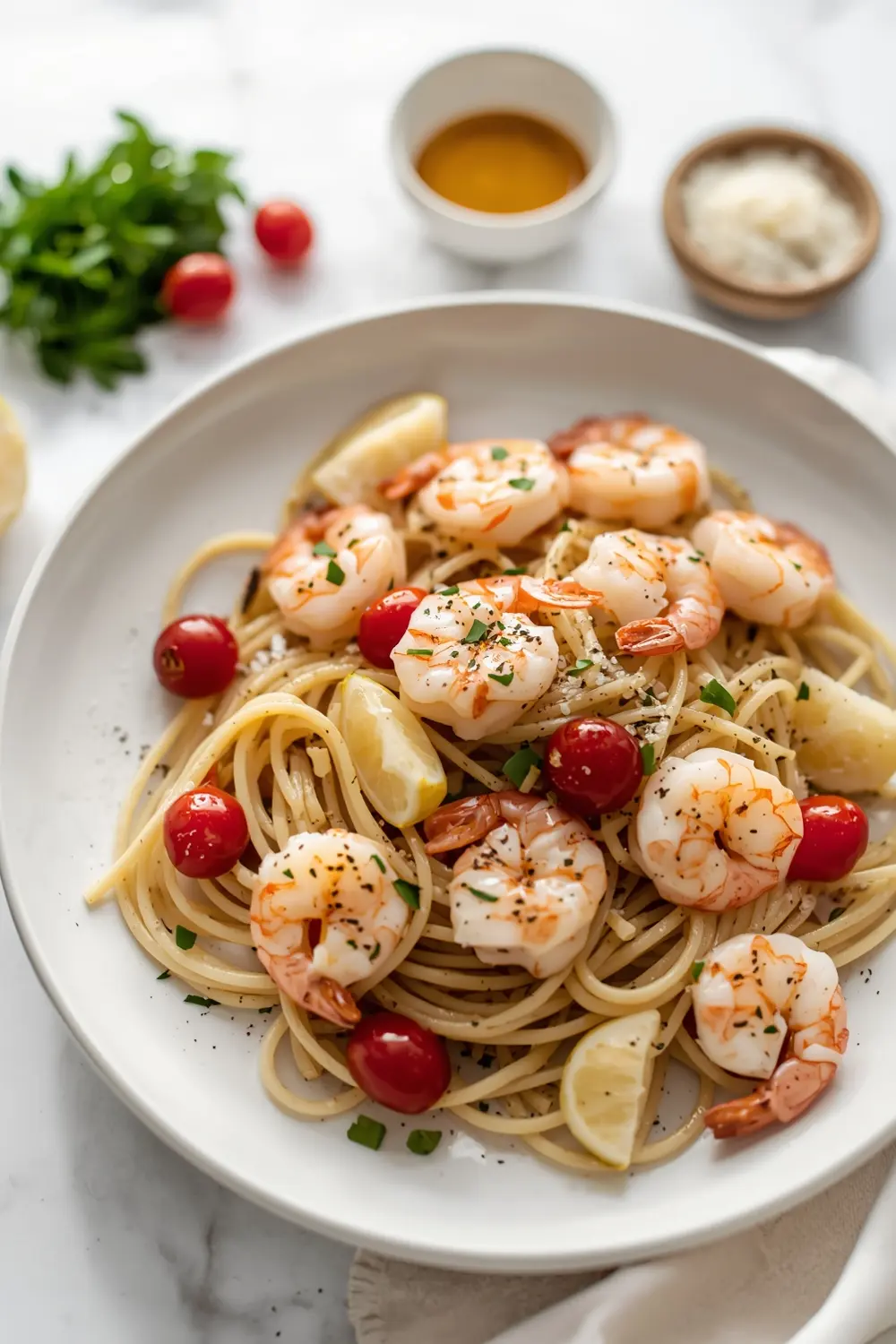
The first time James tasted my lemon garlic shrimp pasta recipe, he went back for seconds without asking what was in it. Citrus hits different when garlic does the heavy lifting beneath the surface.
This easy lemon shrimp pasta comes together faster than ordering takeout, and tastes like you’ve been cooking Italian seafood your whole life. The trick is adding the shrimp only after the pasta water boils down—most recipes skip this, meaning rubbery proteins instead of tender ones that stay simple summer perfection.
When August heat makes the kitchen feel like a sauna, this quick lemon garlic shrimp pasta recipe delivers restaurant-quality results in under 30 minutes. Save this now—you’ll want it bookmarked before the tomatoes peak.
Ready to stop overthinking weeknight dinner?
Why this easy seafood pasta works
What makes a quick lemon garlic shrimp pasta recipe stand out when every recipe blog claims the same thing? The answer sits in the technique, not the ingredients.
- Fresh lemon juice added twice—once to the sauce, once at the end—because a single squeeze flattens after heat.
- Garlic toasted in olive oil before liquid goes in, building depth that raw garlic can’t touch.
- Cherry tomatoes stay whole, bursting only when shrimp heat releases, so you get texture variation instead of sauce mush.
- Pasta water reserved and used as thickener, meaning no cream needed and zero heaviness on a hot evening.
Prep 20 minutes | Cook 30 minutes | Cal 450 | Serves 4 servings | Cuisine Italian-American |
Ingredients for lemon garlic shrimp pasta recipe
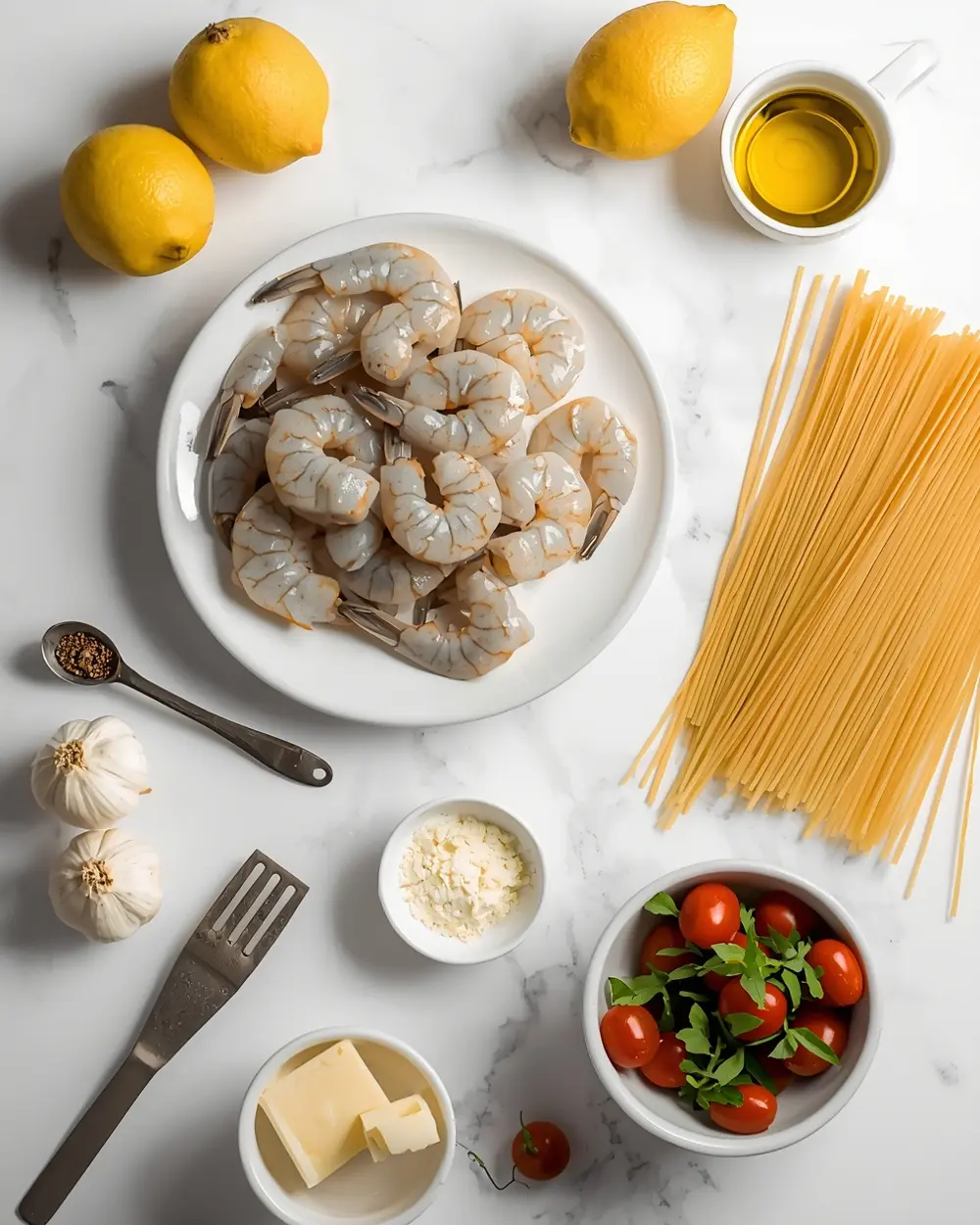
- 8 oz pasta (linguine or spaghetti)
- 1 lb large shrimp, peeled and deveined
- 3 cloves garlic, minced
- 2 tbsp olive oil
- 2 lemons, zested and juiced
- 1 tsp dried oregano
- 1 tsp paprika
- 1/2 tsp salt
- 1/4 tsp black pepper
- 2 cups cherry tomatoes
- 1 cup grated Parmesan cheese
- 2 tbsp butter
- 2 tbsp chopped fresh parsley
I know you might look at this ingredient list and think about swapping. Honestly, the lemon garlic shrimp pasta recipe works best with fresh lemon juice—bottled changes the entire flavor profile and that brightness disappears. If you only have dried parsley, use half the amount because the intensity shifts when it’s not fresh.
Some readers ask about protein substitutions for this simple seafood summer dish. You can absolutely use scallops or even firm white fish, though timing adjusts by 2–3 minutes depending on thickness. The beauty of a quick lemon garlic shrimp pasta recipe is flexibility, as long as you respect the cooking window. Let’s move into how the magic happens in the pan.
Step-by-step cooking instructions
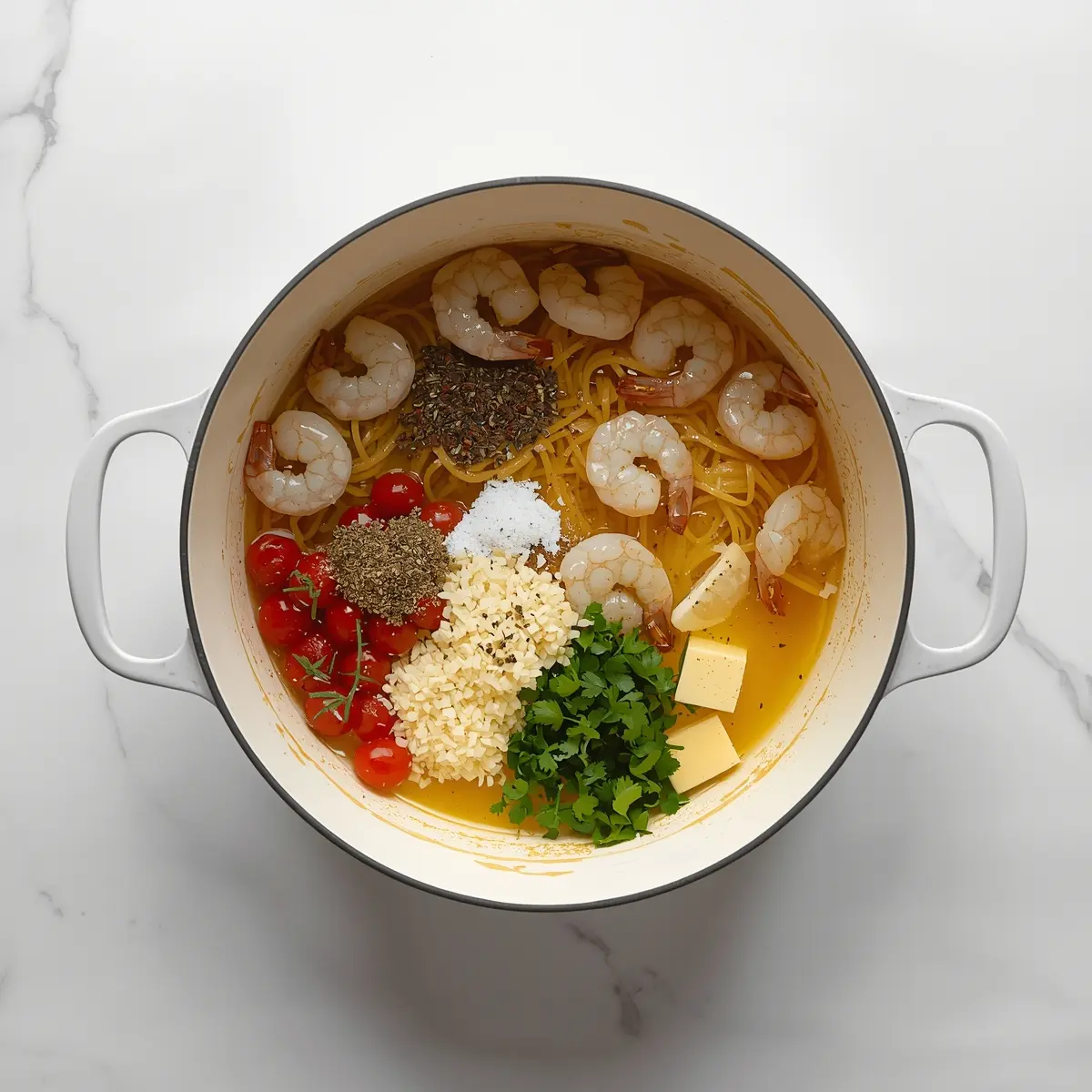
1. Bring a large pot of salted water to a rolling boil and add pasta. Cook according to package directions until al dente, about 8–10 minutes. I always taste one minute early because I’ve learned pasta continues cooking in the pan once you combine it with sauce. Reserve 1 cup pasta water before draining.
2. While pasta cooks, pat shrimp dry with paper towels and season with 1/4 tsp salt and black pepper. This matters because water on the surface steams shrimp instead of searing it, and we want that textured exterior. I’ve made this mistake too many times to count.
3. Heat olive oil in a large skillet over medium-high heat. Add minced garlic and cook for exactly 45 seconds—no longer. The second garlic smells fragrant, add dried oregano and paprika, stirring constantly for 15 seconds to bloom the spices. This prevents burnt garlic that tastes bitter and ruins everything downstream.
4. Add cherry tomatoes to the skillet and let them sit undisturbed for 2 minutes before stirring. You’ll hear them pop slightly. Add the juice from one lemon and 1/2 tsp salt, then simmer for 2 minutes until tomatoes begin releasing their liquid naturally. Why this works: the slow release creates sauce depth instead of watery broth.
5. Increase heat to high and add shrimp in a single layer. Cook for exactly 2 minutes without moving them. This sear creates that restaurant-quality texture. Flip each piece and cook 1–2 minutes more until shrimp turns opaque and feels firm when pressed. I confess I use a timer because I once overcooked an entire batch trying to eyeball it.
6. Reduce heat to low and add cooked pasta directly to the skillet along with 1/2 cup reserved pasta water. Add lemon zest, butter, and the juice from the second lemon. Toss everything for 1–2 minutes until sauce coats the noodles and the mixture looks unified. The starch from pasta water creates silkiness without cream—this is why we saved it.
7. Add Parmesan cheese gradually while tossing, stopping when the sauce reaches the consistency you want. Start with 3/4 cup and add the rest only if needed. Taste and adjust salt to 1/2 tsp total if the Parmesan hasn’t salted it enough. Top with fresh chopped parsley right before serving.
When it’s time to plate this dish, Nora always asks for the tomatoes first.
Serving ideas for lemon garlic shrimp pasta recipe
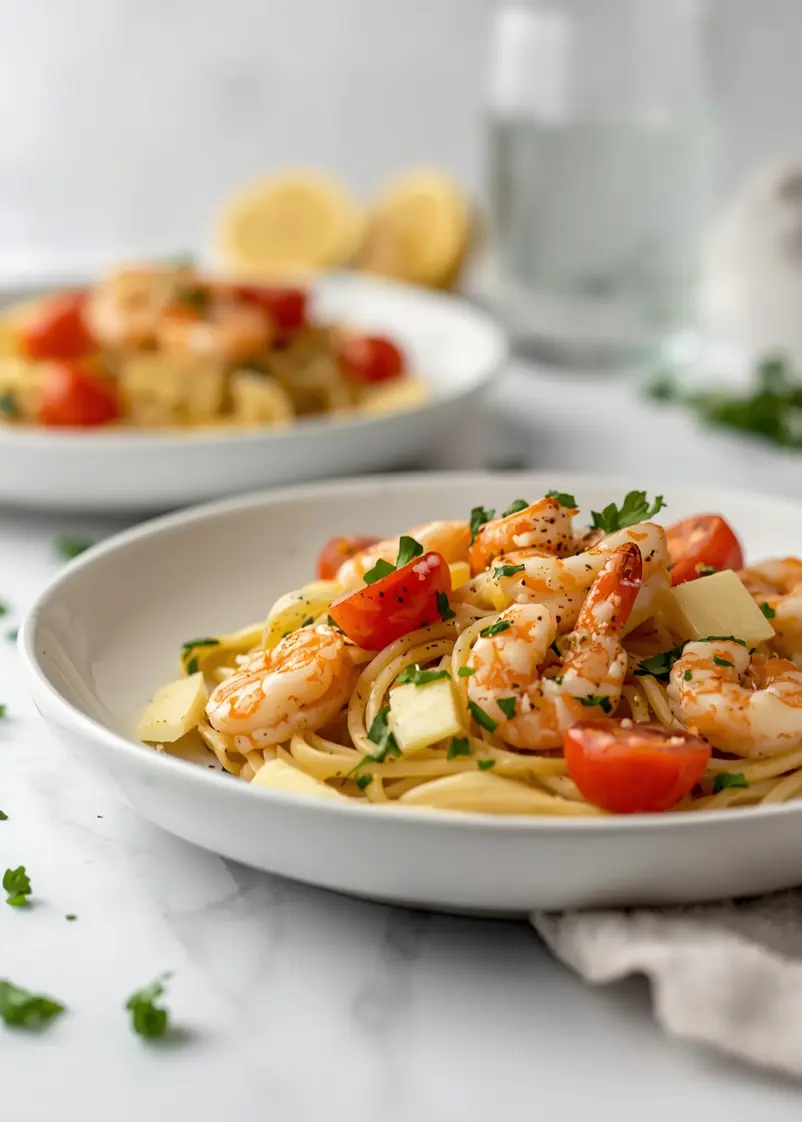
Pair this easy lemon shrimp pasta with sides that don’t compete for attention.
Garlic bread with herbs
Brush baguette slices with olive oil, rub with cut garlic, and toast until edges crisp. Finish with fresh parsley and sea salt because the garlic in your pasta means you want herbal freshness on the bread, not more garlic fighting for space on the plate.Simple arugula salad
Toss peppery greens with lemon vinaigrette and shaved Parmesan. The acidity mirrors your pasta’s citrus, and the crunch balances the tender shrimp and soft noodles without making anyone feel overstuffed on a hot evening.Roasted asparagus with lemon
Toss spears in olive oil, salt, and lemon zest, then roast at 400°F for 12 minutes. This green side echoes the lemon notes from your quick lemon garlic shrimp pasta recipe rather than introducing competing flavors that confuse your palate. simple summer eating means letting the main dish shine while sides support instead of distract.Your easy lemon shrimp pasta deserves a wine pairing more than another starch—save the breadbasket energy for different nights.
Frequently asked simple seafood questions
Can I freeze lemon garlic shrimp pasta recipe leftovers?
No. Shrimp texture becomes rubbery and the pasta absorbs too much liquid during thawing, turning mushy and separated from the sauce.Freezing breaks down the delicate cell structure that gives shrimp its appeal. Eat leftovers within 2 days, or plan to make a smaller batch next time so nothing goes to waste.
What if I don’t have fresh lemon juice?
Use fresh-squeezed juice every time—this isn’t optional for this easy lemon shrimp pasta recipe. Bottled juice contains preservatives that flatten the brightness that defines this dish.If you absolutely must substitute, use white wine vinegar at half the amount, though the flavor profile shifts toward Italian rather than Mediterranean coastal.
How do I reheat lemon garlic shrimp pasta recipe leftovers?
Reheat over low heat for 3–4 minutes at 300°F, stirring occasionally and adding 2 tbsp water to rehydrate the sauce without cooking shrimp further.Microwave heats unevenly and can toughen the shrimp; the stovetop method gives you control and ensures the sauce loosens back to the right consistency.
What causes rubbery shrimp in my simple seafood pasta?
Overcooking past the 3-minute sear window hardens the proteins and squeezes moisture from the meat. Set a timer and stick to it—this is the difference between restaurant-quality and disappointing.If you’ve already overcooked a batch, slice the shrimp and toss into a cold pasta salad the next day where the texture matters less than the flavor integration.
Final thoughts on easy lemon shrimp cooking
You have everything you need right now to make this quick lemon garlic shrimp pasta recipe tonight. The technique is learnable, the ingredients live in every grocery store, and nothing here demands specialized equipment or skills you don’t already have.
James asked me last week why I don’t make this more often, and the honest answer is I do—just not when I’m trying recipes that sound complicated. Simplicity makes you want to cook, and that’s the whole point of this easy lemon shrimp pasta approach. simple summer meals taste better when you’re not stressed over technique, and this delivers restaurant results in the time it takes to watch one episode of whatever show Nora’s into this month.
The beauty of this simple seafood summer pasta sits in how fast it gets from stovetop to plate without compromising a single element.
What ingredient would you swap first? Tell me in the comments—I want to know if you’re a white wine person or if you’d lean into red pepper for heat. Tag me and tell me what James or Nora says after their first bite.