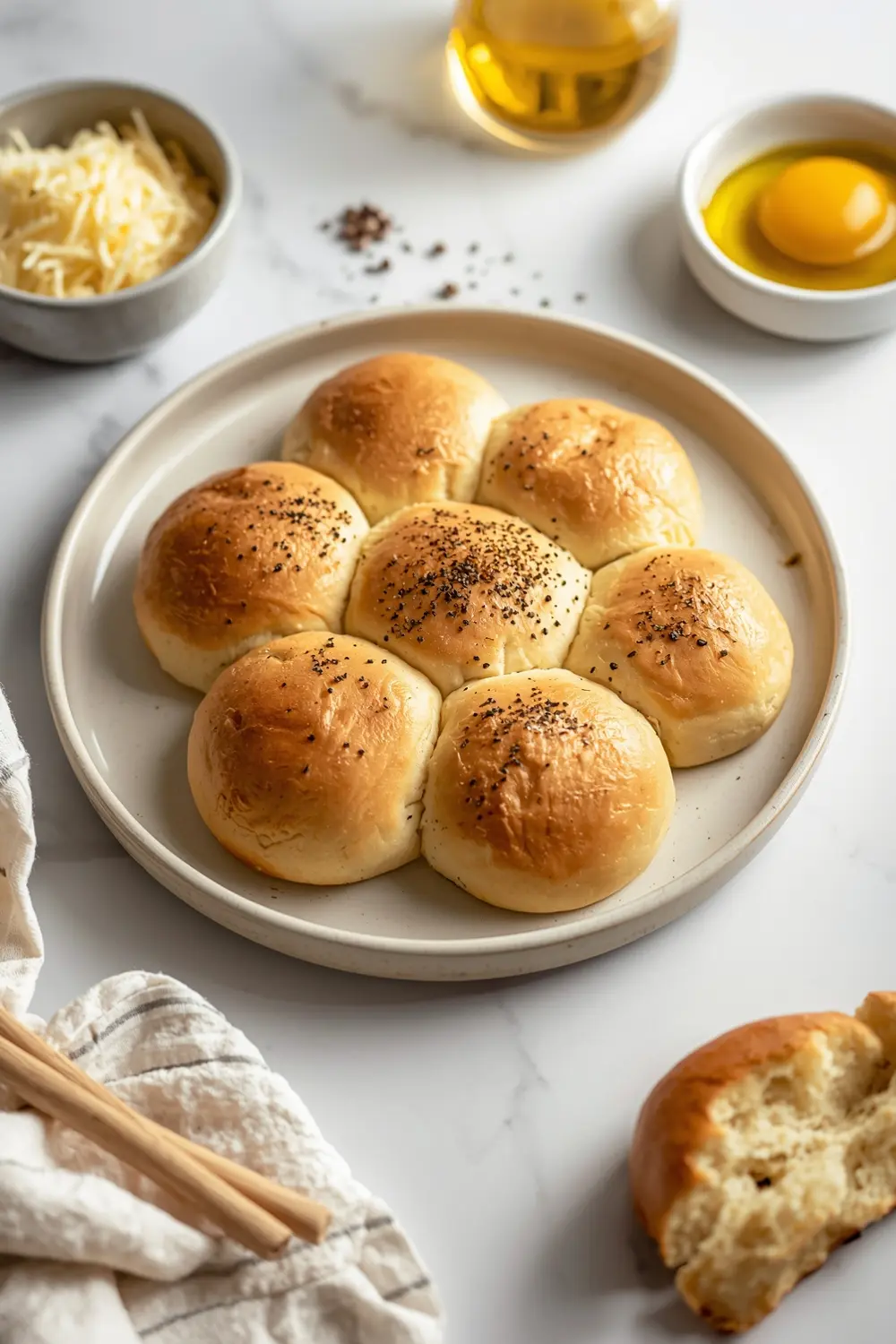
The smell of warm bread rising in your kitchen on Thanksgiving morning is the kind of moment that stops you mid-rush—and this thanksgiving dinner rolls recipe easy delivers exactly that without the stress. When I first made these with James watching from the kitchen counter, he grabbed one straight from the cooling rack before I’d even finished arranging them on the table. This easy homemade rolls recipe belongs on every holiday table, because you can have golden, tender rolls ready in just 80 minutes total, and that includes hands-off rising time. Most recipes for simple Thanksgiving bread demand kneading for 10 minutes straight and overnight proofs, but the trick here is adding honey and warm milk at the mixing stage—most recipes skip warming the milk properly, which cuts your rising time in half.
The differentiation that sets this version apart lives in the spice blend most bakers ignore entirely. You’ll notice cinnamon, nutmeg, and thyme layered into the dough itself, not sprinkled on top like an afterthought—that combination stays subtle against the butter and cheese, creating depth without announcing itself. Pin this for your holiday prep list, because once you see how straightforward this becomes, you’ll never buy frozen rolls again. This quick holiday bread is exactly what your Thanksgiving timeline needs, and thanksgiving turkey breast recipe easy pairs beautifully alongside these rolls.
Thanksgiving arrives one day a year, and that single meal deserves rolls you actually want to make yourself—not ones that come out of a cardboard tube. This recipe takes 35 minutes of active work and 45 minutes of baking, which means you’re free to handle everything else on your table without stress.
Why this easy homemade rolls works
When you understand why each ingredient matters, the thanksgiving dinner rolls recipe easy stops feeling fragile and starts feeling inevitable. The warm milk activates yeast faster than cold liquid ever could, honey feeds that yeast and adds subtle sweetness without heaviness, and the cheese creates richness that commercial rolls simply cannot match.
- Honey feeds yeast while adding body without sweetness overload—because active yeast needs sugar to multiply rapidly.
- Warm milk activates yeast in minutes instead of hours—the temperature triggers fermentation immediately.
- Shredded cheese melts directly into dough for even flavor distribution throughout every roll.
- Spices bloom inside the dough rather than sitting on the surface where they’d burn or separate.
Prep 35 minutes | Cook 45 minutes | Cal 220 | Serves 12 servings | Cuisine American |
Ingredients for thanksgiving dinner rolls recipe easy
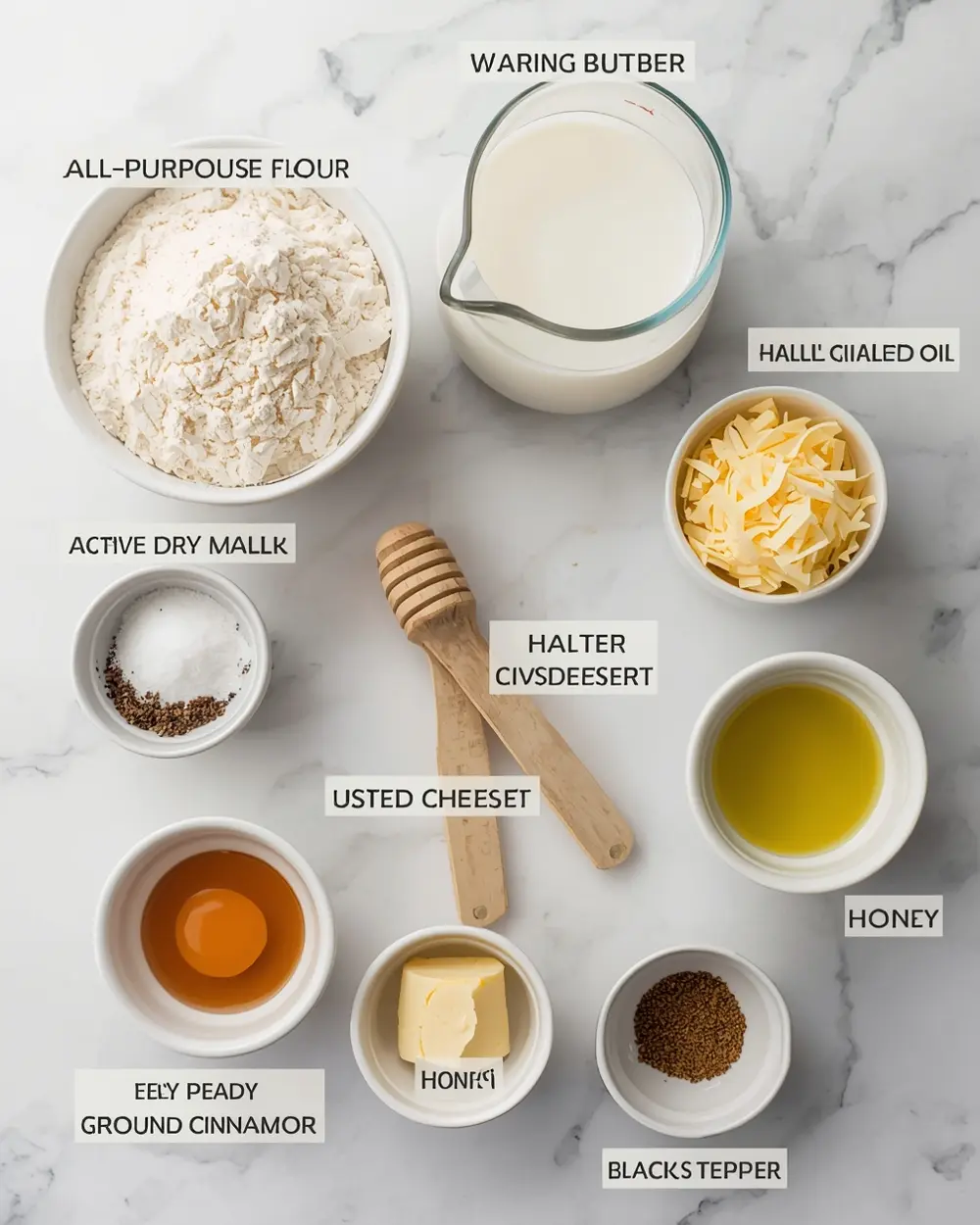
- 2 cups all-purpose flour
- 1 tsp active dry yeast
- 1 cup warm milk
- 2 tbsp unsalted butter
- 1/4 cup honey
- 1 egg
- 1/2 cup shredded unsalted cheese
- 2 tbsp olive oil
- 1 tsp salt
- 1/4 tsp black pepper
- 1/4 tsp ground cinnamon
- 1/4 tsp ground nutmeg
- 1/4 tsp ground thyme
I know the spice blend in this thanksgiving dinner rolls recipe easy might feel unusual at first glance—but trust that combination because it creates a savory undertone that makes people reach for seconds without understanding why. You can swap the cheese variety without penalty: aged cheddar brings sharpness, gruyere adds nuttiness, or mozzarella keeps things mild. Most people worry about the spices overpowering the bread, which is fair, but each one appears in such small quantities that they layer beneath the butter and honey rather than dominating the flavor.
This easy homemade rolls dough forgives substitutions because yeast dough is forgiving by nature. If you’re out of honey, use brown sugar at the same measurement—the yeast won’t notice the difference. If warm milk isn’t available, heat regular milk in a microwave for 45 seconds until it’s barely warm to your inner wrist. Bridge into the instructions where the real transformation happens.
Step-by-step simple thanksgiving bread instructions
1. Combine 1 cup warm milk, 2 tbsp unsalted butter, and 1/4 cup honey in a small saucepan over low heat—stir until the butter melts completely and honey dissolves. I always test the temperature by dipping my pinky in for one second; if I can hold it there comfortably, it’s ready. Once smooth, remove from heat and let cool for 2 minutes so the yeast won’t die from excess heat.
2. Pour the cooled mixture into a large mixing bowl, then sprinkle 1 tsp active dry yeast directly over the liquid. Wait 5 minutes without stirring—this is called blooming, and it activates the yeast so you’ll see tiny bubbles forming on the surface. After 5 minutes, stir gently until the yeast dissolves, which takes about 30 seconds of light mixing.
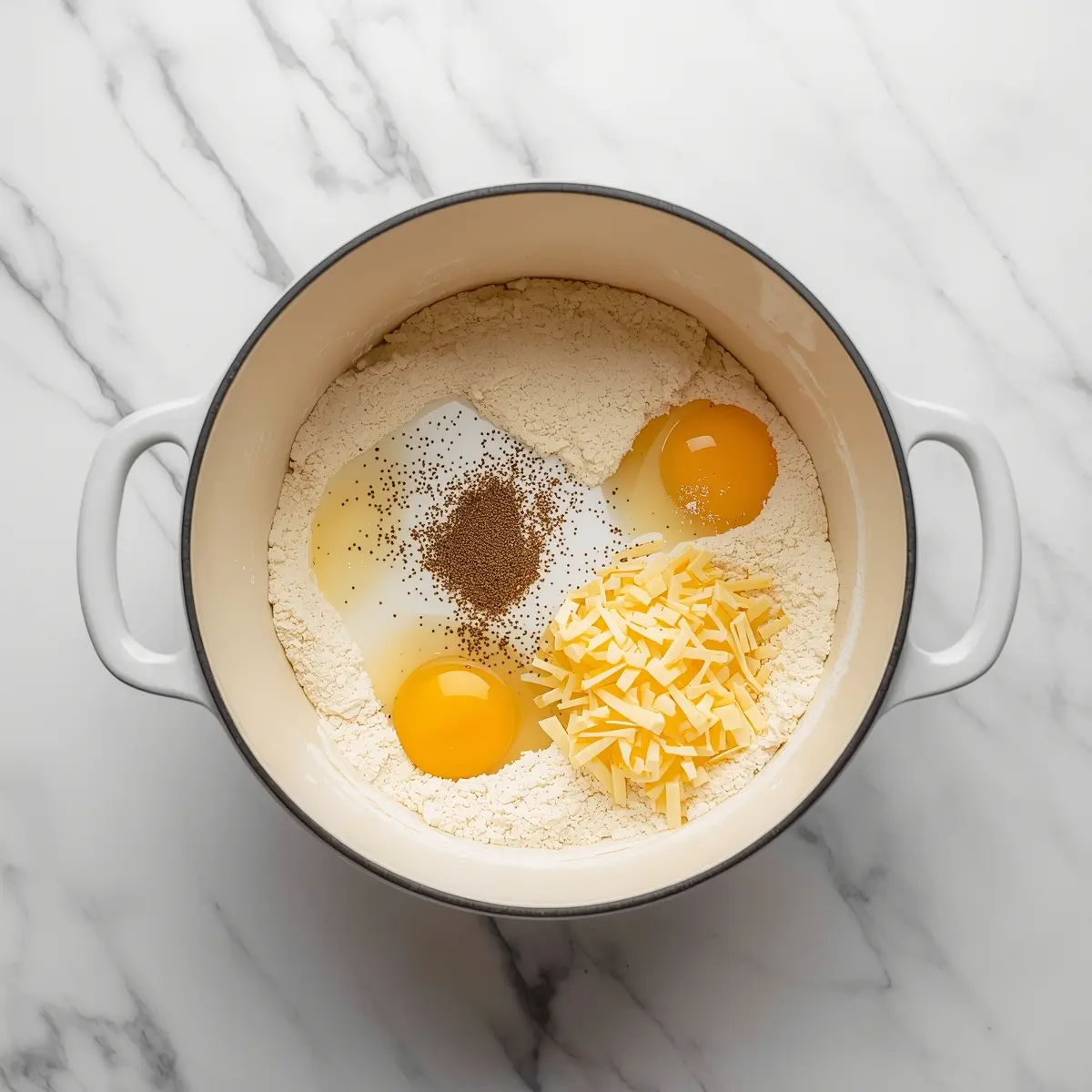
3. Add 2 cups all-purpose flour, 1 tsp salt, 1/4 tsp black pepper, 1/4 tsp ground cinnamon, 1/4 tsp ground nutmeg, and 1/4 tsp ground thyme to the wet mixture. Mix by hand or with an electric mixer on low speed for 2 minutes until a shaggy dough forms—you’re not looking for smoothness yet, just even hydration. I confess I used to overwork this stage until a baker friend explained that overworking develops tough gluten, which is the opposite of what you want in rolls.
4. Stir in 1 egg and 1/2 cup shredded cheese until fully incorporated, which takes about 1 minute of mixing. The egg acts as a binder that tightens the crumb structure, making each roll tender rather than dense. Once the egg disappears into the dough, cover the bowl with a clean kitchen towel and let it rise at room temperature for 25 minutes—you’re looking for visible bubbles breaking through the surface, not full doubling.
5. Divide the dough into 12 equal pieces by cutting it into quarters, then cutting each quarter into three portions. Shape each piece by pulling the edges down and under, rotating as you work, until you form a tight ball—this tension on the surface helps the rolls puff upward instead of spreading sideways. Arrange them on a parchment-lined baking sheet with about 2 inches between each roll because they’ll expand as they bake.
6. Let the shaped rolls rest for 15 minutes while your oven preheats to 375°F. During these 15 minutes, the dough completes its second rise—they won’t look dramatically larger, but you’ll see them settle and puff slightly. I’ve learned that this shorter second rise prevents overdevelopment, which can make rolls gummy instead of fluffy.
7. Brush the tops of each roll with 2 tbsp olive oil using a pastry brush, coating evenly but not dripping. Bake for 20 to 22 minutes until the tops turn light golden and the bottoms sound hollow when you tap them. This thanksgiving dinner rolls recipe easy finishes when you pull the pan from the oven and instantly smell that butter-and-bread fragrance that announces dinner has arrived.
Once they’re cooling on the rack, you’re ready to move them to your table for serving.
Serving ideas for thanksgiving dinner rolls recipe easy
These rolls deserve pairings that honor their savory-sweet character rather than drown them.
With herbed butter
Brush warm rolls with softened butter mixed with fresh parsley, sage, and a pinch of salt. This combination amplifies the subtle thyme already baked into your dough, creating layers of herbaceous flavor that feel intentional rather than accidental.Alongside cranberry sauce
The tartness of cranberry cuts through the cheese and honey in each roll, balancing richness on the plate. Most people expect rolls to be neutral vehicles, but these stand up to bright, acidic accompaniments without losing their character.With turkey and stuffing
Serve these simple thanksgiving bread rolls as the glue that holds your entire plate together—they soften slightly from steam rising off hot turkey, absorbing flavors without falling apart. homemade lemon sorbet recipe easy works beautifully as a palate cleanser after the meal ends. These rolls complete your Thanksgiving narrative in ways that store-bought versions simply cannot achieve.Frequently asked easy homemade rolls questions
Can I freeze the shaped dough before baking?
Yes, absolutely—shape your rolls and freeze them on a baking sheet for 2 hours, then transfer to freezer bags for up to 1 month storage. Bake directly from frozen, adding 5 extra minutes to the baking time and checking that the centers reach 190°F with an instant-read thermometer.What if I don’t have active dry yeast?
Instant yeast works at a 1:1 ratio—use 1 tsp instant yeast instead of active dry yeast with no other changes. The main difference is that instant yeast has smaller granules, so it hydrates and activates slightly faster, but your thanksgiving dinner rolls recipe easy turns out identical either way.How do I reheat these rolls the next day?
Wrap cooled rolls in a damp kitchen towel and microwave for 20 to 30 seconds until warm throughout, or wrap them in foil and bake at **325°F for 8 to 10 minutes** until the centers reach 160°F. Microwaving keeps them soft, while oven reheating restores a slight crust on the exterior.Why aren’t my rolls rising properly in this thanksgiving dinner rolls recipe easy?
Check that your milk was actually warm (around 110°F) rather than hot or cold—yeast dies at temperatures above 120°F and stays dormant below 80°F. Also verify your yeast is fresh by checking the expiration date; old yeast simply won’t activate no matter how perfect your technique becomes.Final thoughts on simple thanksgiving bread
Nora picked up one of these rolls fresh from the cooling rack last year and said, “This is better than the kind from the bakery”—and that moment crystallized why homemade matters on this single day. You’re not just feeding people; you’re creating the memory that makes them return to your table year after year.
The thanksgiving dinner rolls recipe easy succeeds because it strips away pretense and delivers actual flavor—that cheese, those spices, the honey—without demanding special equipment or overnight planning. This isn’t a recipe that requires you to wake up at dawn or stress about exact temperatures. air fryer tilapia recipe easy brings the same philosophy to weeknight dinners—simplicity with character.
Your Thanksgiving table deserves rolls that taste like you made them because you love the people eating them, not because you were out of options at the grocery store. These rolls deliver that feeling every single time.
Which spice variation would you try first—more rosemary for herbiness, or keeping the subtle blend and letting the cheese take the lead? Tell me what James or Nora says when they taste their first bite.