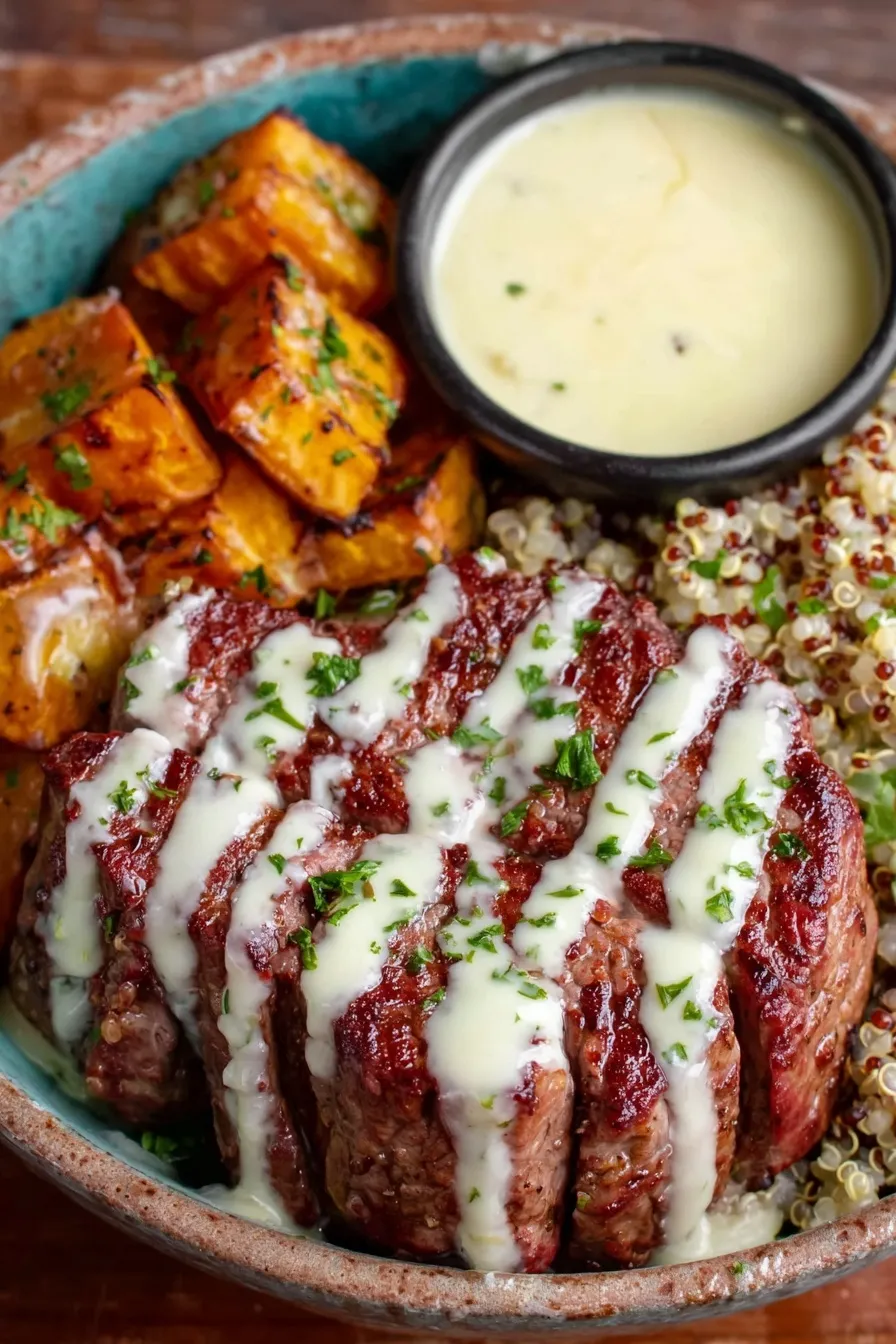
This butternut squash steak bowls recipe delivers restaurant-quality flavor in your own kitchen with minimal cleanup.
Tender, juicy steak meets caramelized butternut squash in a protein-packed bowl that’s perfect for meal prep or weeknight dinners.
The garlic herb marinade creates an incredible crust on the steak while the butternut squash roasts to perfection with crispy edges and a creamy center.
If you love hearty grain bowls, you’ll also enjoy my easy Mediterranean steak bowls or this vibrant Korean BBQ steak rice bowl.
This butternut squash steak bowls recipe works beautifully over quinoa, brown rice, or even cauliflower rice for a lower-carb option.
The combination of roasted butternut squash and perfectly seared steak creates a balanced meal with complex flavors and satisfying textures. Butternut squash is rich in vitamins A and C, making this bowl as nutritious as it is delicious.
Leftover steak? Transform it into these sweet chili chicken bowls using the same bowl-building technique, or try my Mediterranean quinoa bowl for a plant-forward variation.
These butternut squash steak bowls prove that healthy eating doesn’t mean sacrificing flavor or spending hours in the kitchen.
Why This Butternut Squash Steak Bowls Recipe Works
| Prep Time | Cook Time | Calories | Servings | Cuisine |
|---|---|---|---|---|
| 15 minutes | 25 minutes | 425 per serving | 4 | American |
This recipe uses a two-temperature roasting method that caramelizes the butternut squash while keeping the steak tender and juicy. The garlic herb marinade penetrates the meat quickly, delivering maximum flavor in minimal time. One sheet pan means easy cleanup and perfectly coordinated timing.
Ingredients
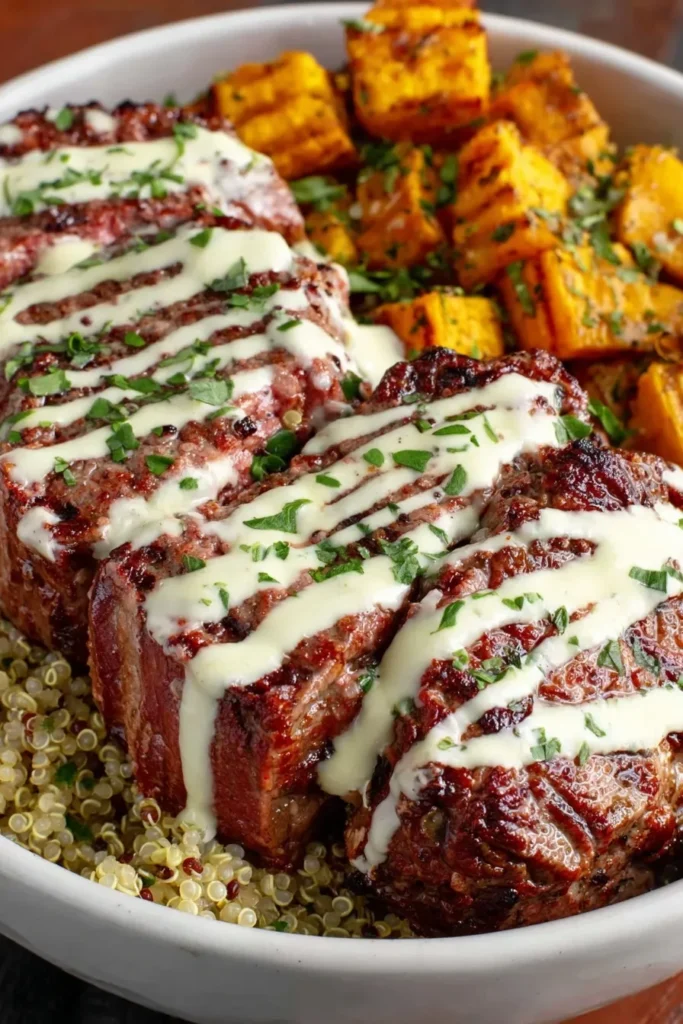
For the Garlic Herb Steak:
- 1½ pounds sirloin or flank steak, cut into 1-inch strips
- 3 tablespoons olive oil
- 4 cloves garlic, minced
- 2 teaspoons fresh rosemary, chopped
- 2 teaspoons fresh thyme leaves
- 1 teaspoon smoked paprika
- 1 teaspoon salt
- ½ teaspoon black pepper
For the Roasted Butternut Squash:
- 1 medium butternut squash (about 2 pounds), peeled and cubed
- 2 tablespoons olive oil
- 1 teaspoon ground cumin
- ½ teaspoon cinnamon
- ½ teaspoon salt
- ¼ teaspoon cayenne pepper
For the Bowls:
- 3 cups cooked quinoa or brown rice
- 2 cups fresh spinach or arugula
- ½ cup crumbled feta cheese
- ¼ cup toasted pumpkin seeds
- Balsamic glaze for drizzling
Instructions
Preheat your oven to 425°F and line a large sheet pan with parchment paper.
Combine the steak strips with olive oil, minced garlic, rosemary, thyme, smoked paprika, salt, and pepper in a medium bowl. Massage the marinade into the meat and set aside while preparing the squash.
Toss the butternut squash cubes with olive oil, cumin, cinnamon, salt, and cayenne in a large bowl until evenly coated.
Spread the butternut squash in a single layer on one half of the prepared sheet pan, making sure the pieces don’t overlap for maximum caramelization.
Roast the butternut squash for 15 minutes until the edges start to brown and soften.
Remove the pan from the oven and push the squash to one side. Arrange the marinated steak strips on the other half of the pan in a single layer.
Return to the oven and roast for 8-10 minutes for medium-rare steak, or longer if you prefer your meat more well-done.
Remove from the oven and let the steak rest for 5 minutes before assembling the bowls.
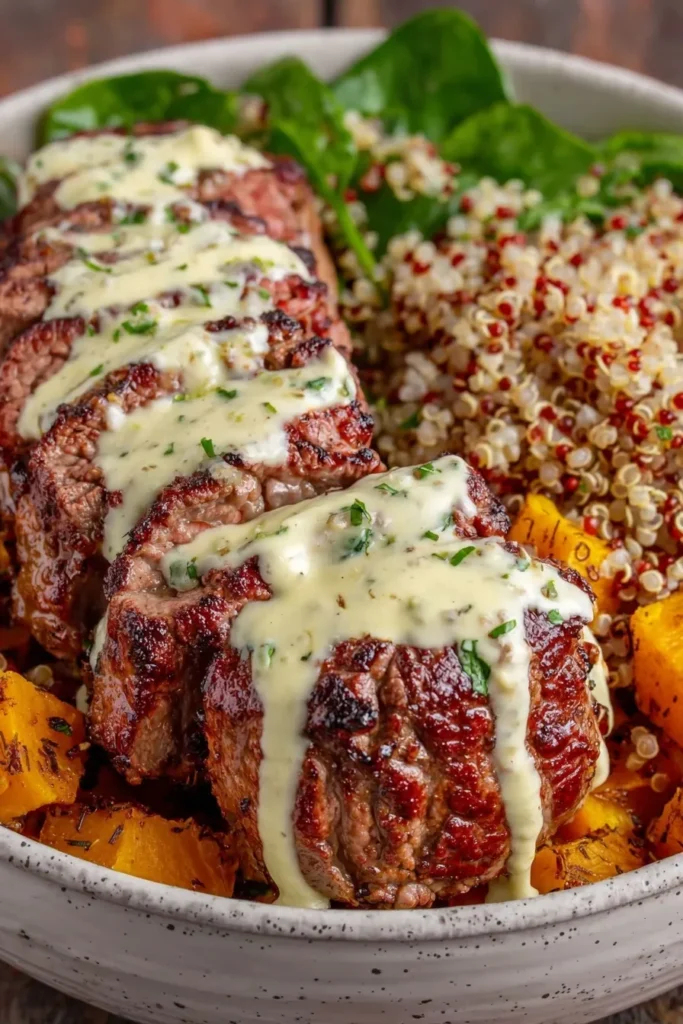
Build each bowl by starting with a base of quinoa or rice, then adding a handful of fresh greens.
Top with roasted butternut squash, sliced steak, crumbled feta, and toasted pumpkin seeds.
Drizzle with balsamic glaze and serve immediately while everything is warm.
Expert Tips for Perfect Butternut Squash Steak Bowls
💡 Pro Tip: Cut your butternut squash cubes to a uniform ¾-inch size to ensure even roasting. Smaller pieces will burn before the steak is done, while larger pieces won’t caramelize properly. The goal is crispy edges with a tender center that melts in your mouth.
💡 Pro Tip: Let your steak come to room temperature for 15-20 minutes before cooking. This ensures even cooking throughout the meat and prevents a cold center with an overcooked exterior. The marinade penetrates better into room-temperature meat.
💡 Pro Tip: Use a meat thermometer to check doneness – 130°F for medium-rare, 140°F for medium. The steak will continue cooking during the 5-minute rest period, so remove it from the oven when it’s 5 degrees below your target temperature.
⚠️ Common Fix: If your butternut squash isn’t caramelizing, your pan is probably overcrowded. Overcrowding creates steam instead of roasting, leaving you with mushy squash. Use two pans if needed, or roast in batches. Space between pieces is essential for that golden-brown crust.
⚠️ Common Fix: Tough, chewy steak usually means it was sliced with the grain instead of against it. Look for the direction of the muscle fibers and cut perpendicular to them. This shortens the fibers and makes every bite tender. If you accidentally slice with the grain, marinate longer next time to help break down the fibers.
Ingredient Substitutions
| Original Ingredient | Substitute | Notes |
|---|---|---|
| Sirloin steak | Chicken thighs or firm tofu | Adjust cooking time accordingly |
| Butternut squash | Sweet potato or acorn squash | Similar roasting time |
| Fresh herbs | 1 tsp dried herbs per 2 tsp fresh | Less potent flavor |
| Quinoa | Brown rice or farro | Adjust liquid and cook time |
| Feta cheese | Goat cheese or dairy-free alternative | Similar tangy profile |
| Pumpkin seeds | Sunflower seeds or slivered almonds | Same crunch factor |
| Balsamic glaze | Tahini dressing or yogurt sauce | Different flavor profile |
| Fresh spinach | Kale or mixed greens | Heartier texture with kale |
What to Serve with Butternut Squash Steak Bowls
These bowls are complete meals on their own, but if you’re feeding a crowd, add a simple side salad or roasted vegetables. The grilled veggie bowl with quinoa makes an excellent vegetarian companion dish for mixed dietary preferences.
For a lighter option, serve the steak and squash over a bed of massaged kale instead of grains. A crisp white wine or sparkling water with lemon complements the rich flavors beautifully.
Warm pita bread or naan on the side turns this into a build-your-own bowl bar that’s perfect for entertaining.
Storage & Reheating Instructions
Store components separately in airtight containers in the refrigerator for up to 4 days. Keep the steak, squash, grains, and greens in individual containers to maintain optimal texture.
Reheat the steak and butternut squash together in a 350°F oven for 8-10 minutes, or use a skillet over medium heat until warmed through. Avoid microwaving the steak if possible, as it can become tough and rubbery.
The quinoa or rice can be reheated in the microwave with a splash of water to restore moisture. Add fresh greens and toppings just before serving.
These bowls are excellent for meal prep. Prepare 4-5 containers on Sunday for easy weeknight lunches or dinners throughout the week.
The steak can be frozen for up to 3 months. Thaw overnight in the refrigerator before reheating. The butternut squash texture changes slightly after freezing but is still delicious.
Nutritional Highlights
Each serving provides approximately 30 grams of protein from the lean steak, supporting muscle maintenance and satiety. The butternut squash contributes significant amounts of vitamin A, which supports eye health and immune function.
Quinoa adds complete protein and fiber, making this bowl particularly filling and satisfying. The healthy fats from olive oil and pumpkin seeds support nutrient absorption and heart health.
This balanced meal provides complex carbohydrates, lean protein, and vegetables in one bowl, eliminating the need for side dishes. The combination of nutrients helps stabilize blood sugar and provides sustained energy.
Fresh herbs like rosemary and thyme contain antioxidants and anti-inflammatory compounds. The spices – cumin, cinnamon, and cayenne – not only add flavor but also support digestion and metabolism.
At 425 calories per serving with all components, these bowls fit easily into most eating plans while providing substantial nutrition and satisfaction.
Troubleshooting Common Issues
Problem: The steak is overcooked and tough. Solution: Use a meat thermometer and remove the steak at 125°F for medium-rare. It will continue cooking to 130°F during rest time. Flank steak in particular needs to be cooked to no more than medium.
Problem: The butternut squash is mushy instead of caramelized. Solution: Make sure your oven is fully preheated to 425°F before adding the pan. Cut squash to uniform size and don’t overcrowd the pan. If pieces are touching, they’ll steam instead of roast.
Problem: The marinade seems watery and won’t stick to the steak. Solution: Pat the steak completely dry with paper towels before adding marinade. Moisture on the surface prevents the oil-based marinade from adhering properly.
Problem: The garlic is burning before the steak is done. Solution: If using minced garlic directly on the pan, add it halfway through cooking. Alternatively, keep garlic mixed into the marinade rather than as separate pieces.
Problem: Everything is done at different times. Solution: Cut the butternut squash into larger pieces if your steak cooks quickly, or give the squash a 10-15 minute head start before adding the steak to the pan.
Problem: The bowl feels dry and needs more sauce. Solution: Make a quick tahini drizzle by whisking together 3 tablespoons tahini, 2 tablespoons lemon juice, 1 tablespoon water, and a pinch of salt. This adds creaminess and ties all the components together.
Problem: The steak is tough even when sliced against the grain. Solution: Your marinade time may be too short. For tougher cuts like flank steak, marinate for at least 2 hours or up to overnight. The acid and oil help break down muscle fibers.
Make-Ahead & Meal Prep Tips
Prep the butternut squash up to 2 days ahead by peeling, cubing, and storing in an airtight container in the refrigerator. This saves significant time on busy weeknights.
The steak marinade can be mixed and poured over the meat up to 24 hours before cooking. Longer marinating time actually improves flavor and tenderness.
Cook the quinoa or rice in batches on Sunday and refrigerate. One batch of grains serves as the base for multiple meal prep bowls throughout the week.
Assemble complete bowls in glass meal prep containers, keeping wet ingredients like balsamic glaze separate until serving. This prevents the greens from getting soggy.
For maximum freshness, store the greens separately and add them just before eating. Spinach and arugula wilt quickly when stored with warm components.
The roasted butternut squash actually tastes better the next day as the spices have time to permeate the flesh. Make a double batch and use it in other recipes throughout the week.
Pre-portion all toppings – feta, pumpkin seeds, and fresh herbs – into small containers for quick bowl assembly. This grab-and-go approach makes healthy eating effortless.
Why High-Heat Roasting Creates Perfect Caramelization
Roasting at 425°F triggers the Maillard reaction, a chemical process that creates hundreds of new flavor compounds and that signature golden-brown color. Lower temperatures simply steam the vegetables instead of caramelizing them.
The high heat evaporates surface moisture rapidly, allowing the natural sugars in butternut squash to concentrate and caramelize. This is why properly roasted squash tastes sweet and nutty rather than bland.
The same principle applies to the steak. High heat creates a flavorful crust through protein denaturation and caramelization while keeping the interior juicy and tender.
Using a sheet pan instead of a roasting pan allows better air circulation around each piece of food. This promotes even browning and prevents steaming in trapped moisture.
The brief resting period after cooking allows the steak’s internal juices to redistribute. Cutting immediately causes those flavorful juices to run out onto the cutting board instead of staying in the meat.
Final Thoughts
These butternut squash steak bowls prove that healthy, balanced meals don’t require complicated techniques or expensive ingredients. The one-pan method streamlines cooking and cleanup while delivering restaurant-quality results.
The beauty of bowl recipes is their flexibility – once you master the technique, you can swap proteins, vegetables, and grains based on what you have available or what’s in season.
Make this recipe your own by experimenting with different herb combinations in the marinade or trying various toppings like avocado, pickled onions, or a soft-boiled egg.
Whether you’re meal prepping for the week or making a quick weeknight dinner, these bowls deliver satisfaction and nutrition in every bite. The combination of tender steak, caramelized butternut squash, and fresh greens creates a meal you’ll crave again and again.