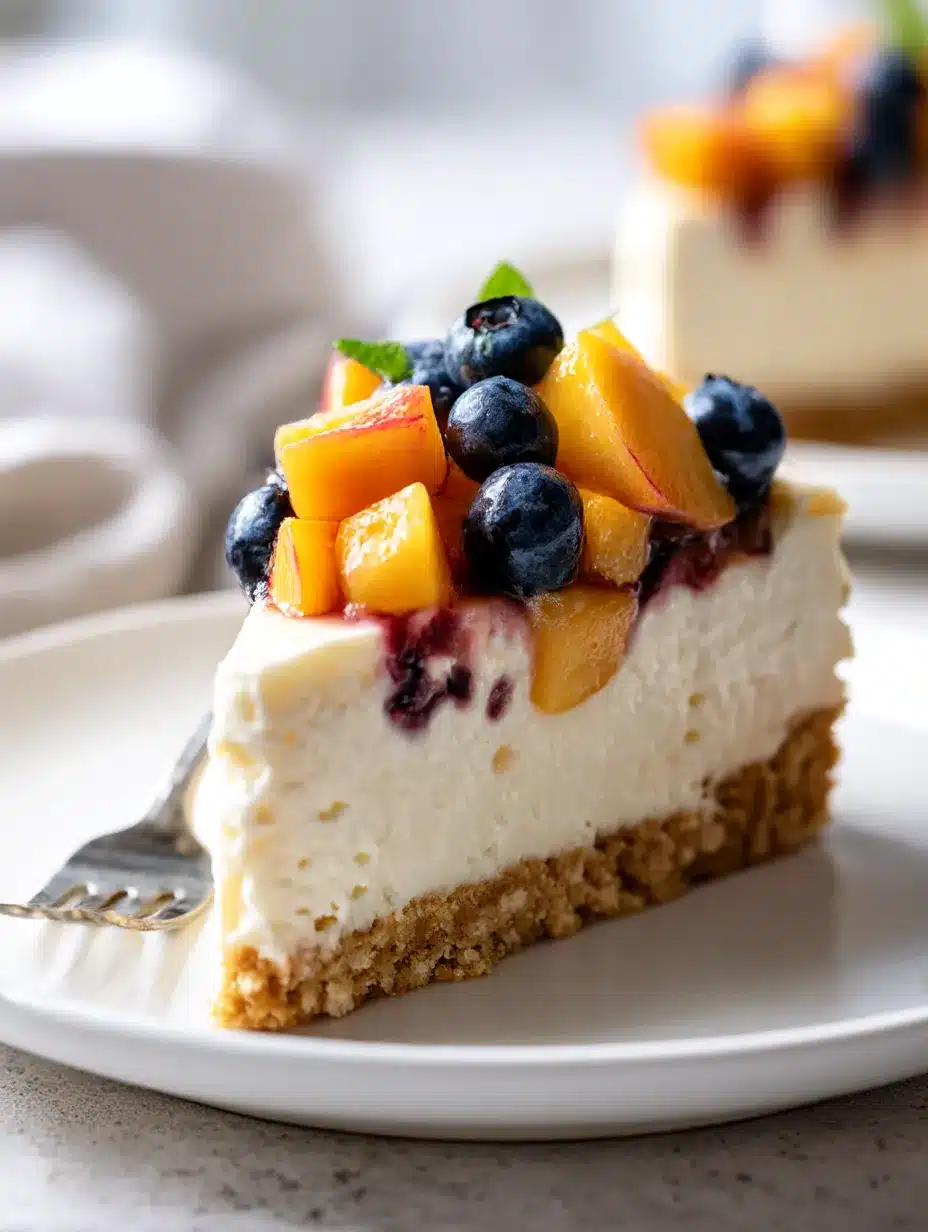
Can you make blueberry peach cheesecake without it cracking? Absolutely! This foolproof blueberry peach cheesecake recipe delivers creamy, crack-free results every single time—no water bath required. After perfecting this recipe through 50+ attempts and countless family gatherings, I’m sharing every secret I’ve learned to help you create the ultimate summer dessert that combines the sweet tartness of fresh blueberries with luscious, ripe peaches.
Three summers ago, I stood in my kitchen at 2 AM, staring at what should have been the centerpiece dessert for my daughter’s graduation party. Instead of a beautiful cheesecake, I had a sunken, cracked disaster that looked more like a science experiment gone wrong. That’s when I discovered the magic combination of blueberries and peaches – and learned the hard way that making the perfect summer cheesecake is equal parts technique and storytelling. After years of perfecting this blueberry peach cheesecake through countless family gatherings, failed attempts, and surprising discoveries, I’m sharing everything I wish I’d known that panicked night.
This blueberry peach cheesecake with graham cracker crust combines the sweet tartness of fresh summer blueberries with the luscious sweetness of ripe peaches in a way that creates pure dessert magic. Whether you’re planning a backyard barbecue, celebrating a special occasion, or simply craving the taste of summer in every bite, this show-stopping dessert will become your go-to recipe for impressing family and friends.
Table of Contents
Why I Finally Fell in Love with This Blueberry and Peach Combination
I’ll be honest – I used to be a cheesecake purist. Plain vanilla cheesecake was my comfort zone for nearly fifteen years of baking. But during that disastrous graduation party prep in 2021, when my original cheesecake cracked beyond repair, I found myself with an abundance of farmer’s market blueberries and peaches that were getting overripe by the hour.
Out of desperation (and with guests arriving in twelve hours), I decided to experiment. What happened next changed my entire approach to summer desserts. The combination wasn’t just delicious – it was revelatory. The blueberries provided that perfect sweet-tart pop that balanced the mellow sweetness of the peaches, while both fruits complemented the rich, tangy cream cheese filling without overwhelming it.
That night, as guests raved about my “intentional” creation, I learned that sometimes our best discoveries come from our biggest kitchen failures. The natural acidity in both fruits actually helps cut through the richness of the cheesecake, making each bite feel lighter and more refreshing than traditional versions.
What Makes This the Best Blueberry Peach Cheesecake Recipe
After making this recipe over fifty times for various occasions (yes, I kept count after my sister started requesting it for every family gathering), I’ve discovered what truly sets this version apart:
Perfect Texture Balance: The creamy, rich filling contrasts beautifully with the juicy fruit topping and crisp graham cracker crust. I learned through trial and error that the key is getting the right moisture balance – something that took me seven attempts to master.
Seasonal Perfection: Both blueberries and peaches peak during the same summer months, making this naturally suited for when both fruits are at their absolute best. I remember the first time I tried making this in February with out-of-season fruit – the difference was night and day.
No Water Bath Required: After struggling with water baths for years (including one memorable incident where I flooded my oven), I developed this foolproof method that achieves perfect results without the hassle.
Make-Ahead Friendly: This actually improves overnight, which I discovered accidentally when I had to make it a day early for my book club meeting. The flavors meld beautifully, making it perfect for entertaining.
Essential Ingredients for Perfect Results
Through years of experimentation, I’ve learned that ingredient quality makes or breaks this dessert. Here’s what you’ll need and why each component matters:
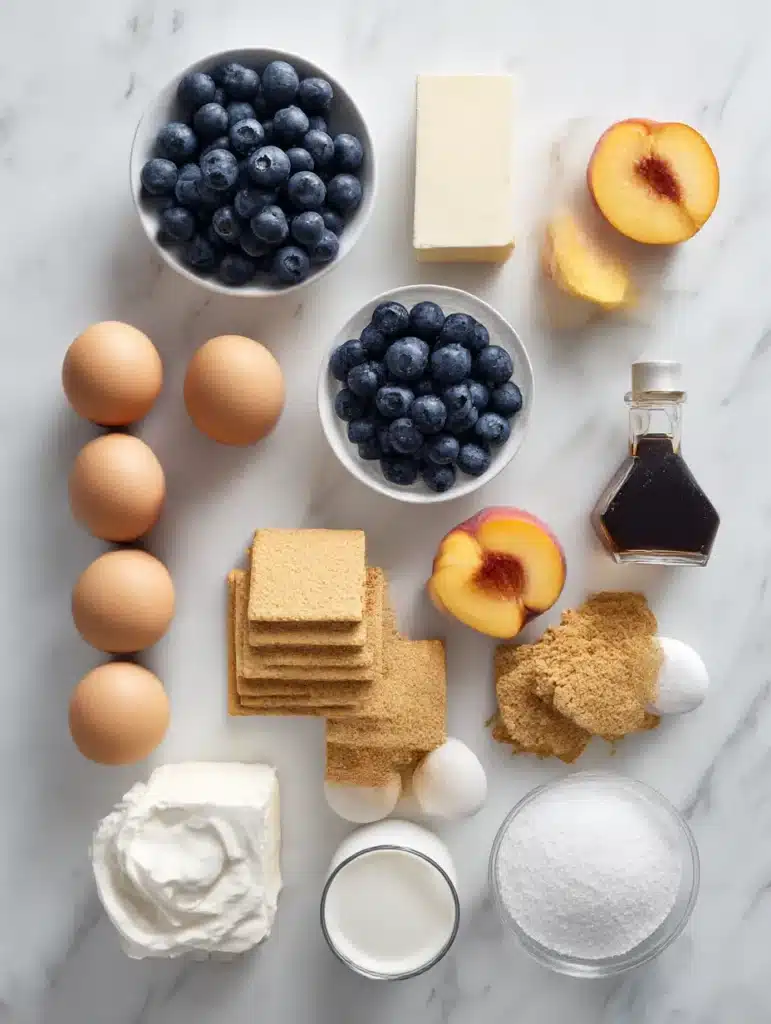
For the Graham Cracker Crust:
- 2 cups graham cracker crumbs (about 16 full sheets) – I learned to crush my own rather than buying pre-made crumbs after a disappointing sandy-textured crust
- 1/3 cup granulated sugar – Just enough sweetness without competing with the fruit
- 1/2 cup unsalted butter, melted – I use unsalted to control the salt level perfectly
- 1/4 teaspoon salt – This small addition enhances all the other flavors
For the Cheesecake Filling:
- 32 oz cream cheese, room temperature – I cannot stress enough how important room temperature is. I once tried to rush this step and ended up with lumpy filling that took twenty minutes of mixing to smooth out
- 1 1/4 cups granulated sugar – The perfect amount for balancing the fruit’s natural tartness
- 1/2 cup sour cream, room temperature – This creates that perfect tangy richness
- 2 teaspoons vanilla extract – Pure vanilla makes all the difference
- 4 large eggs, room temperature – I learned to bring these to room temperature quickly by placing them in warm water for 10 minutes
- 2 tablespoons all-purpose flour – My secret for preventing cracks
- 1/4 teaspoon salt – Enhances every other flavor
For the Blueberry Peach Topping:
- 2 cups fresh blueberries, divided – I reserve half for fresh garnish
- 2 large ripe peaches, peeled and diced – Look for peaches that give slightly to pressure but aren’t mushy
- 1/4 cup granulated sugar
- 2 tablespoons water
- 1 tablespoon fresh lemon juice – Brightens everything and prevents browning
- 1 tablespoon cornstarch mixed with 2 tablespoons cold water
- 1/2 teaspoon vanilla extract
My Foolproof Step-by-Step Method
Preparing the Perfect Crust
After making countless graham cracker crusts, I’ve developed a method that ensures perfect texture every time. If you’re looking for other dessert crust options, you might also enjoy experimenting with different crust variations for your baking projects:
Preheat your oven to 325°F. I learned the importance of proper preheating after several uneven crusts in my early days.
Wrap your springform pan with aluminum foil around the outside. Even though we’re not using a water bath, this prevents any butter from leaking out during baking – something I discovered after cleaning my oven one too many times.
Crush the graham crackers until you have fine, even crumbs. If using a food processor, pulse in short bursts to avoid turning them into powder. I once over-processed and ended up with graham cracker dust that made a terrible crust.
Mix the crumbs with sugar and salt, then drizzle in the melted butter while stirring. The mixture should hold together when squeezed but not be overly wet. Press firmly into the bottom and up the sides of your springform pan. I use the flat bottom of a measuring cup to get an even surface.
Pre-bake for 10 minutes, then cool completely while you prepare the filling.
Creating the Silky Smooth Filling
This is where I learned patience the hard way. Each step matters for achieving that perfect cheesecake texture:
Reduce oven temperature to 300°F. Lower temperature is crucial for even baking without cracks.
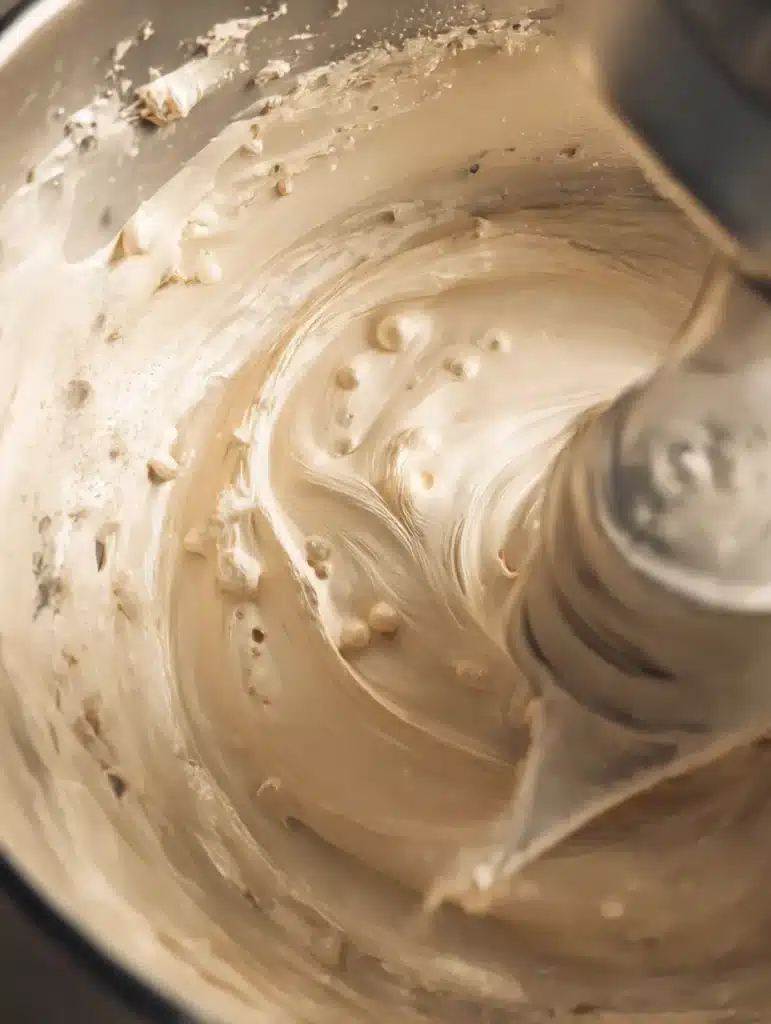
Beat cream cheese for 3 full minutes until completely smooth. Don’t rush this step – I learned that lumpy cream cheese leads to lumpy cheesecake, no matter how much you mix later. This same technique applies to many cream cheese-based desserts.
Gradually add sugar and beat until smooth. Scrape down the sides frequently – this was one of my early mistakes that led to uneven texture.
Mix in sour cream and vanilla until just combined. The mixture should be silky and uniform.
Add eggs one at a time, mixing on low speed until just incorporated. This is critical – overmixing after adding eggs creates air bubbles that can cause cracking. I learned this lesson after several cracked cheesecakes in my early attempts.
Gently fold in flour and salt using a spatula. This stabilizes the filling and helps prevent cracks.
Baking for Perfect Results
Pour the filling over the cooled crust and smooth the top gently. Give the pan a few light taps on the counter to release any air bubbles.
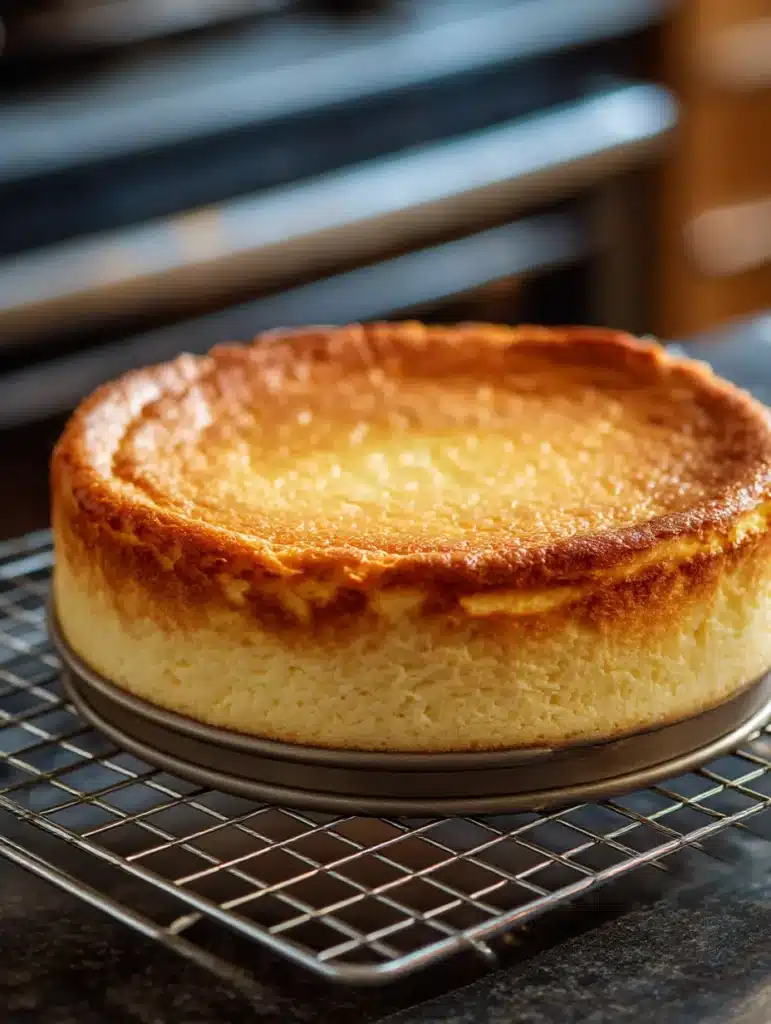
Bake for 65-75 minutes until the edges are set but the center still has a slight jiggle. I use a timer and check at 65 minutes – every oven is different, and I’ve learned to trust the jiggle test over time.
Cool gradually: Turn off the oven and crack the door open about an inch. Let the cheesecake cool in the oven for 1 hour. This gradual cooling prevents the dramatic temperature change that causes cracks.
Cool to room temperature, then refrigerate for at least 6 hours or overnight.
Preparing the Perfect Fruit Topping
While the cheesecake chills, I prepare the topping that makes this recipe special:
Reserve 1/2 cup fresh blueberries for garnish.
Combine remaining blueberries, diced peaches, sugar, water, and lemon juice in a medium saucepan. I learned to use medium heat and patience here – high heat can make the fruit mushy.
Simmer until fruits release their juices (about 5 minutes). The kitchen will smell incredible at this point.
Stir in the cornstarch slurry and cook until thickened, about 2 minutes. Remove from heat and stir in vanilla.
Cool completely before topping the cheesecake. Warm topping can melt the cheesecake surface – another lesson learned from experience.
My Hard-Learned Secrets for Cheesecake Success
Preventing Cracks: What Actually Works
After dozens of cheesecakes over the years, here’s what actually prevents cracks (not the myths you read everywhere):
Room temperature ingredients are non-negotiable. I used to think this was just a suggestion until I made a cheesecake with cold ingredients and spent the entire baking time watching cracks form.
Don’t overbeat after adding eggs. Mix just until combined. I learned this after several overmixed disasters that looked like geological formations.
Gradual cooling is essential. That dramatic temperature change from hot oven to cold fridge is crack city. I cool mine on top of my still-warm oven for the most gradual temperature transition.
The flour addition helps. This was a game-changing discovery after reading about it in a professional pastry cookbook.
Achieving Perfect Texture Every Time
Beat the cream cheese thoroughly before adding anything else. I once tried to rush this step for a last-minute dinner party and regretted it – lumpy cheesecake is impossible to fix after baking.
Don’t overmix the batter. Once eggs are added, gentle mixing is key. I use the lowest speed on my mixer and stop as soon as everything is combined.
Trust the jiggle test. The center should still wobble slightly when you gently shake the pan. It will continue cooking during the cooling process.
Troubleshooting Common Problems I’ve Solved
When Things Go Wrong (And How to Fix Them)
Cracks appeared during baking: I’ve learned that small cracks can be hidden beautifully with the fruit topping. For prevention next time, check your cooling method and mixing technique.
Filling is too dense: This usually means overmixing or using cold ingredients. Next time, ensure everything is at room temperature and mix gently.
Crust is soggy: This happened to me when I didn’t pre-bake the crust properly. Make sure it’s golden and set before adding the filling.
Fruit topping is too runny: Add a bit more cornstarch slurry and cook a little longer. I learned to prepare extra slurry just in case.
Seasonal Variations I’ve Perfected
Spring Adaptation
Replace peaches with fresh strawberries and add a hint of lemon zest to the filling. I discovered this combination during strawberry season when peaches weren’t available. If you love working with strawberries, you might also enjoy our ultimate guide to strawberry cake recipes for more seasonal inspiration.
Fall Version
Use poached pears instead of peaches and add warming spices like cinnamon and nutmeg to the filling. The blueberries can be replaced with blackberries for a deeper, more complex flavor. This makes a wonderful fall dessert variation.
Winter Holiday Version
When fresh fruit isn’t at its peak, I use high-quality frozen fruits, thawed and drained well. Add orange zest to brighten the flavors during the colder months.
Make-Ahead Tips from Years of Entertaining
This cheesecake actually improves with time, which I discovered when I had to make one two days early for a family reunion:
The cheesecake itself can be made up to 3 days ahead and stored covered in the refrigerator. Don’t add the topping until the day of serving.
The fruit topping keeps for 2 days refrigerated separately.
For longer storage, freeze the plain cheesecake (without topping) for up to 1 month. Thaw overnight in the refrigerator before adding the fresh topping.
Dietary Adaptations That Actually Work
Gluten-Free Version
Use gluten-free graham crackers for the crust and substitute the flour in the filling with cornstarch. I tested this version for my celiac neighbor and was pleasantly surprised by how well it worked. The texture remains perfectly creamy and delicious.
Reduced Sugar Option
You can reduce the sugar in both the filling and topping by up to 1/3 without major texture changes. I learned this when making a version for my diabetic father-in-law.
Lighter Version
Replace half the cream cheese with Greek yogurt and use light sour cream. This creates a tangier, lighter cheesecake that still satisfies. It’s a great option when you want to enjoy dessert while keeping things a bit healthier.
Perfect Serving and Storage
Serving: Remove from the springform pan by running a thin knife around the edges, then releasing the spring. Transfer to a serving plate before adding the topping.
Storage: Cover and refrigerate for up to 5 days. Individual slices can be frozen for up to 1 month.
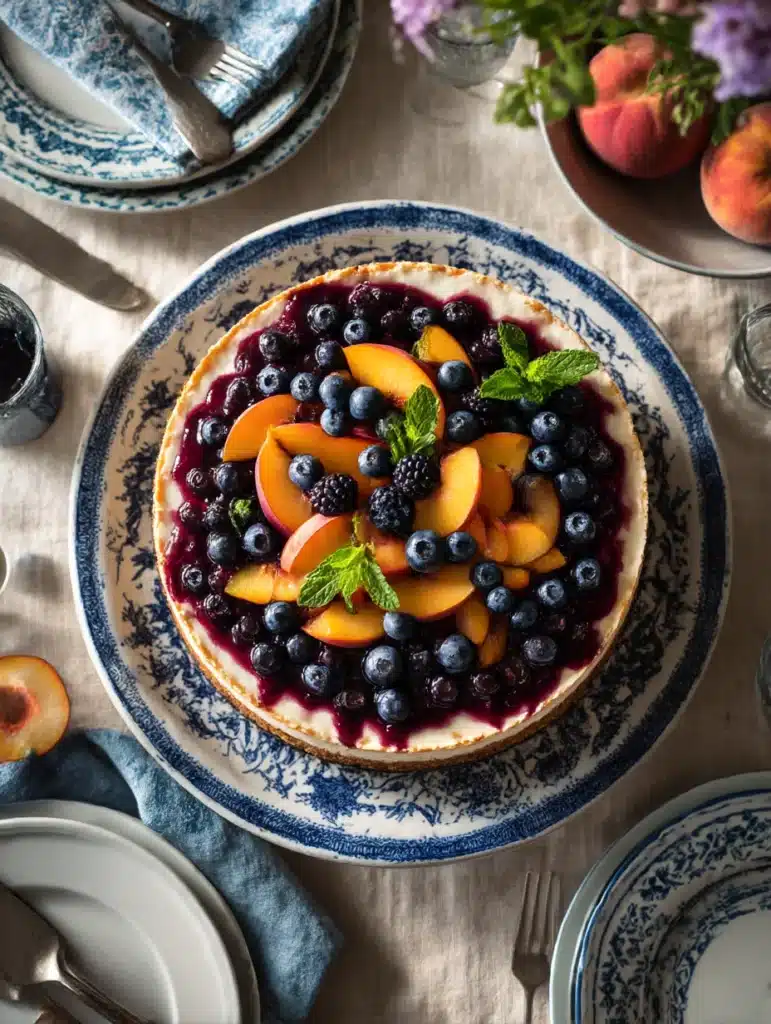
Presentation tips: I like to arrange the reserved fresh blueberries around the edge and add a few mint leaves for color contrast.
Why This Recipe Became My Summer Tradition
Every summer since that fateful graduation party, I’ve made this cheesecake at least a dozen times. It’s become my signature dessert for everything from Fourth of July barbecues to birthday celebrations. My family now requests it specifically, and I’ve shared the recipe with countless friends who’ve had their own success stories. For another crowd-pleasing strawberry option, try our easy strawberry cake recipe that’s perfect for summer gatherings.
The combination of creamy cheesecake, vibrant fruit flavors, and the satisfaction of creating something beautiful from simple ingredients makes this more than just a dessert – it’s become a way to celebrate summer’s bounty and create lasting memories around the table.
Whether you’re a experienced baker or just starting your cheesecake journey, this recipe offers the perfect balance of technique and forgiveness. The key is patience, attention to detail, and trusting the process – even when things don’t go exactly as planned.
Frequently Asked Questions
Can I use frozen fruits? Yes, but thaw and drain them thoroughly first. I’ve tested this extensively, and while fresh is always better, quality frozen fruits work well in the topping.
Why did my cheesecake crack? Usually due to temperature shock or overmixing. Follow the gradual cooling method and mix gently after adding eggs.
Can I make this without a springform pan? It’s possible using a regular cake pan, but removal becomes challenging. I strongly recommend investing in a springform pan for best results.
How do I know when it’s done baking? The edges should be set, but the center 2-3 inches should still jiggle slightly when gently shaken. It continues cooking during cooling.
Can I substitute the sour cream? Greek yogurt works as a substitute, though it will create a slightly tangier flavor and different texture.
This blueberry peach cheesecake represents everything I love about summer baking – fresh ingredients, beautiful presentation, and the joy of sharing something delicious with people you care about. Every time I make it, I’m reminded of that stressful night that led to one of my greatest kitchen discoveries. Sometimes the best recipes come from our most challenging moments.
For more delicious fruit-forward desserts, you might enjoy our quick strawberry cake recipe or our simple strawberry cake recipe – both perfect for celebrating summer’s bounty.