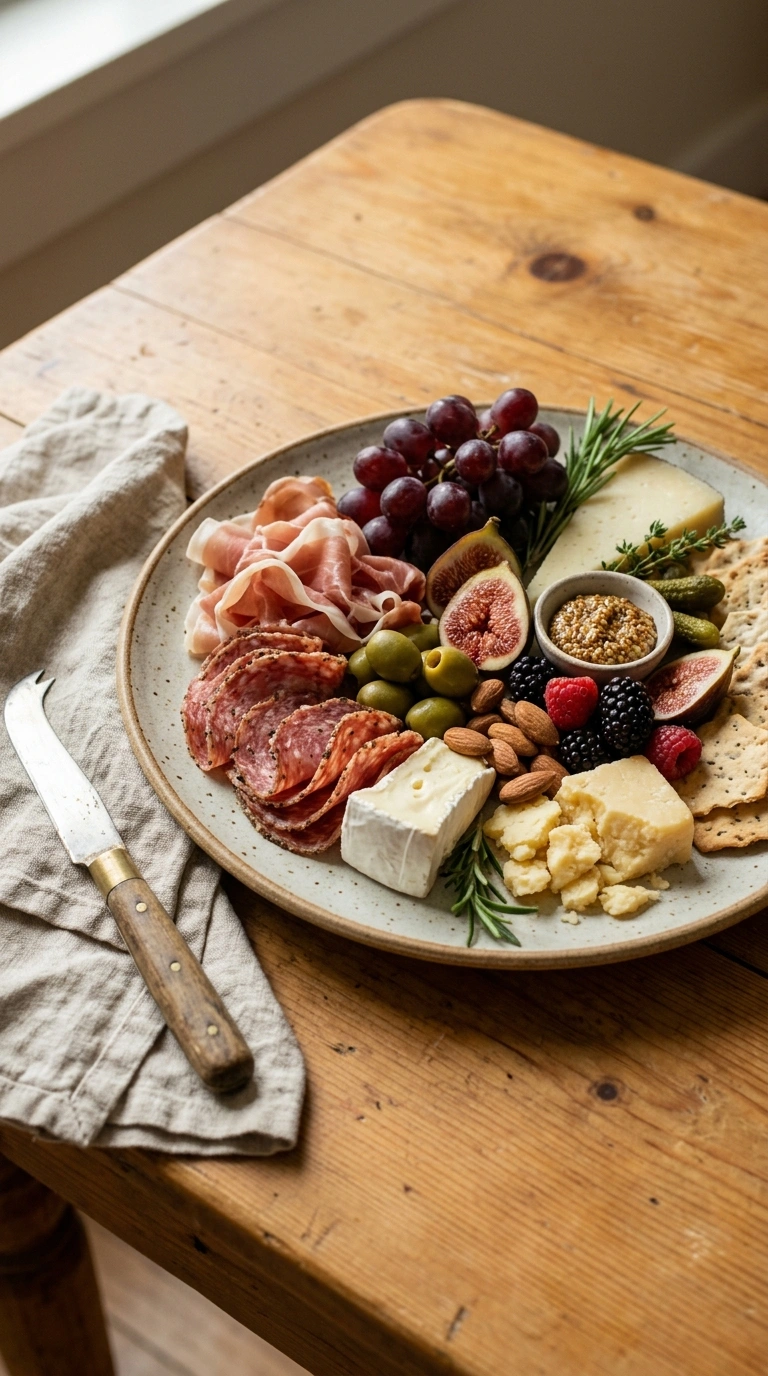
A charcuterie board is the ultimate crowd-pleaser for entertaining without stress. Whether you’re hosting a holiday gathering or casual weeknight dinner, this elegant appetizer requires zero cooking skills. Building the perfect board takes just 25 minutes from start to table. My friend Nora always says these platters look restaurant-quality but taste homemade-special, and she’s absolutely right.
The beauty of assembling a board lies in its flexibility and visual impact. You control every ingredient, every flavor pairing, and every arrangement detail. Unlike complicated appetizers requiring last-minute timing, a board comes together calmly in your kitchen. party finger food easy has never looked this impressive or tasted this good.
What makes this version different from basic board recipes is the combination of smoked turkey strips with traditional cured meats, creating complex flavor layers rather than one-note saltiness. The roasted chickpeas add surprising crunch alongside nuts, while fig jam bridges sweet and savory perfectly. This isn’t just meat and cheese—it’s a thoughtfully designed tasting experience.
James tested this board at his last dinner party and watched guests graze for two hours straight. That’s the power of intentional ingredient selection and strategic placement on your serving surface.
Why this board arrangement works
Building a successful board means understanding how flavors and textures complement each other across the platter. These key principles transform random ingredients into a cohesive, memorable experience that guests genuinely enjoy.
- Variety in texture prevents palate fatigue—crunchy, creamy, chewy, and soft elements keep interest alive throughout grazing
- Warm and cool temperature contrast creates dynamic sensation—room-temperature meats alongside chilled grapes refresh the mouth repeatedly
- Color distribution makes visual appeal irresistible—ruby grapes, golden apricots, and purple olives draw the eye around your surface
- Flavor bridges prevent clashing combinations—honey and fig jam smooth transitions between sharp cheeses and smoky cured meats
Professional caterers understand that the best platters balance three flavor profiles: salty, sweet, and savory, because this combination keeps guests reaching for more rather than feeling overstuffed.
Prep 25 minutes | Cook 0 minutes | Cal 285 | Serves 12 servings | Cuisine American |
Ingredients for charcuterie board
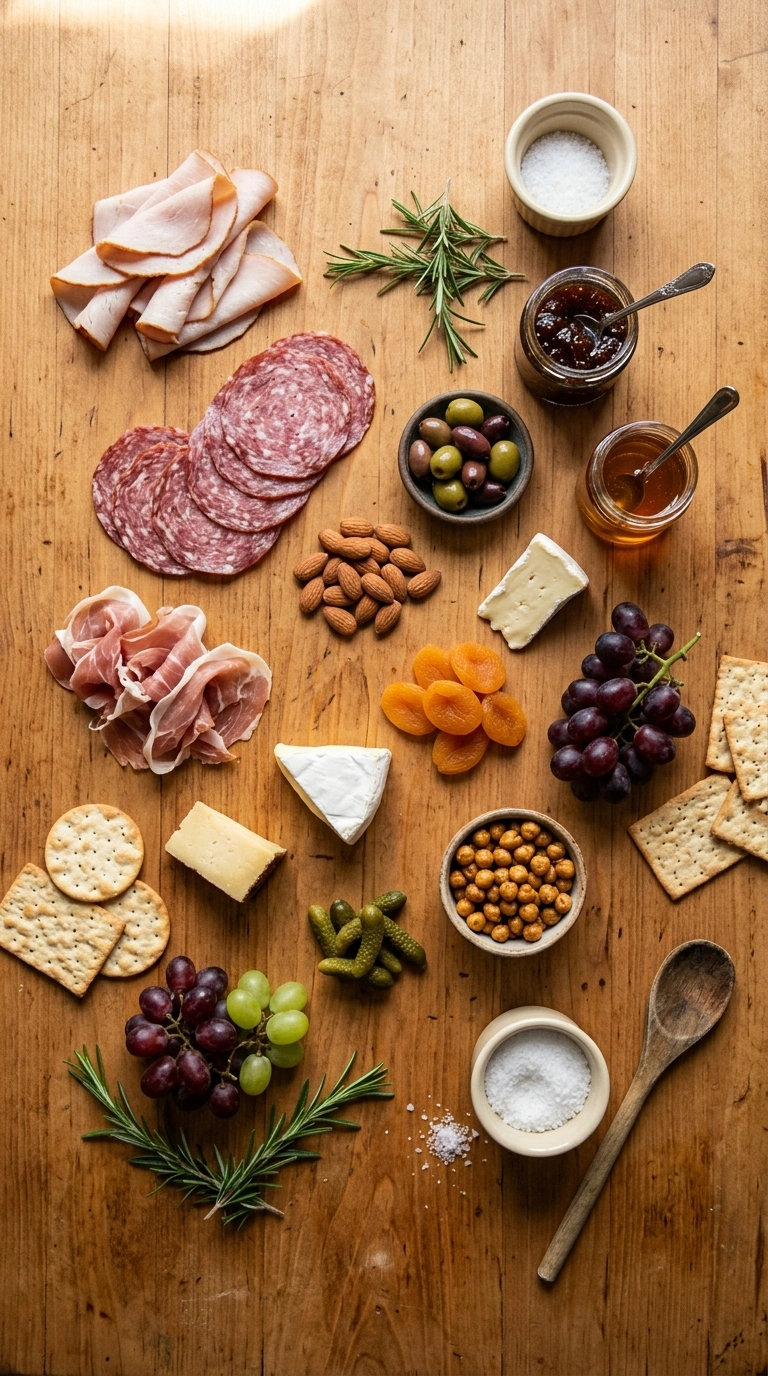
- 8 oz smoked turkey strips
- 8 oz beef salami
- 6 oz prosciutto
- 12 oz assorted cheeses (aged cheddar, brie, aged gouda, or similar varieties)
- 1 cup mixed olives (green and kalamata)
- 1 cup roasted almonds
- 1 cup dried apricots
- 1 cup fresh grapes (red or green)
- 8 oz crackers (water crackers, rosemary, or multigrain)
- 1 cup cornichons
- 1 cup roasted chickpeas
- 4 oz fig jam
- 2 tbsp honey
- Fresh rosemary sprigs for garnish
For substitutions, swap beef salami with Spanish chorizo if you prefer milder spice, or replace prosciutto with soppressata for earthier depth. The smoked turkey can become honey-glazed ham or roasted chicken breast for different flavor profiles. Aged gouda can substitute any hard cheese, while fresh mozzarella balls replace brie if you want lighter creaminess. Skip roasted chickpeas and double the almonds if you prefer familiar textures, though the chickpeas provide unexpected crunch that guests love discovering.
When selecting cheeses, choose varieties at different ages and textures: one soft (brie), one semi-firm (aged cheddar), and one hard (aged gouda). This creates a natural progression from delicate to bold as guests move across your board. Purchase all ingredients one day before assembly so flavors develop and everything reaches optimal taste.
Step-by-step board arrangement instructions
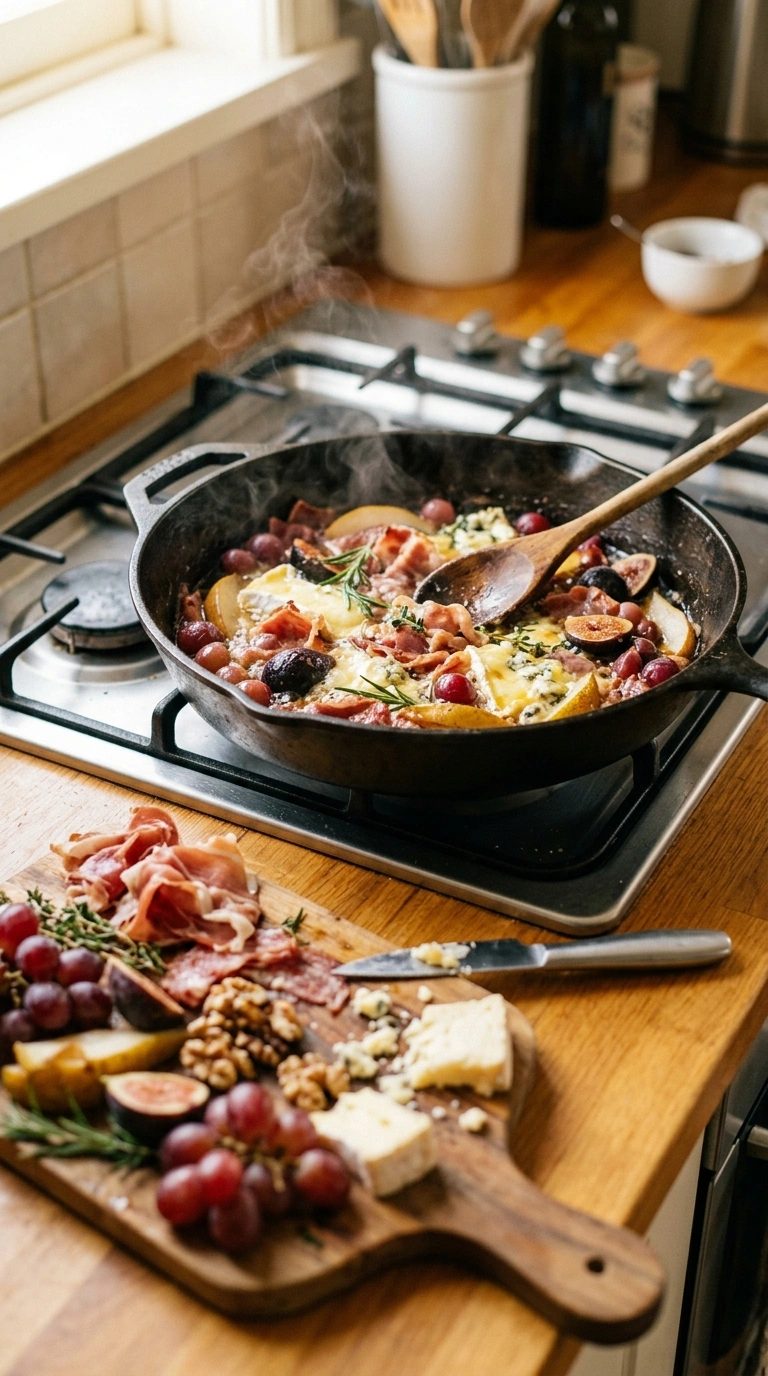
1. Start with your largest serving board or wooden platter, ensuring it’s completely clean and dry before beginning. Position it on your counter where you have comfortable room to arrange—this prevents crowding and rushing decisions. A 16-18 inch surface works perfectly for 12 servings because it allows proper spacing without looking empty or cramped.
2. Arrange cheeses first by cutting them into bite-sized wedges or thin slices, leaving small pieces of rind visible for elegant presentation. Place your three cheese varieties in separate areas across the board—imagine dividing it into thirds—because this helps guests navigate flavor progression naturally. The visual separation also prevents flavors from blending before tasting.
3. Layer the cured meats next, folding prosciutto into loose triangles and rolling the smoked turkey strips and beef salami for height and dimension. Position meats between cheese sections so the entire charcuterie board creates visual variety and balanced protein distribution. Folded meats take up less space than flat arrangements while looking more intentional and restaurant-quality.
4. Fill remaining negative space with your complements in distinct clusters—keep olives together, apricots together, almonds together, and chickpeas together rather than scattering randomly. This organized approach helps guests understand which pairings work best and prevents one ingredient from disappearing before others are discovered. Clustered arrangement also looks three times more professional than scattered placement.
5. Place small bowls or ramekins of fig jam and honey at opposite ends of the board, creating anchor points that draw eyes through the entire composition. Add crackers standing upright or fanned gracefully in one area, leaving room for guests to easily grab them without toppling your careful arrangement. Fresh rosemary sprigs tucked throughout add final aromatic garnish that whispers elegance.
Serving ideas for charcuterie board
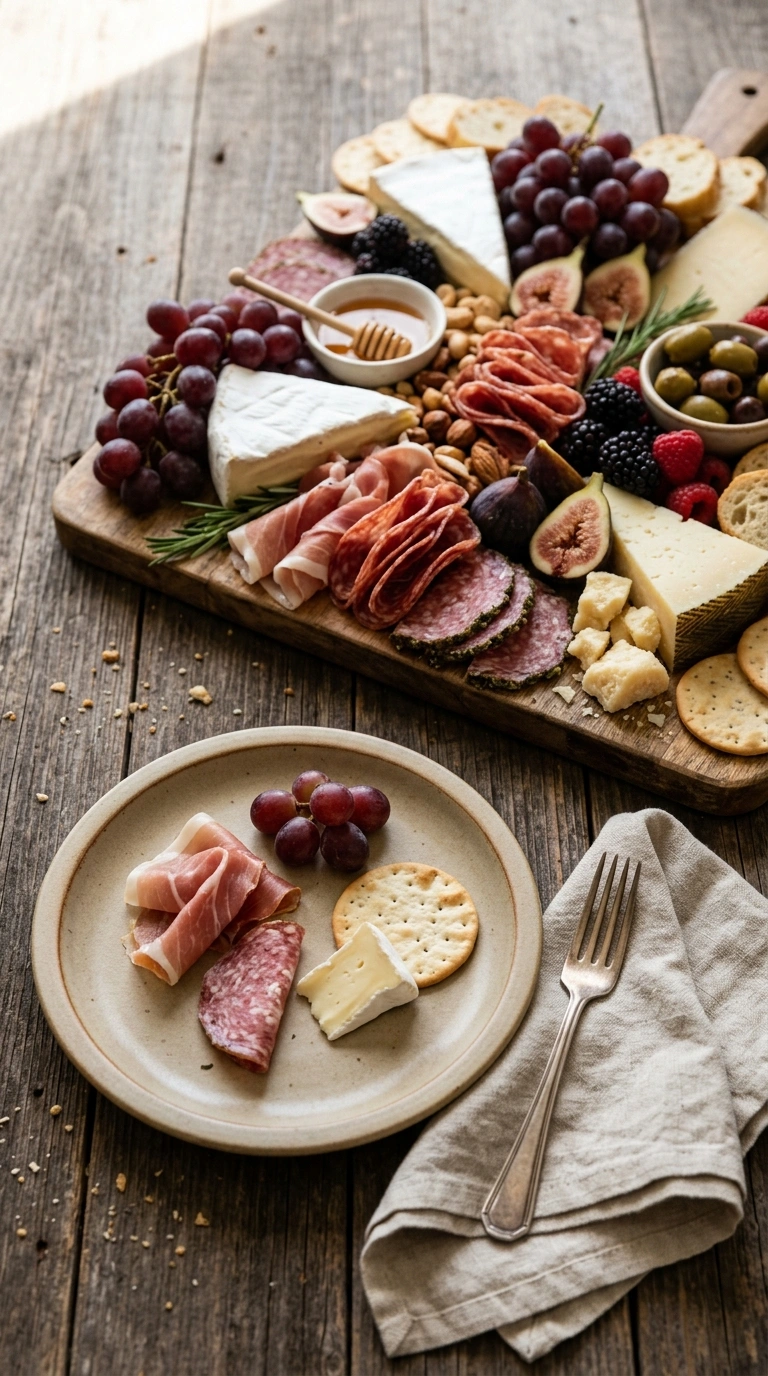
These serving combinations transform your board from simple appetizer into conversation-starting centerpiece that guests remember long after your party ends.
Wine pairings that complement the flavors
Pinot Noir works beautifully because its earthy notes echo the aged cheeses while cutting through smoky meat richness. Crisp Sauvignon Blanc brightens salty cured meats and creates refreshing contrast, especially when grapes are nearby for natural pairing cues. The board’s fig jam and honey elements dance wonderfully with off-dry Riesling because sweetness balances savory intensity.
Beverage options beyond wine
Craft beer styles like blonde ale and wheat beer complement the roasted chickpeas and almonds through shared nutty undertones. Sparkling water with fresh lemon keeps palates clean between flavor-heavy bites, allowing guests to taste each element distinctly. Non-alcoholic ginger ale adds subtle spice that echoes the board’s complexity without competing for attention.
Bread and accompaniment pairings
Warm crusty bread or sourdough slices provide textural contrast to crackers while absorbing fig jam in ways that multiply enjoyment. Sliced baguette toasted lightly offers sturdier vessels for piling cured meats and soft cheeses without breaking under weight. Grissini breadsticks add vertical elements that break up flat service while giving guests elegant, easy-holding options.
Frequently asked board questions
How long can a charcuterie board sit out at room temperature?
Yes, up to 4 hours safely. Beyond that timeline, soft cheeses begin breaking down and cured meats dry out noticeably. Cover loosely with plastic wrap to prevent dust and insects while allowing air circulation that keeps everything fresh.
Can I substitute cured meats with different varieties?
Absolutely! Swap prosciutto with Spanish jamón, replace beef salami with Italian soppressata, or use roasted chicken breast instead of smoked turkey. Each substitution creates different flavor profiles while maintaining the board’s elegant structure and appeal to varied taste preferences.
Can I prepare this board the night before my party?
Partially, yes. Arrange components separately in labeled containers overnight, then assemble on your serving board 1-2 hours before guests arrive. This timing preserves flavors and textures better than assembling 24 hours ahead, which causes crackers to soften and cheeses to dry.
What’s the easiest way to build a stunning charcuterie board?
Start with cheeses in three separate areas, add folded cured meats between them, then fill gaps with clustered accompaniments like olives and nuts. Keep similar items grouped rather than scattered, use height variation through folded meats and standing crackers, and anchor with jam and honey in separate bowls. This systematic approach removes guesswork and guarantees impressive results.
Final thoughts on board assembly
Building an impressive charcuterie board requires no cooking experience, just intentional ingredient selection and thoughtful arrangement strategy. Your guests will taste the care you invested even though preparation took just 25 minutes—that’s the magic of elegant simplicity. Whether hosting holiday charcuterie gatherings or casual weeknight entertaining, this framework scales beautifully for any crowd size.
James recently told me he’s stopped ordering expensive catered appetizers because this homemade version costs less and tastes infinitely better. When guests rave about flavors and presentation, they’re really responding to the thoughtfulness behind every placement decision you made. The combination of smoked meats, aged cheeses, and intentional accompaniments creates an experience far beyond basic snacking.
Transform your next gathering by building this board with confidence knowing every element serves a purpose. Start with this exact ingredient list, then adapt based on your guests’ preferences as you gain experience. Your reputation as an effortless entertainer starts right here—grab your board and begin arranging today!