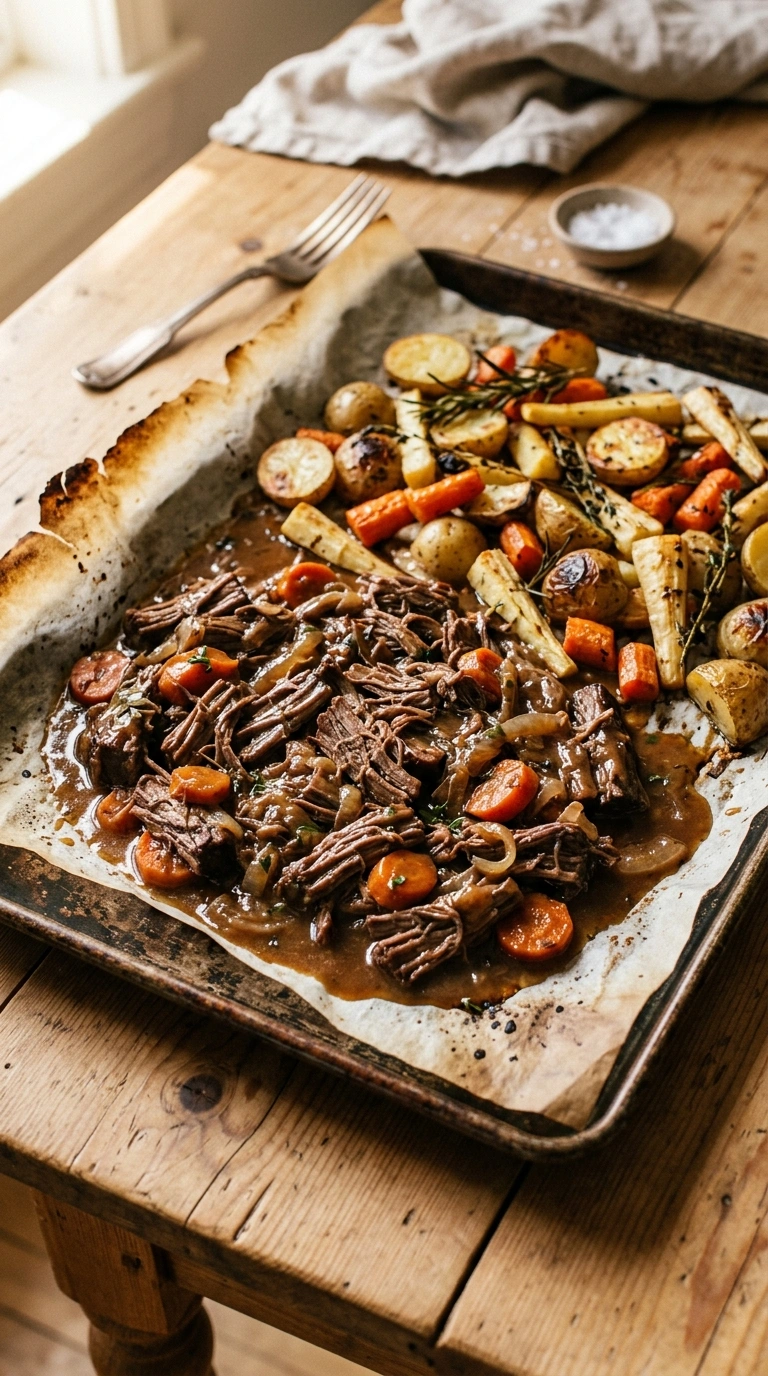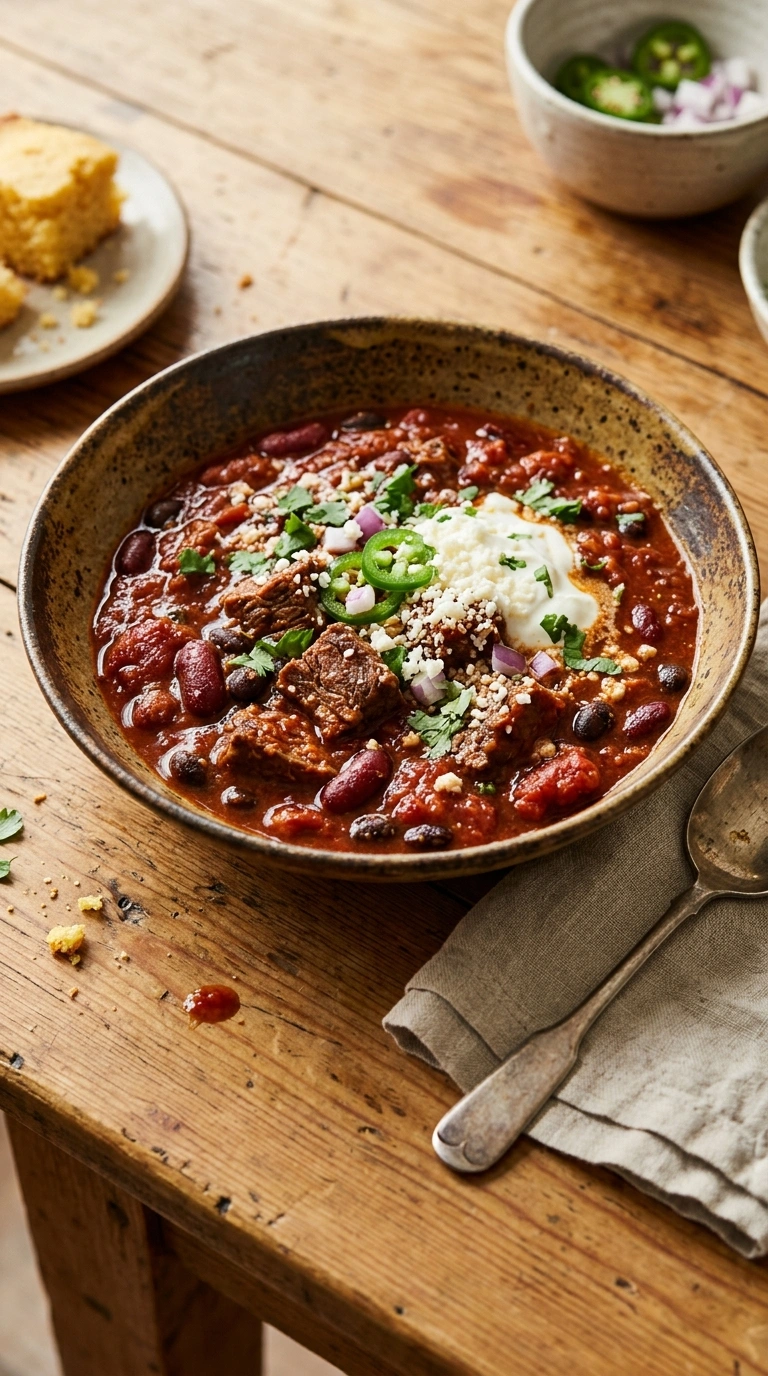
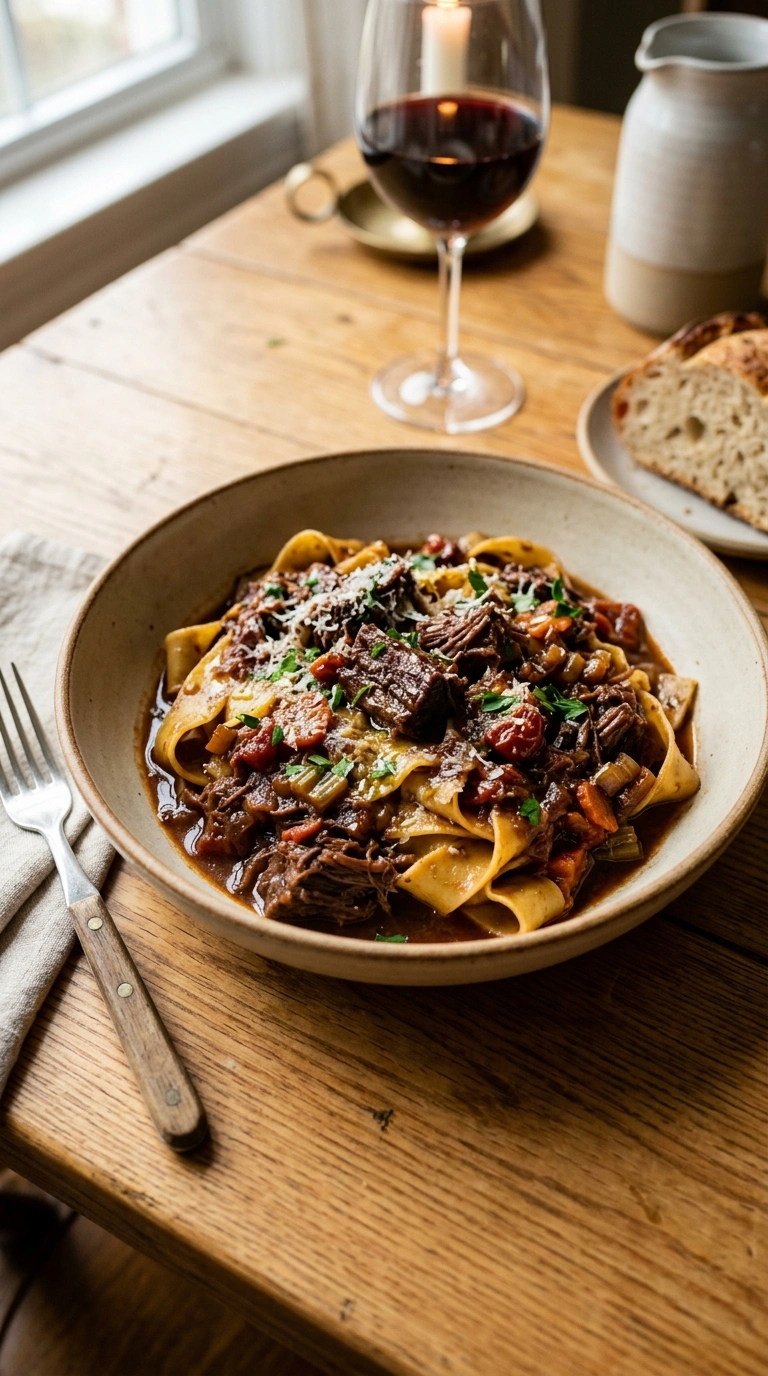
Deep rich slow cooker beef ragu recipe transforms simple ingredients into restaurant-quality comfort food that feeds your whole family. This Italian-inspired dish simmers for eight hours, filling your kitchen with aromas that announce dinner before anyone opens the door. Unlike store-bought versions, homemade slow cooker beef ragu develops layers of flavor that become deeper and more complex as time passes. My friend James requested this recipe after tasting it at a cozy fall gathering, and now he makes it every October.
The magic happens when you golden 30 min beef fajita skillet technique meets slow-cooking patience—low heat breaks down tough beef chuck into silken strands that melt on your tongue. This crockpot approach means you spend twenty minutes prepping and the slow cooker does the heavy lifting. Unlike rushed stovetop versions that taste thin and one-dimensional, this ragu achieves that luxurious, restaurant-quality depth that makes people ask for seconds.
Why this slow cooker beef ragu works
A slow cooker beef ragu succeeds because low, moist heat transforms collagen in chuck roast into gelatin that creates silky sauce. The extended cooking time allows flavors to marry and intensify without burning or evaporating. Here’s what makes this recipe special:
- Beef chuck roast has enough marbling to stay tender during eight hours without drying out
- Tomato paste caramelizes during the sear step, building umami foundation for rich depth
- Balsamic vinegar adds subtle sweetness and acidity that balances the beef’s heaviness
- Bay leaves infuse the entire pot with herbal complexity impossible to rush
I believe slow cooker ragu tastes superior to stovetop versions because the sealed environment concentrates flavors while moisture stays locked inside, creating silkier sauce and more tender meat than faster methods allow.
Prep 20 minutes | Cook 480 minutes | Cal 385 | Serves 6 servings | Cuisine Italian |
Ingredients for deep rich slow cooker beef ragu recipe
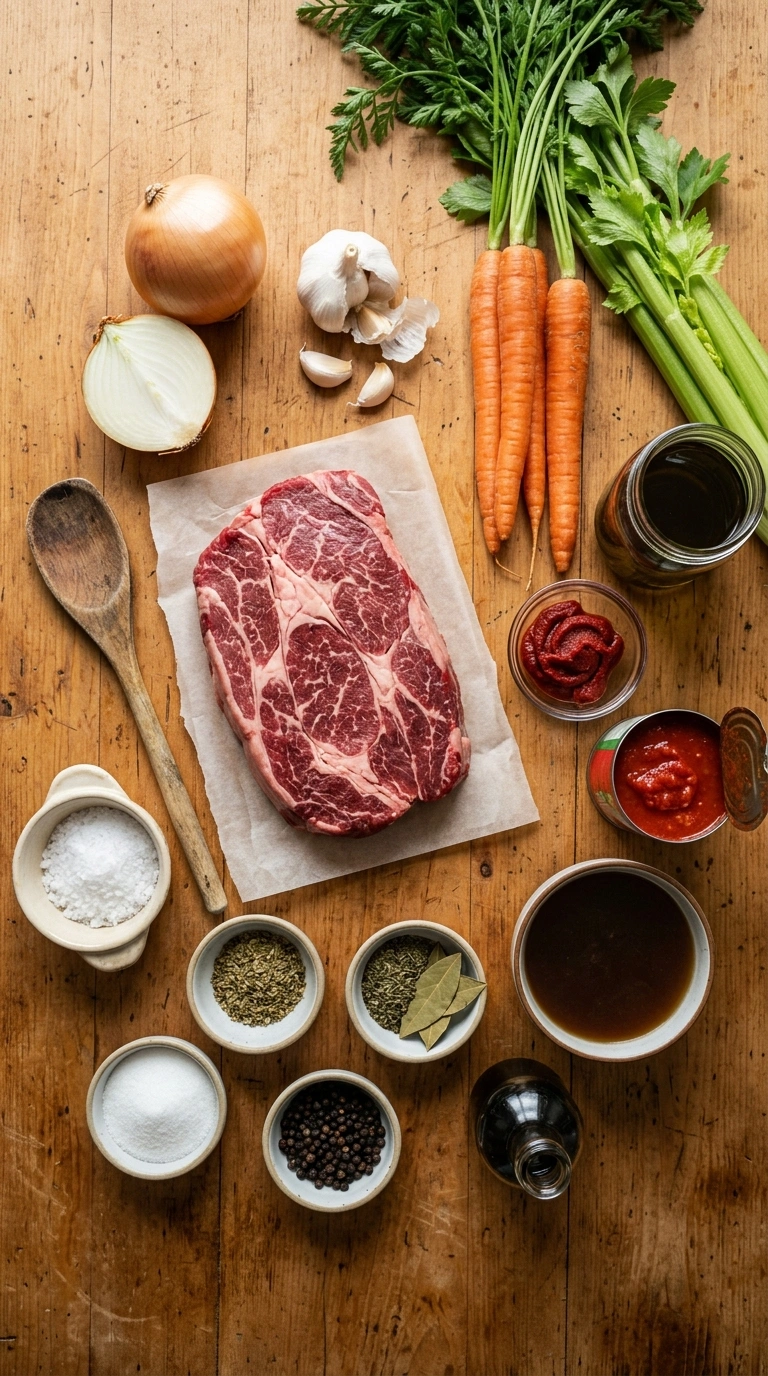
- 2 lb beef chuck roast, cut into 1-inch cubes
- 3 tbsp olive oil
- 1 large onion, diced
- 4 cloves garlic, minced
- 2 carrots, chopped
- 2 celery stalks, chopped
- 1 can (28 oz) crushed tomatoes
- 2 tbsp tomato paste
- 1 cup beef broth
- 2 tbsp balsamic vinegar
- 2 tsp dried oregano
- 1 tsp dried basil
- 1 tsp salt
- ½ tsp black pepper
- 2 bay leaves
- 1 tbsp sugar
Chuck roast is non-negotiable here because its fat content keeps meat tender throughout eight hours of cooking. If you can’t find chuck, beef stew meat works as a substitute, though it won’t develop quite the same silky texture. For vegetable swaps, mushrooms replace carrots beautifully, and shallots work if you’ve run out of onions.
Don’t skip the searing step—this develops caramelization that creates the deep, rich foundation your sauce depends on. Many shortcuts recipes eliminate this, but the Maillard reaction is where brown flavor comes from, and it’s impossible to recreate with longer cooking alone.
Step-by-step slow cooker beef ragu instructions
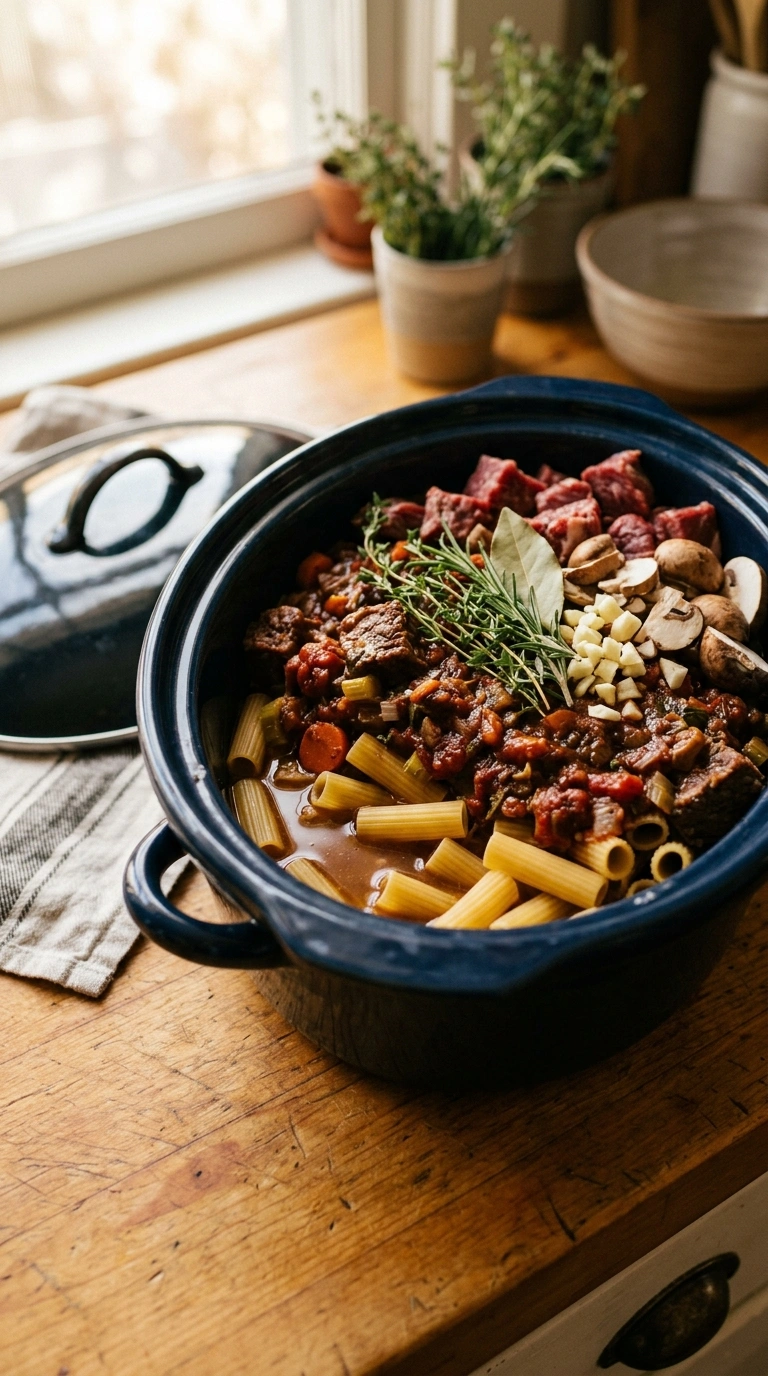
1. Pat your beef chuck roast cubes completely dry with paper towels—this is crucial because moisture prevents browning. Heat olive oil in a large Dutch oven or heavy skillet over medium-high heat until it shimmers, then brown beef in two batches for 3-4 minutes per side, resisting the urge to move pieces around too early, which breaks the crust you’re building.
2. Add diced onion, minced garlic, carrots, and celery to the same pot and sauté for 5 minutes until vegetables soften and release their sweetness, stirring occasionally. This step matters because sautéing mellows the raw onion bite and creates a sweeter flavor base that balances the acidity later.
3. Stir in tomato paste and cook for 1-2 minutes, allowing it to darken slightly—you’ll smell when it’s ready, as a deeper tomato aroma fills the pot. This concentrated paste contains umami compounds that multiply in effect when heated, so don’t skip this small but mighty step.
4. Pour in crushed tomatoes, beef broth, balsamic vinegar, oregano, basil, salt, black pepper, bay leaves, and sugar, then transfer everything to your slow cooker. Give the mixture a good stir to combine ingredients evenly, which prevents hot spots and ensures flavors meld.
5. Cover and cook on LOW for 8 hours—this is where your deep rich slow cooker beef ragu recipe becomes magical. At the 4-hour mark, give it a quick stir, checking that beef is submerged; if sauce looks too thin, you can remove the lid for the final hour to reduce it slightly.
6. After 8 hours, beef should shred easily with a fork and sauce should coat a spoon thickly. Taste and adjust seasoning, adding another ½ tsp salt if needed—the slow cooker intensifies existing flavors but sometimes dulls salt perception.
7. Remove bay leaves before serving, and let the ragu rest for 5 minutes, which allows flavors to settle and makes sauce appear even richer and more luxurious on the plate.
Serving ideas for deep rich slow cooker beef ragu recipe
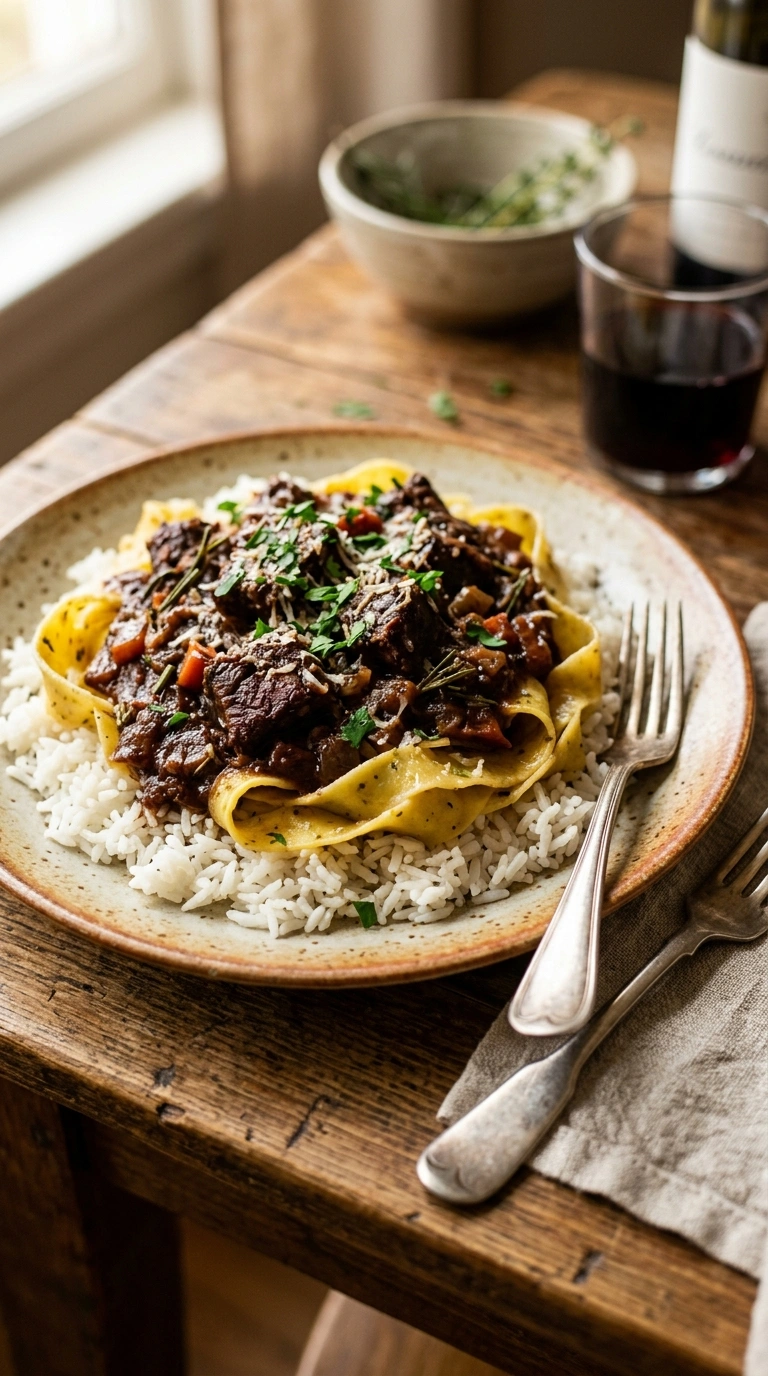
This slow cooker beef ragu pairs beautifully with carbohydrates that soak up sauce and with fresh elements that cut through richness. Here are my three favorite serving combinations that balance this hearty crockpot sauce perfectly:
Fresh pasta ribbons
Serve over wide pappardelle or fettuccine that cradles sauce in every fold, because flat ribbons hold ragu better than thin spaghetti would. Finish with fresh basil and Parmigiano-Reggiano for brightness that prevents the dish from feeling too heavy.
Creamy polenta
Soft polenta provides a luxurious, buttery base for the beef, and the mild corn flavor lets your rich tomato sauce shine as the star. Top with extra cheese and a crack of pepper for textural contrast.
Crusty bread with ricotta
Toast thick slices of artisan bread and spread with fresh ricotta, then top with generous spoonfuls of your beef ragu. This combination works because ricotta’s mild creaminess bridges the gap between bread and intense sauce, creating layers of flavor and texture.
Frequently asked slow cooker beef ragu questions
Can I freeze slow cooker beef ragu?
Yes, absolutely—freeze in airtight containers for up to 3 months without quality loss. Thaw overnight in the refrigerator, then reheat gently on the stovetop over low heat, stirring occasionally and adding beef broth if sauce became too concentrated.
What if I don’t have beef chuck roast?
Beef stew meat works as a substitute, though chuck has better marbling for tender results. Brisket flat is another option, but trim excess fat first since it renders differently than chuck during slow cooking.
How do I reheat leftover ragu?
Warm gently on the stovetop over low heat for 10-15 minutes, stirring frequently to prevent scorching. Add ¼ cup beef broth to restore sauce consistency if it thickened significantly during storage.
Why is deep rich slow cooker beef ragu recipe better than canned versions?
Homemade ragu tastes exponentially better because you control ingredient quality and cooking time, allowing flavors to develop naturally rather than relying on preservatives and shortcuts. The slow cooker breaks down beef collagen into gelatin, creating silky texture no canned version achieves, plus you decide exactly how much salt and acid goes into your dish.
Final thoughts on slow cooker beef ragu
This deep rich slow cooker beef ragu recipe proves that great food doesn’t require hours of active work—it requires patience and quality ingredients. My friend Nora made this last month and said it rivaled dishes she’d eaten in Italy, which honestly made my entire week hearing that.
The beauty of a slow cooker beef ragu is that it improves your entire week when you make it once. One batch feeds your family dinner Monday night, provides Tuesday leftovers, and freezes portions for future emergencies when you need restaurant-quality comfort food without the restaurant price tag.
This cozy fall recipe becomes a tradition once you make it, so I encourage you to try it this week. For more hearty Italian inspiration, check out this easy chicken weeknight dinner that pairs beautifully as a lighter complement to heavier ragu nights.
Make this slow cooker ragu this weekend and tag me in your photos—I’d love seeing how your family enjoys it.