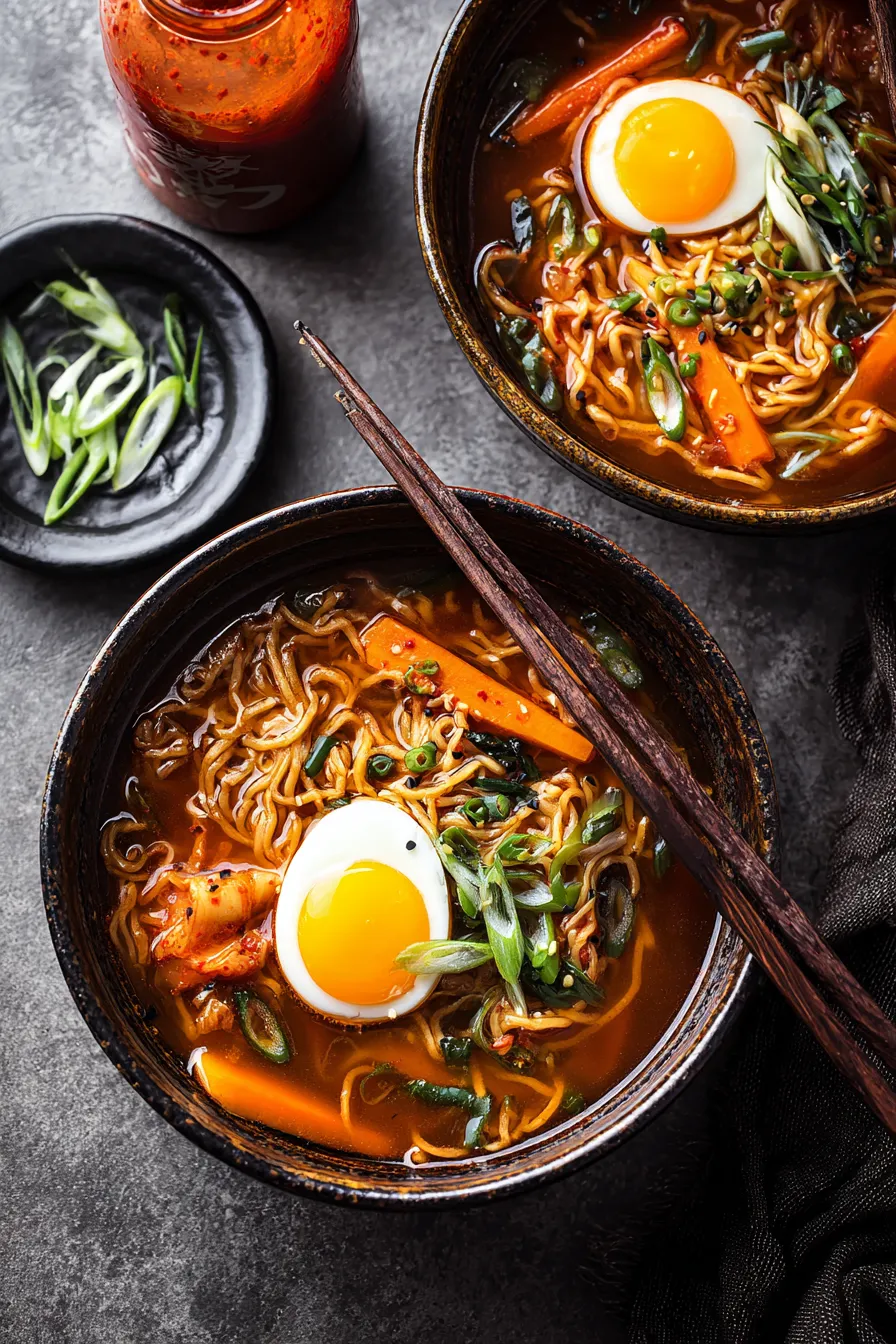
Skip expensive takeout and create incredible homemade ramen with rich, flavorful broth and perfect toppings – no special ingredients required!
There’s something absolutely magical about slurping a steaming bowl of perfectly crafted ramen on a cold evening. During my years in professional kitchens, I learned that the secret to exceptional ramen isn’t complicated techniques or hard-to-find ingredients – it’s about building flavor layers and understanding how each component works together.
After testing this recipe with my family and neighbors (including my friend’s college-age son who claimed it was “better than his favorite ramen spot”), I’ve perfected a version that delivers restaurant-quality results in just 30 minutes using ingredients from any regular grocery store.
This easy homemade ramen has become our go-to comfort food when we want something that feels indulgent but doesn’t require hours of preparation. It’s completely customizable and forgiving enough for beginners while impressive enough for dinner party guests.
Why This Homemade Ramen Recipe Works Every Time
The Foundation of Perfect Broth
My culinary training taught me that great ramen starts with building an aromatic base. The combination of fresh garlic, ginger, and sesame oil creates a foundation that rivals any authentic ramen shop I’ve visited.
The key is cooking these aromatics just until fragrant – never brown the garlic or you’ll introduce bitter notes.
Perfect for Busy American Families
As someone who’s managed full-time work and family dinners, I understand the appeal of ordering takeout when you’re craving something special. But this recipe proves you can create restaurant-worthy ramen faster than delivery would arrive – and for a fraction of the cost.
I often make a double batch of the broth base and freeze portions for even quicker weeknight meals.
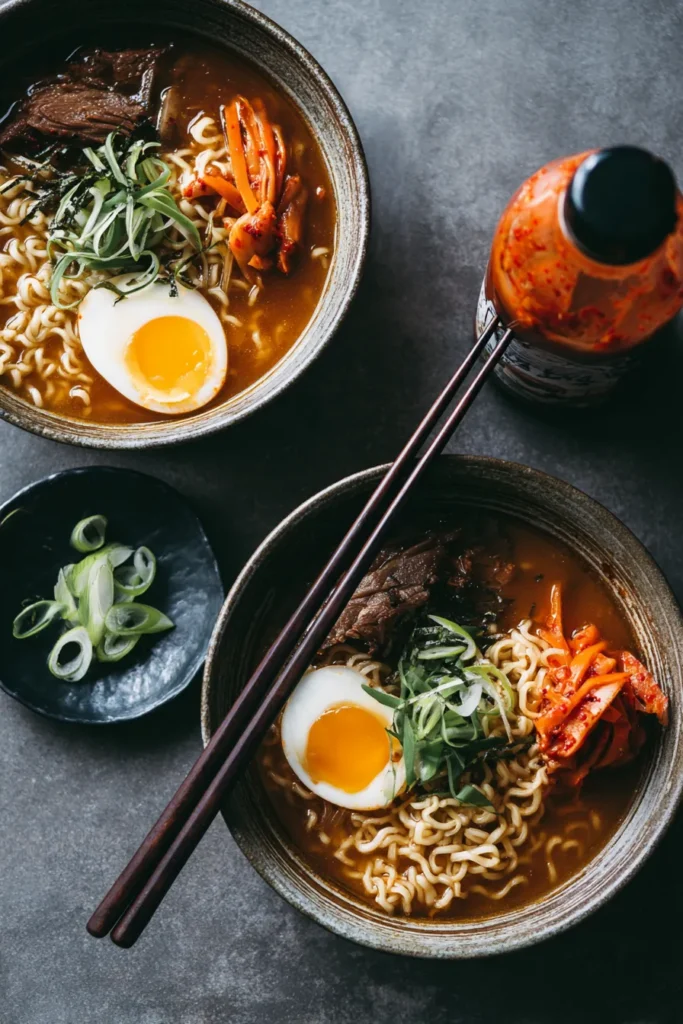
Essential Ingredients for Incredible Homemade Ramen
For the Aromatic Base:
- 1 tablespoon sesame oil (or neutral oil)
- 2 cloves garlic, minced fresh
- 2 teaspoons fresh ginger, grated
- 1/2 cup shredded carrots
- 1/2 cup shiitake mushrooms, sliced (optional but recommended)
For the Flavorful Broth:
- 4 cups chicken or vegetable broth (low-sodium preferred)
- 1 tablespoon rice vinegar
- 3 tablespoons low-sodium soy sauce (adjust to taste)
- 1 tablespoon sriracha sauce (more or less to preference)
For the Noodles and Toppings:
- 2 portions (3 oz each) ramen noodles (discard flavor packets)
- 2 soft-boiled eggs
- Sliced scallions
- Sesame seeds
- Additional shredded carrots
Step-by-Step Instructions for Perfect Homemade Ramen
Building the Aromatic Foundation
Professional tip: Never rush the aromatics – this is where the magic begins.
Step 1: Create the Base Heat sesame oil in a medium-large saucepan over moderate heat. Add minced garlic and grated ginger, cooking for 2-3 minutes until fragrant. Watch carefully – burnt garlic will make the entire broth bitter.
Step 2: Add Vegetables Stir in shredded carrots and sliced mushrooms (if using). Cook for 1-2 minutes, stirring frequently, until vegetables just begin to soften.
Developing Rich, Complex Flavors
Step 3: Build the Broth Pour in chicken or vegetable broth, then add rice vinegar, soy sauce, and sriracha. Stir well and bring to a gentle simmer. Let it cook for 5 minutes to allow flavors to meld beautifully.
Taste and adjust seasoning – this is crucial for perfect results!
Step 4: Prepare Perfect Noodles While broth simmers, cook ramen noodles in a separate pot according to package instructions. This prevents the noodles from absorbing too much broth and maintains perfect texture.
Assembly for Restaurant Presentation
Step 5: Proper Noodle Preparation Drain cooked noodles and rinse briefly under cool water to stop cooking process. Divide between serving bowls.
Step 6: Create Perfect Soft-Boiled Eggs Bring water to boil in small saucepan. Add eggs and cook exactly 5-6 minutes for jammy yolks. Transfer immediately to ice bath, then peel and slice in half.
Step 7: Final Assembly Ladle hot broth over noodles in each bowl. Top with halved soft-boiled eggs, sliced scallions, sesame seeds, and any additional vegetables.
Professional Tips for Ramen Success
Broth Temperature Matters
In my restaurant experience, serving temperature makes or breaks ramen. The broth should be piping hot when ladled over noodles – this helps warm the egg and keeps everything at optimal eating temperature.
Noodle Texture Control
Never cook noodles directly in the broth! They’ll absorb liquid and become mushy. Cooking separately ensures perfect al dente texture every time.
Egg Timing Precision
After testing dozens of eggs, I’ve found 5-6 minutes gives the perfect jammy yolk consistency. Prepare an ice bath beforehand for immediate cooling.
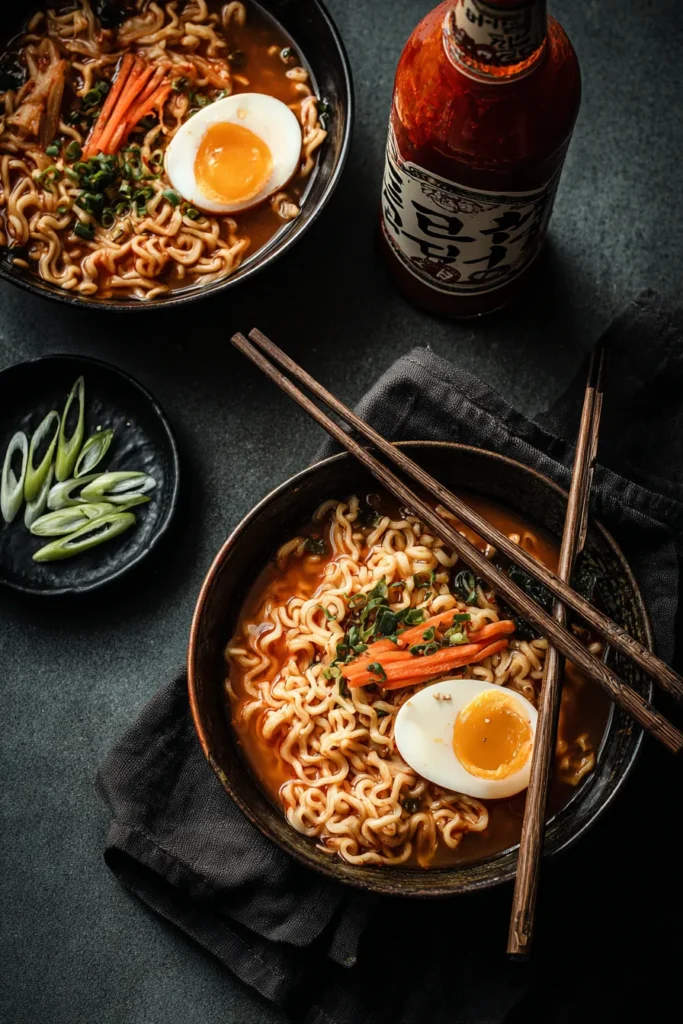
Incredible Customization Options
Protein Variations
- Leftover rotisserie chicken – shredded and added in final minutes
- Korean-style beef – thinly sliced and quick-cooked
- Tofu or tempeh – for vegetarian versions
- Shrimp – adds elegant seafood flavor
Vegetable Additions That Work
My family loves adding different vegetables based on what’s in season:
- Baby spinach – wilts perfectly in hot broth
- Bok choy – adds wonderful crunch and color
- Bean sprouts – classic texture contrast
- Corn kernels – surprisingly delicious addition
Heat Level Adjustments
- Mild: Omit sriracha, add extra soy sauce
- Medium: Use recipe as written
- Spicy: Double sriracha or add chili oil
Make-Ahead and Meal Prep Strategies
Broth Preparation
The broth base can be made 2-3 days ahead and refrigerated. The flavors actually improve overnight, making this perfect for meal planning.
Storage tip: Keep broth and noodles separate until serving to maintain optimal textures.
Freezer-Friendly Options
I often double the broth recipe and freeze portions in ice cube trays for quick single servings. Pop a few cubes into a saucepan with fresh broth for instant flavor boost.
Perfect Serving Suggestions
Traditional Accompaniments
- Asian cucumber salad for cooling contrast
- Steamed edamame as a light starter
- Crispy wontons for extra crunch
Modern American Twists
- Korean corn dogs as a fun side
- Fresh herb garnishes like cilantro or Thai basil
- Pickled vegetables for acidic brightness
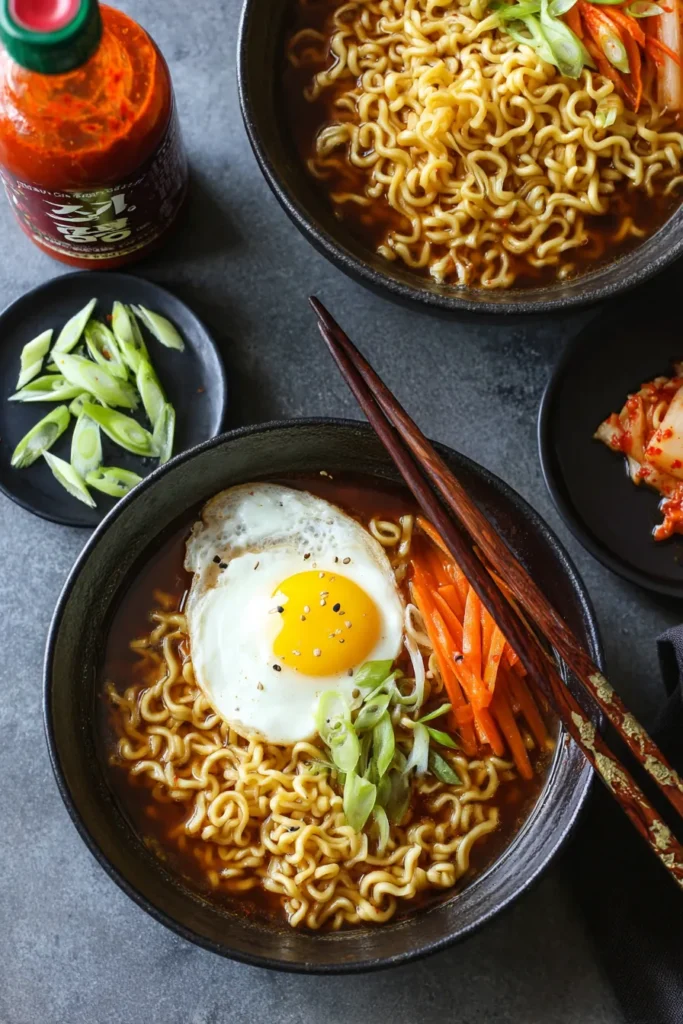
Troubleshooting Common Ramen Issues
Broth Too Salty?
From my years of answering reader questions, this happens frequently.
Add a splash of rice vinegar or a pinch of sugar to balance saltiness. You can also dilute with additional unsalted broth.
Eggs Overcooked?
Timing is everything with soft-boiled eggs. Set a timer and prepare ice bath beforehand. Overcooked eggs are still delicious, just not as creamy.
Bland Broth?
Usually means aromatics weren’t cooked long enough or seasoning needs adjustment. Always taste and adjust before serving.
Nutritional Benefits of Homemade Ramen
This healthy homemade ramen provides:
- High-quality protein from eggs and optional additions
- Immune-boosting ingredients like ginger and garlic
- Vegetable nutrients from carrots and mushrooms
- Lower sodium than restaurant versions when using low-sodium ingredients
Perfect for families seeking comfort food that doesn’t compromise nutrition.
Why My Family Requests This Weekly
My teenage nephew, who’s usually glued to his phone during family dinners, actually puts his device away when I make this ramen. He says it’s “better than the place near campus” – which, coming from a college student, is the highest praise possible.
The Thai-inspired dishes in my repertoire are wonderful, but sometimes you need the soul-warming comfort that only a perfect bowl of ramen can provide.
Advanced Variations to Try
Miso Ramen Style
Whisk 2 tablespoons of white or red miso paste into the broth for deeper, more complex flavor.
Coconut Curry Ramen
Replace half the broth with coconut milk and add curry powder for fusion flair.
Breakfast Ramen
Top with cottage cheese pancakes instead of traditional toppings for a morning twist.
Equipment That Makes a Difference
Essential Tools
- Heavy-bottomed saucepan prevents scorching aromatics
- Fine-mesh strainer for silky smooth broth
- Sharp knife for precise vegetable cuts
- Timer for perfect egg consistency
While these tools help, the recipe works beautifully with basic kitchen equipment too.
Storage and Reheating Tips
Proper Storage Method
Store broth and noodles separately in airtight containers for up to 3-4 days. This prevents mushy noodle texture.
Reheating: Warm broth gently in saucepan, add noodles just to heat through, then transfer to bowls.
Meal Prep Excellence
Prepare components separately: broth in large container, pre-cooked noodles in portions, chopped toppings ready to go. Assembly takes just 2 minutes for quick lunches.
Cost-Effective Comfort Food
This homemade version costs approximately $3-4 per serving compared to $12-15 at restaurants. The same high-quality ingredients, better customization, and the satisfaction of creating something amazing yourself.
For families on tight budgets, this recipe stretches beautifully with additional vegetables or budget-friendly proteins.
Frequently Asked Questions
Can I use instant ramen noodles? Absolutely! Discard the flavor packets and use just the noodles – they work perfectly in this recipe.
How spicy is this recipe? It’s mild to medium heat. Adjust sriracha to your family’s preference or omit entirely for sensitive palates.
Can I make this vegetarian? Yes! Use vegetable broth and add extra mushrooms or tofu for protein. The flavor is still incredible.
How long does the broth keep? Refrigerate for up to 4 days or freeze for up to 3 months. Flavors actually improve overnight.
What if I don’t have sesame oil? Regular vegetable oil works fine, though you’ll miss some authentic flavor. Add a sprinkle of sesame seeds for similar taste.
This easy homemade ramen proves that restaurant-quality comfort food is absolutely achievable in your home kitchen. The combination of proper technique, quality ingredients, and personal touches creates bowls that rival any authentic ramen shop.
Whether you’re feeding hungry teenagers, impressing dinner guests, or treating yourself to something special after a long day, this ramen delivers the warmth and satisfaction that makes every spoonful feel like a hug in a bowl.