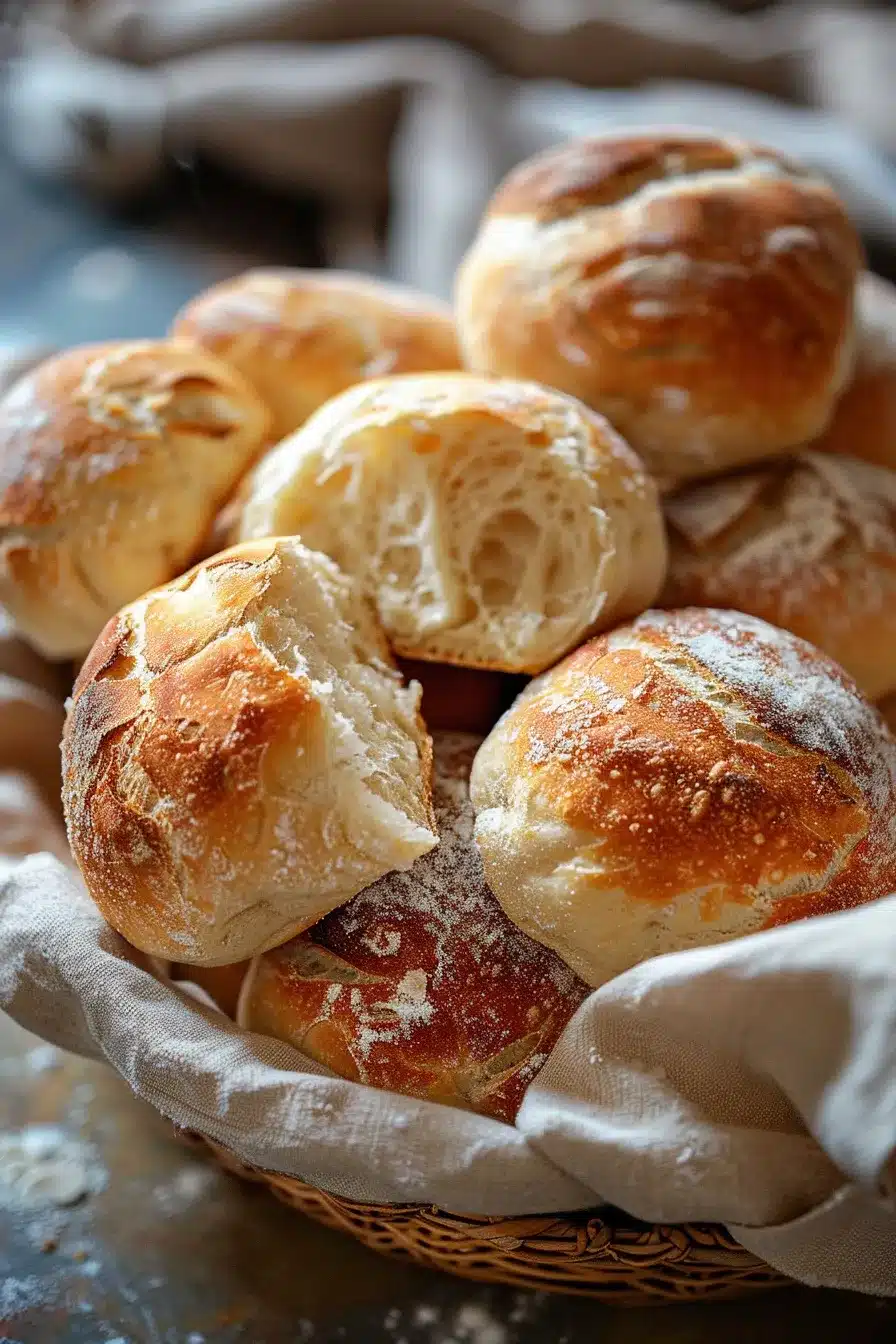
French Bread Dinner Rolls deliver that perfect combination of crispy, golden crust and soft, chewy interior that makes restaurant bread so irresistible! This fail-proof recipe creates bakery-quality rolls with incredible flavor development through slow fermentation. Ready to impress in just 3 hours active time, plus overnight rising! 🥖
The secret to these incredible rolls is the unique folding technique and extended cold rise that develops complex flavors while creating that signature crusty exterior. Each roll has the perfect chew with beautiful air pockets inside – exactly like the bread baskets at your favorite steakhouse. Perfect for special dinners, holidays, or anytime you want to elevate your meal!
What Makes These French Bread Dinner Rolls So Special?
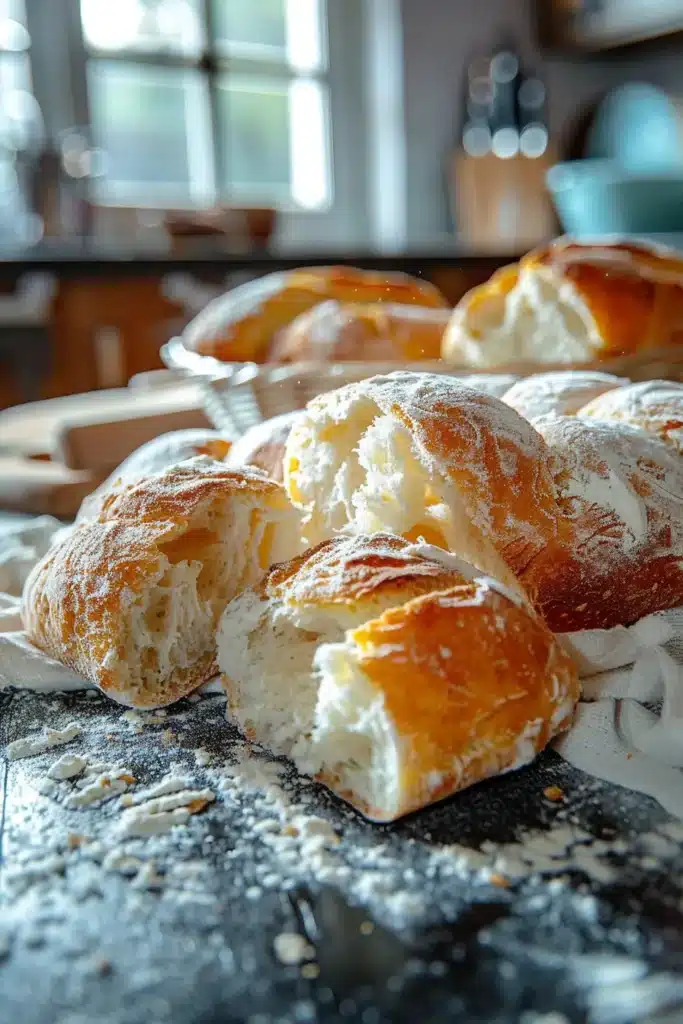
These aren’t your typical soft dinner rolls – they’re inspired by authentic French bread techniques that create a completely different texture and flavor profile. The high-temperature baking method combined with steam creates that coveted crispy crust that crackles when you squeeze it, while the interior remains incredibly tender and chewy.
The extended fermentation process is what sets these rolls apart from quick bread recipes. By allowing the dough to rise slowly in the refrigerator, enzymes break down proteins and starches, creating deeper flavors and improving the texture. The folding technique during the initial rise develops gluten strength without aggressive kneading, resulting in those perfect air pockets.
Essential Ingredients for Perfect French Bread Rolls
Main Dough Ingredients:
• 1 cup warm water (105-110°F) – activates yeast and provides proper hydration
• 1 teaspoon active dry yeast – creates slow, steady rise for flavor development
• ½ teaspoon honey – feeds yeast and adds subtle sweetness
• 2¼ cups all-purpose flour – provides structure while maintaining tender crumb
• 1 teaspoon salt – enhances flavor and strengthens gluten structure
For Assembly and Baking:
• Butter for greasing – prevents sticking during long rise
• Extra flour for dusting – helps with shaping and prevents sticking
• Water spray for misting – creates steam for crispy crust development
Optional Enhancements:
• Coarse sea salt – sprinkle on top before baking for gourmet touch
• Fresh herbs like rosemary – incorporate into dough for aromatic variation
• Garlic powder – add 1 teaspoon for subtle savory notes
How to Make French Bread Dinner Rolls (Step by Step)
Step 1: Activate the Yeast
In a large mixing bowl, combine warm water, yeast, and honey. Stir gently and let sit for 8-10 minutes until the mixture becomes foamy and bubbly. This proves your yeast is active and ready.
Step 2: Create the Base Dough
Add flour and salt to the foamy yeast mixture. Mix with a wooden spoon until a shaggy dough forms. The dough will look rough and somewhat sticky – this is exactly what you want.
Step 3: Knead to Smooth Perfection
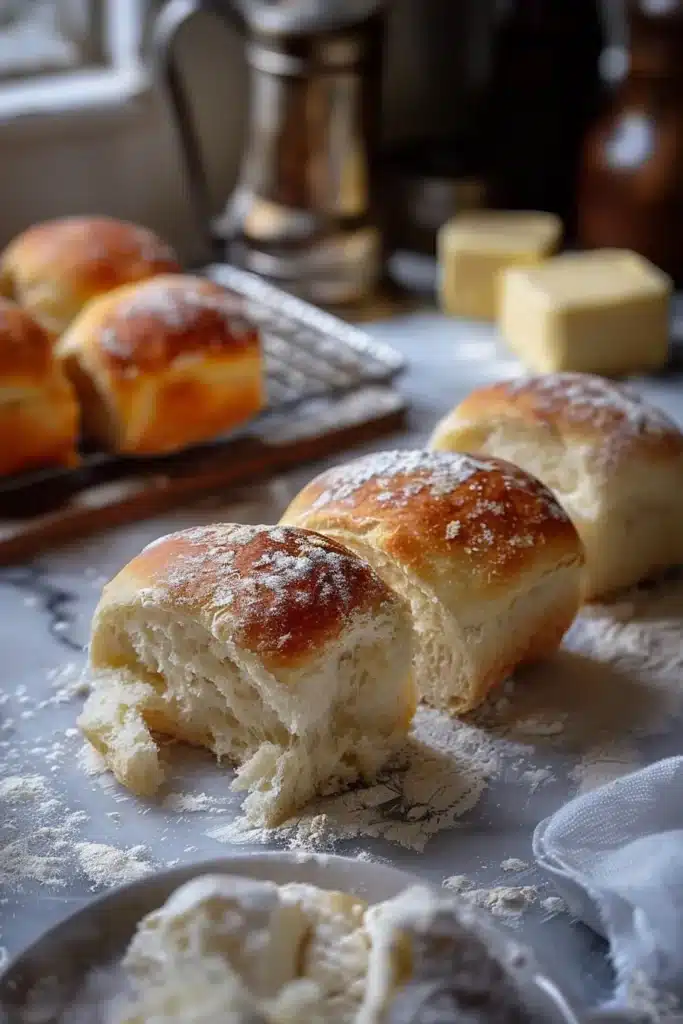
Knead the dough by hand or with a stand mixer fitted with dough hook for 8-10 minutes until smooth and elastic. The dough should be slightly tacky but not sticky, and should spring back when poked.
Step 4: First Rise with Folding Technique
Place dough in a greased bowl, cover with damp towel, and let rise 45 minutes. Then perform the signature folding technique: grab each side of the dough and fold it over onto itself, creating a square shape. This realigns the gluten and develops texture.
Step 5: Second Fold and Rise
Re-cover and let rise another 45 minutes. Repeat the folding process, then allow a final 30-45 minute rise until doubled in size. This triple-rise method creates incredible flavor and texture.
Step 6: Shape the Rolls
Turn dough onto lightly floured surface and divide into 10 equal pieces. Shape each piece by tucking edges underneath until you have smooth, round rolls. The surface tension is crucial for proper rise.
Step 7: Cold Fermentation (The Secret Step)
Place shaped rolls in greased 8-inch or 9-inch cake pans, cover tightly, and refrigerate for minimum 4 hours or up to 2 days. This slow fermentation develops incredible flavor complexity.
Step 8: Final Rise and Prep
Remove rolls from refrigerator while oven preheats to 500°F. Let them come to room temperature and nearly double in size – about 30-45 minutes depending on kitchen temperature.
Step 9: Steam and Bake
Just before baking, mist rolls lightly with water. Bake at 500°F for 10 minutes, then reduce to 400°F and bake 10-15 minutes more until golden brown and hollow-sounding when tapped.
Pro Tips for Bakery-Quality Results
Temperature Precision: Use a thermometer to ensure your water is exactly 105-110°F. Too hot kills yeast, too cool won’t activate it properly.
**✅ Folding Technique: The folding steps aren’t optional – they develop gluten structure and create the perfect texture without overworking the dough.
**⚠️ Common Mistake: Don’t rush the cold fermentation. The minimum 4-hour refrigerator time is essential for proper flavor and texture development.
Chef’s Secret: The steam created by misting with water is crucial for developing that crispy, crackling crust. Don’t skip this step!
Timing Flexibility: These rolls are perfect for entertaining because you can make them 1-2 days ahead and just bake when needed.
Storage Success: Baked rolls stay fresh at room temperature for 2 days. Reheat in a 350°F oven for 5 minutes to restore crispiness.
Serving and Presentation Ideas
Elegant Dinner Service: Present in a basket lined with a clean kitchen towel to keep rolls warm throughout the meal.
Holiday Centerpiece: Arrange on a wooden cutting board with small bowls of flavored butters – herb, garlic, or honey cinnamon butter.
Soup Accompaniment: These rolls are perfect for soaking up hearty soups, French onion soup, or rich stews. The crusty exterior holds up beautifully.
Sandwich Base: Split these rolls for gourmet sandwiches – their sturdy structure and complex flavor elevate any filling 🥪
Creative Variations and Flavor Twists
Garlic Herb Rolls: Add 1 teaspoon garlic powder and 1 tablespoon dried herbs (rosemary, thyme, oregano) to the flour mixture.
Seeded Crust: Before final baking, brush tops with egg wash and sprinkle with sesame seeds, poppy seeds, or everything bagel seasoning.
Whole Grain Version: Replace up to ½ cup of all-purpose flour with whole wheat flour for nutty flavor and added nutrition.
Cheese Stuffed: During shaping, place a small cube of cheese in the center of each roll before forming the final shape.
Make-Ahead and Storage Guide
Perfect for Meal Planning: Shape rolls and refrigerate up to 2 days before baking. This actually improves flavor!
Freezer-Friendly Option: Shaped unbaked rolls can be frozen for up to 1 month. Thaw overnight in refrigerator before final rise and baking.
Day-of Convenience: Remove from refrigerator 30-45 minutes before guests arrive, then bake during cocktail hour for perfectly timed warm bread.
Leftover Revival: Day-old rolls are perfect for making croutons, bread pudding, or French toast with a twist.
Frequently Asked Questions About French Bread Dinner Rolls
Why do my rolls come out dense instead of light and airy?
Dense rolls usually result from insufficient rising time or over-flouring during shaping. Make sure each rise doubles the dough size and handle gently during shaping to preserve air bubbles.
Can I make these without the overnight refrigeration?
While you can skip the cold rise, you’ll miss the complex flavor development that makes these rolls special. For same-day baking, allow shaped rolls to rise 1-2 hours at room temperature.
How do I know when the rolls are perfectly baked?
Properly baked rolls should be golden brown and sound hollow when tapped on the bottom. Internal temperature should reach 190-200°F for fully baked bread.
Can I use instant yeast instead of active dry yeast?
Yes! Use ¾ teaspoon instant yeast and mix it directly with the flour. Skip the activation step and proceed with combining wet and dry ingredients.
Why do I need to fold the dough during rising?
The folding technique redistributes yeast and nutrients while developing gluten structure. This creates better texture and more even fermentation throughout the dough.
What’s the best way to reheat these rolls?
Wrap in foil and warm in a 350°F oven for 5-7 minutes, or wrap in damp paper towel and microwave for 15-20 seconds to restore softness.
Can I double this recipe for a crowd?
Absolutely! This recipe doubles perfectly. You may need to divide the dough between multiple bowls during rising and use additional pans for shaping.
How long do these rolls stay fresh?
At room temperature, they stay fresh for 2-3 days in an airtight container. For longer storage, freeze for up to 3 months and reheat from frozen.