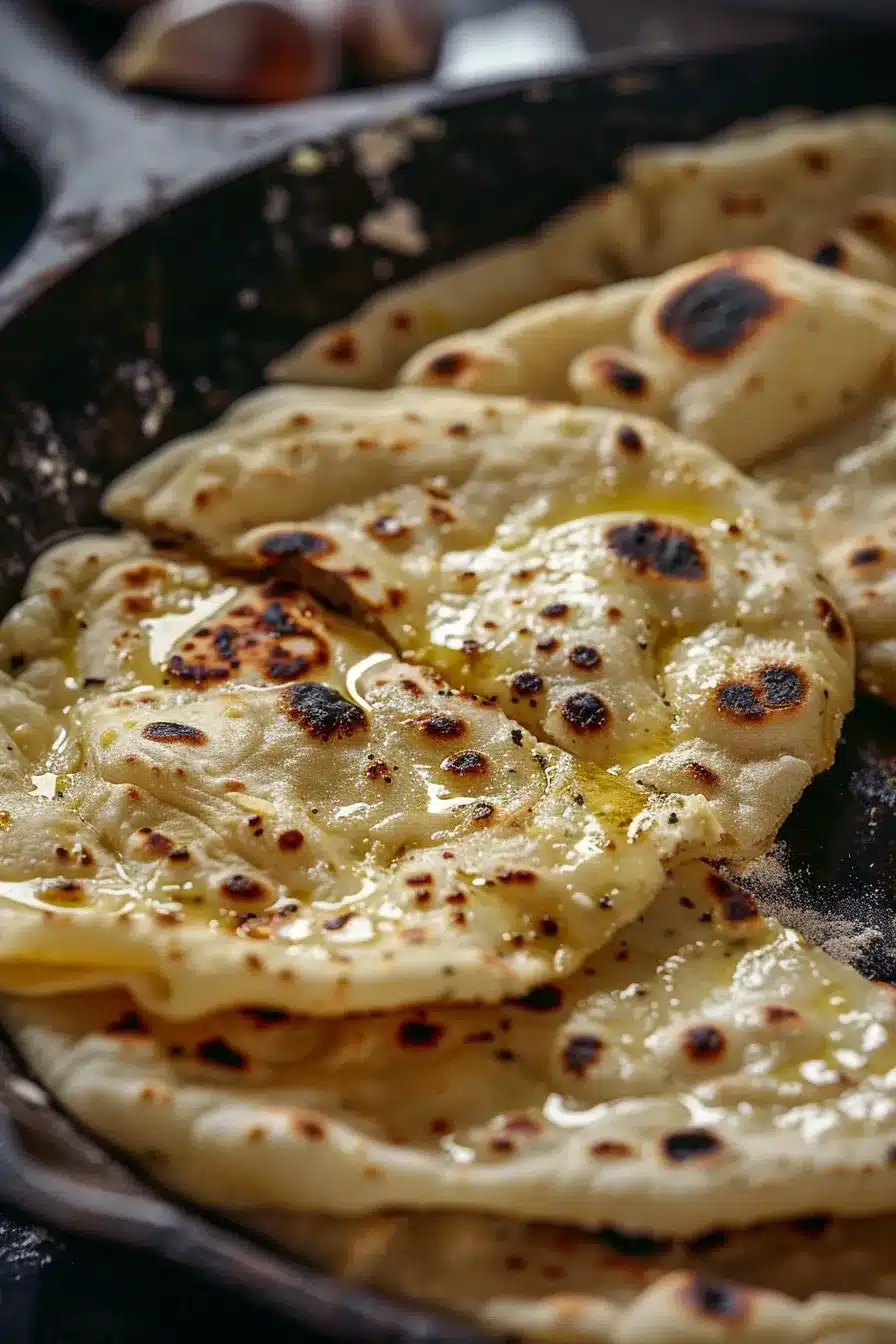
Homemade Naan Bread is the ultimate soft, pillowy Indian flatbread that’s surprisingly easy to make at home! This authentic recipe creates restaurant-quality naan with a tender interior and slightly charred exterior using just a regular skillet. Ready in 2 hours with simple pantry ingredients! 🫓
The secret to this incredible naan is the combination of yogurt and egg in the dough, which creates that signature soft, stretchy texture. Each piece puffs beautifully in the pan and develops those perfect golden-brown spots that make naan so irresistible. Brush with garlic butter and you’ll never want store-bought again!
What Makes This Homemade Naan Bread So Special?
Traditional naan is baked in a blazing hot tandoor oven, but this recipe proves you can achieve the same incredible results using a cast iron skillet or heavy pan. The key lies in the dough composition – yogurt adds tang and tenderness, while the egg provides richness and helps create that characteristic chewy yet soft texture that makes naan so beloved.
The fermentation process, though brief, allows the yeast to develop flavors while the yogurt’s acidity tenderizes the gluten. This creates bread that’s simultaneously soft enough to fold and sturdy enough for scooping up curries and sauces. The high-heat cooking method mimics tandoor conditions, creating those signature charred spots and the perfect puffed texture.
Essential Ingredients for Authentic Naan
Main Dough Ingredients:
• ½ cup warm water (105-115°F) – activates yeast for proper rise
• 2 teaspoons instant yeast – creates light, airy texture faster than active dry
• 1 teaspoon granulated sugar – feeds yeast and aids in browning
• 3 tablespoons olive oil – adds richness and keeps naan soft
• ¼ cup plain yogurt – creates tender crumb and authentic tang
• 1 large egg – provides structure and golden color
• ½ teaspoon salt – enhances flavor and strengthens dough
• 2½-3 cups all-purpose flour – creates the perfect texture balance
For Cooking and Finishing:
• Oil or cooking spray – prevents sticking during cooking
• 2 tablespoons butter, melted – for that irresistible finish
• 2 teaspoons minced garlic – elevates the flavor profile
Optional Garnishes:
• Fresh cilantro or parsley – adds color and fresh flavor
• Nigella seeds – traditional topping for authentic appearance
• Coarse sea salt – sprinkle on top for gourmet touch

How to Make Perfect Homemade Naan (Step by Step)
Step 1: Activate the Yeast
In a large bowl, combine warm water, yeast, and sugar. Let sit for 5 minutes until the mixture becomes foamy and bubbly. This ensures your yeast is active and will create properly risen naan.
Step 2: Build the Dough
Add olive oil, yogurt, egg, salt, and 2½ cups flour to the yeast mixture. Stir until a soft, slightly sticky dough forms. Add remaining flour gradually until the dough pulls away from the bowl but remains soft.
Step 3: Knead to Perfection
Knead the dough on a lightly floured surface for 3-4 minutes until smooth and elastic. The dough should feel soft and slightly tacky but not sticky. Proper kneading develops the gluten for the perfect texture.
Step 4: First Rise
Place dough in a greased bowl, cover with a damp towel, and let rise in a warm place until doubled in size – about 1 hour. A properly risen dough will be light and airy.
Step 5: Divide and Shape
Punch down the risen dough and divide into 8 equal pieces. On a lightly floured surface, roll each piece into a 6-inch oval or circle, about 3-5mm thick. This thickness is crucial for proper puffing.
Step 6: Cook in Hot Skillet
Preheat a cast iron skillet or heavy pan over medium-high heat. Lightly oil the pan and cook each naan for 2-3 minutes until bubbles form and the bottom is golden brown. Flip and cook another 2-3 minutes.
Step 7: Finish with Garlic Butter
While still warm, brush the bubbly side of each naan with melted garlic butter. The heat will help the butter soak in, creating that restaurant-quality finish.
Step 8: Serve Immediately
Naan is best served warm and fresh. Keep cooked naan warm in a low oven or wrapped in a clean kitchen towel while you finish the batch.
Pro Tips for Restaurant-Quality Naan
Heat Control: Medium-high heat is crucial – too hot and the outside burns before the inside cooks; too cool and you won’t get proper puffing and charring.
**✅ Thickness Matters: Roll to exactly 3-5mm thick. Too thin creates crispy crackers; too thick prevents proper cooking and puffing.
**⚠️ Common Mistake: Don’t skip the rising time. Properly fermented dough creates the light, airy texture that makes naan special.
Chef’s Secret: Cast iron skillets work best because they retain and distribute heat evenly, mimicking tandoor oven conditions.
Dough Consistency: The dough should be soft and slightly tacky. If it’s too dry, the naan will be tough; if too wet, it will be difficult to handle.
Make-Ahead Magic: Dough can be refrigerated for up to 2 days or frozen for 1 month. Thaw completely before rolling and cooking.
Serving and Pairing Ideas
Classic Indian Style: Serve alongside curry dishes, dal, or any Indian meal for authentic bread-and-curry combinations.
Appetizer Delight: Cut into triangles and serve with hummus, yogurt dips, or Mediterranean spreads for fusion appetizers.
Pizza Alternative: Use as a base for quick flatbread pizzas with your favorite toppings – the soft texture holds toppings beautifully.
Sandwich Wrap: Use naan as a wrap for grilled meats, vegetables, or Mediterranean-style fillings for gourmet handheld meals 🌯

Creative Naan Variations
Garlic Naan: Mix 2 minced garlic cloves directly into the dough and brush with extra garlic butter after cooking.
Herb Naan: Add 2 tablespoons fresh chopped cilantro, mint, or parsley to the dough for aromatic herb-infused bread.
Stuffed Naan: Roll small amounts of spiced potato filling, paneer, or cheese into the center before cooking for stuffed varieties.
Sweet Naan: Add 1 tablespoon sugar to the dough and brush with honey butter for a dessert version.
Storage and Reheating Guide
Same Day Storage: Keep cooked naan wrapped in a clean kitchen towel at room temperature for up to 6 hours.
Refrigerator Storage: Store in an airtight container for up to 3 days. Reheat in a dry skillet for 30 seconds per side.
Freezer Storage: Wrap individual naan in plastic wrap and freeze for up to 3 months. Thaw and reheat in a warm skillet.
Reheating Methods: For best results, reheat in a dry skillet over medium heat, in a toaster oven, or wrap in damp paper towel and microwave for 15-20 seconds.
Frequently Asked Questions About Homemade Naan
Can I make naan without yogurt?
While yogurt creates the authentic tangy flavor and tender texture, you can substitute with sour cream or buttermilk. However, the texture may be slightly different from traditional naan.
Why isn’t my naan puffing up?
Naan puffs due to steam created from moisture in the dough hitting the hot pan. Ensure your skillet is properly preheated and the dough isn’t rolled too thin or too thick.
Can I use active dry yeast instead of instant yeast?
Yes! Use the same amount but activate it in the warm water with sugar for 10 minutes until foamy before adding other ingredients.
How do I know when the skillet is the right temperature?
Sprinkle a few drops of water on the pan – they should sizzle and evaporate within 2-3 seconds. The pan should be hot but not smoking.
Can I make this dough ahead of time?
Absolutely! The dough can be refrigerated for up to 2 days or frozen for 1 month. Cold fermentation actually improves the flavor.
What’s the difference between naan and regular flatbread?
Naan contains yogurt and often eggs, creating a richer, more tender texture than simple flour-and-water flatbreads. It’s also traditionally leavened with yeast.
Can I make naan without eggs for vegetarian diets?
Yes, simply omit the egg. The naan will be slightly less rich but still delicious. You might add an extra tablespoon of yogurt to maintain moisture.
How can I get those dark spots like restaurant naan?
The dark spots come from high heat. Make sure your pan is properly heated and don’t move the naan too quickly. The spots develop naturally as the dough puffs and chars slightly.