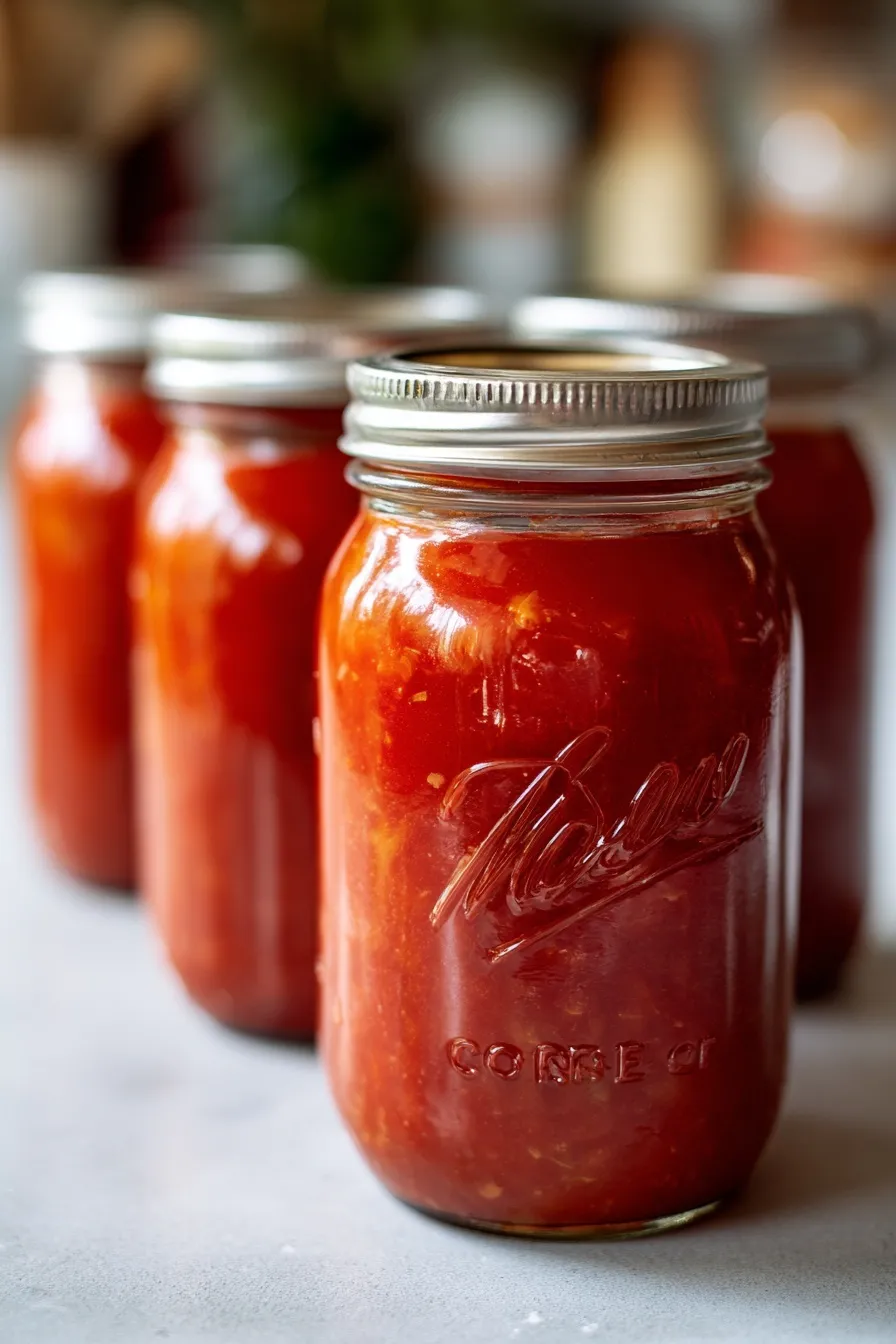
Skip the store-bought stuff forever – this homemade canning method gives you restaurant-quality tomato sauce all winter long.
Since you’re here, make sure to check out these other preserving and sauce favorites: Perfect Hot Honey Cottage Cheese, Easy Green Goddess Salad Recipe, Easy Green Goddess Pizza, Tomato Flights Elegant Summer Appetizer, and Pizza Margherita Recipe.
Why Every Family Needs This Canning Recipe
Picture this: it’s February, there’s snow on the ground, and you’re making pasta for dinner. Instead of reaching for some sad, expensive jar of sauce that tastes like sweet tomato water, you grab one of your own perfectly preserved mason jars filled with the essence of summer tomatoes.
That’s the magic of learning how to can tomato sauce properly. This isn’t just about saving money (though you absolutely will). It’s about controlling exactly what goes into your family’s food and having the most flavorful sauce you’ve ever tasted waiting in your pantry.
I learned this method from watching my Italian grandmother work her magic every August, and let me tell you – once you’ve tasted homemade canned tomato sauce, the store-bought stuff becomes completely inedible.
What Makes This Canning Method Special
Food Safety First
This recipe follows proper canning guidelines with correct acidity levels and processing times. We’re not messing around with botulism here – safety is non-negotiable.
Maximum Flavor Concentration
By simmering the sauce uncovered for hours, you’re concentrating all those beautiful tomato flavors into liquid gold.
Zero Preservatives
You know exactly what’s in your sauce: tomatoes, vegetables, herbs, and love. No artificial colors, high fructose corn syrup, or mystery ingredients.
Cost-Effective
When tomatoes are in peak season, they’re dirt cheap. Buy in bulk, preserve properly, and you’ll have sauce for months at a fraction of store prices.
Essential Equipment You’ll Need
For sauce making:
- Large, heavy-bottomed pot (or two)
- Food processor or blender
- Immersion blender (optional)
- Large colander
- Sharp knives
- Cutting boards
For canning:
- Water bath canner with rack (or large stockpot with rack)
- Canning jars (pint or quart size)
- New canning lids and rings
- Jar lifter tongs
- Canning funnel
- Bubble removal tool (or clean plastic knife)
Ingredients
For the Sauce (makes about 8-10 quart jars):
- 25 pounds fresh tomatoes (Roma or San Marzano work best)
- 4 large onions, quartered
- 10-15 garlic cloves
- 3-4 handfuls fresh basil leaves
- 1 (28 oz) can tomato puree
- 1/4 cup extra virgin olive oil
- Salt to taste
- 1 tablespoon dried oregano (optional)
- 1 tablespoon dried parsley (optional)
For Safe Canning:
- Bottled lemon juice (2 tablespoons per quart jar, 1 tablespoon per pint)
- Clean mason jars with new lids and rings
Instructions
Step 1: Prepare Your Tomatoes Like a Pro
Quality check first: Examine every single tomato. Cut away any bad spots, bruises, or moldy areas. If more than 25% of a tomato is bad, toss the whole thing.
The blanching method: Bring a large pot of water to rolling boil. Score a small “X” on the bottom of each tomato. Working in batches, drop tomatoes into boiling water for 2-3 minutes until skins start to split.
Ice bath magic: Immediately transfer to a bowl of ice water. Once cool enough to handle, the skins will slip right off. Remove cores and any remaining tough spots.
Step 2: Build Your Flavor Base
In your food processor, combine onions, garlic, fresh basil, and a pinch of salt. Pulse until you have a chunky paste – don’t over-process into mush.
Heat olive oil in your largest pot over medium heat. Add the vegetable mixture and cook for 3-4 minutes until fragrant and slightly softened.
Step 3: Process and Cook the Tomatoes
Working in batches, process your peeled tomatoes in the food processor until smooth but not completely liquefied. You want some texture remaining.
Add processed tomatoes to the pot with your cooked vegetables. Stir in the canned tomato puree, oregano, and parsley if using.
Step 4: The Long Simmer (This is Where Magic Happens)
Bring the entire mixture to a boil, then reduce to a steady simmer. Never cover the pot – you want moisture to evaporate and flavors to concentrate.
Simmer for 2-4 hours, stirring every 15-20 minutes. The sauce is ready when it coats the back of a spoon and has reduced by about half.
Taste and adjust: Add salt gradually until the flavor pops. The sauce should taste slightly more concentrated than you’d want to eat straight.
Step 5: Prep for Canning
Sterilize everything: Wash jars in hot, soapy water. Keep hot in a pot of simmering water or run through dishwasher. Place new lids in hot (not boiling) water.
Final blending (optional): Use an immersion blender to smooth out any remaining chunks if desired.
Step 6: Fill and Process Jars
Add acid first: Place 2 tablespoons bottled lemon juice in each quart jar (1 tablespoon for pints). This ensures safe acidity levels.
Fill jars: Using a canning funnel, ladle hot sauce into jars, leaving 1/2-inch headspace. Remove air bubbles with a clean plastic knife.
Clean and cap: Wipe jar rims with a damp cloth. Place lids and screw on rings finger-tight (don’t over-tighten).
Step 7: Water Bath Processing
Place filled jars in your canner, ensuring they’re covered by at least 1 inch of water. Bring to a rolling boil and process:
- Pint jars: 35 minutes
- Quart jars: 40 minutes
Important: Start timing only when water reaches a full rolling boil.
Step 8: Cool and Check Seals
Remove jars and place on towels, leaving space between each jar. Don’t retighten lids! Let cool for 12-24 hours.
Check seals: Press center of each lid. If it doesn’t pop back, it’s sealed properly. Unsealed jars should be refrigerated and used within a week.
Storage and Usage
Properly sealed jars: Store in cool, dark place for up to 18 months Label everything: Include date and contents First in, first out: Use older jars before newer ones
Serving suggestions: This sauce is perfect for pasta, pizza, lasagna, chicken parmesan, or anywhere you need rich tomato flavor.
Safety Tips You Cannot Ignore
Use bottled lemon juice only – fresh lemon juice has variable acidity Don’t alter the recipe – changing ratios can affect safety Process for full time – even at high altitude, follow tested processing times When in doubt, throw it out – if a jar didn’t seal or looks off, don’t risk it
Complete FAQ
Q: Can I use any type of tomatoes? A: Paste tomatoes like Roma or San Marzano work best because they have less water content. Avoid overly juicy varieties that will make thin sauce.
Q: Why can’t I use fresh lemon juice instead of bottled? A: Bottled lemon juice has consistent acidity levels (pH), which is crucial for safe canning. Fresh lemon juice varies and could result in unsafe acidity levels.
Q: Can I add other vegetables like peppers or mushrooms? A: No! This recipe is tested for safety with these specific ingredients. Adding low-acid vegetables requires different processing methods.
Q: What if my jars didn’t seal properly? A: Refrigerate unsealed jars immediately and use within a week, or reprocess with new lids within 24 hours.
Q: Can I double or halve this recipe? A: You can scale the recipe up or down, but maintain the same cooking time and processing requirements for safety.
Troubleshooting Common Issues
Sauce too thin: Continue simmering uncovered until desired consistency. Don’t add thickeners.
Sauce too thick: Add a bit of water or tomato juice during cooking.
Jars not sealing: Check jar rims for nicks, ensure proper headspace, and verify lid quality.
Sauce separating: This is normal! Just stir before using.
Why This Method Beats Store-Bought
Every jar you make represents summer tomatoes at their absolute peak, preserved at the moment of perfect ripeness. No artificial flavors, no high fructose corn syrup, no mysterious “natural flavoring” – just pure, concentrated tomato goodness.
When you open a jar in the middle of winter and that incredible aroma hits you, you’ll understand why this tradition has been passed down through generations. This isn’t just cooking; it’s preserving memories and feeding your family the best.
The first time you make pasta with your own canned sauce, you’ll realize that all those years of buying sauce was just settling for less. This is what tomato sauce is supposed to taste like.