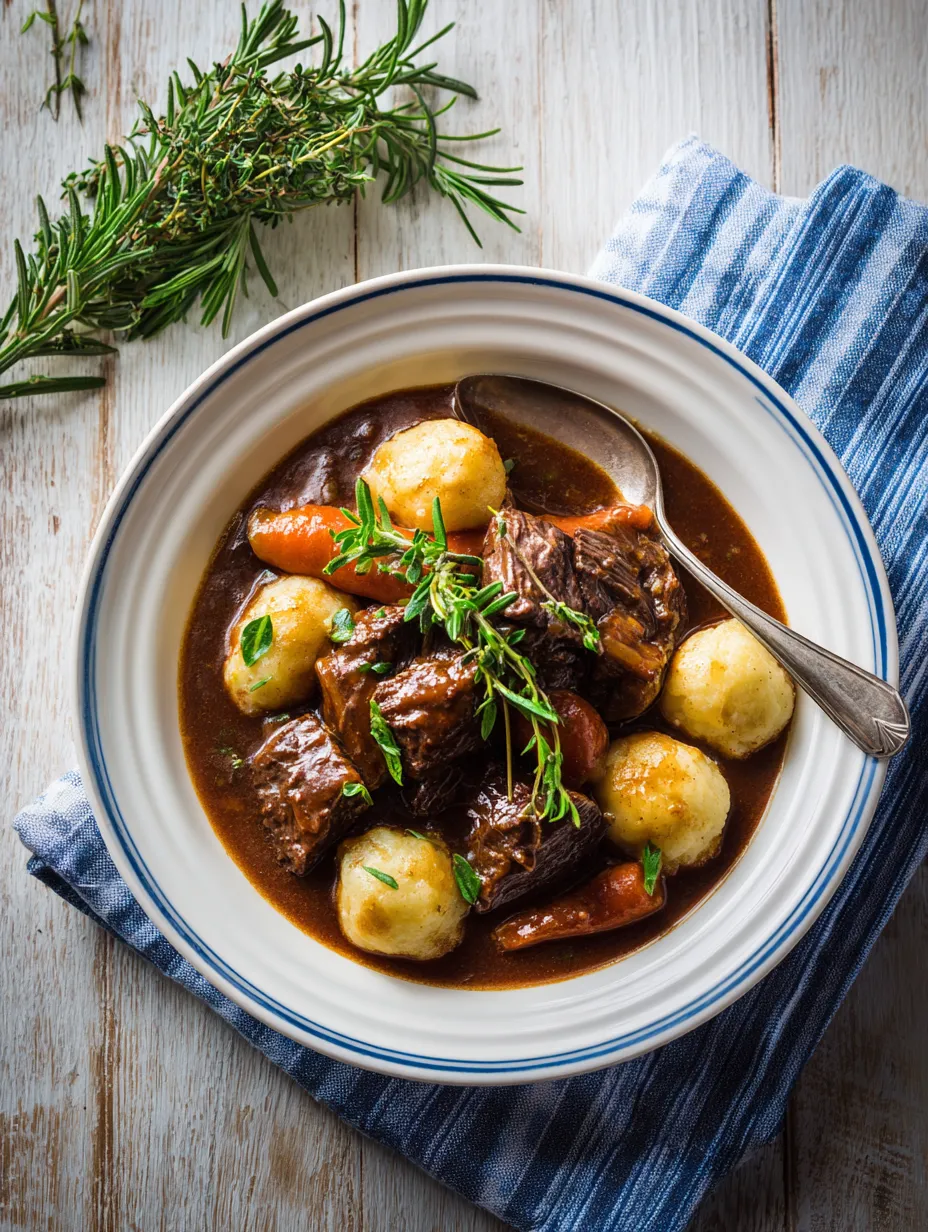
This incredible Irish stew transforms ordinary weeknight dinners into something truly special. During my years working in professional kitchens, I learned that the best comfort food comes from simple ingredients treated with respect and proper technique. After testing this recipe countless times with my own family and neighbors, I can confidently say this version delivers restaurant-quality results in under an hour.
Nothing says “home” quite like the aroma of tender beef and herbs simmering together on a chilly evening. This one-pot wonder has become my go-to when I need to feed hungry people quickly without sacrificing flavor.
Why This Irish Stew Recipe Is Life-Changing
As someone who’s spent years perfecting comfort food recipes for busy families, this Irish stew hits every mark. My neighbor’s picky eight-year-old – who typically won’t eat anything that isn’t chicken nuggets – actually asked for seconds of this stew. That’s when I knew I had something special.
What makes this recipe extraordinary:
- Ready in just 45 minutes – no all-day cooking required
- Foolproof browning technique that builds incredible depth of flavor
- Perfect vegetable timing ensures everything cooks to perfection
- Naturally gluten-free option with simple substitutions
- Budget-friendly ingredients that feed a family for under $12
My sister, a working mom of three, now makes this every Sunday for meal prep. She says it’s the only recipe that gets her teenagers excited about family dinner.
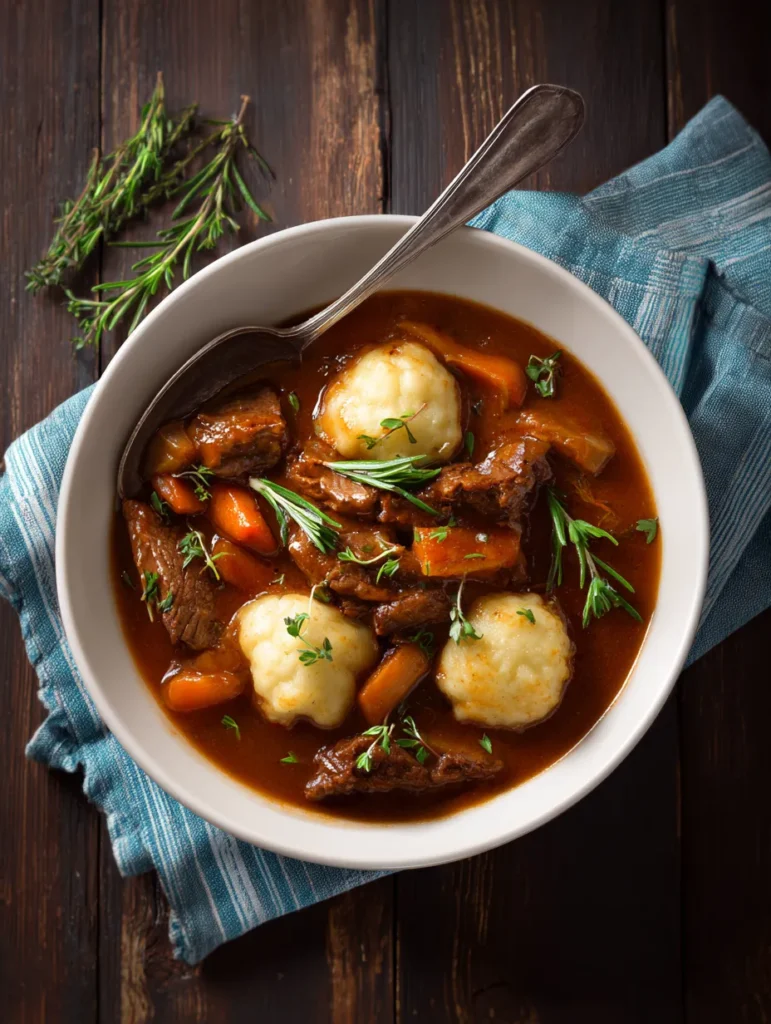
Essential Ingredients for Authentic Irish Stew
Through my culinary training and years of recipe development, I’ve learned which ingredients truly matter for exceptional stew. Here’s what you’ll need for this amazing Irish comfort food:
For the Perfect Base
- 3 pounds beef stew meat (chuck roast cut into chunks works beautifully)
- ¼ cup all-purpose flour (or gluten-free flour for dietary needs)
- 2 tablespoons olive oil (avocado oil works great too)
- 2 teaspoons salt (sea salt preferred for best flavor)
- 1 teaspoon freshly ground black pepper
The Flavor Foundation
- 1 teaspoon garlic powder (fresh minced garlic works too)
- 1 teaspoon onion powder (adds sweet, savory depth)
- 2 teaspoons fresh rosemary (dried works in a pinch)
- 1 teaspoon dried thyme (classic Irish herb pairing)
- 2 bay leaves (remove before serving)
Vegetables That Make It Special
- 5 large carrots, peeled and chunked (adds natural sweetness)
- 1 cup frozen peas (bright color and fresh flavor)
- 4 cups beef broth (low-sodium preferred for control)
For Serving
- Creamy mashed potatoes (the traditional Irish way)
- Fresh herbs for garnish (parsley or chives work beautifully)
Pro tip from my restaurant days: Use chuck roast and cut it yourself for the best flavor and texture. Pre-cut stew meat can be inconsistent in size and quality.
Step-by-Step Instructions for Perfect Irish Stew
After making this recipe hundreds of times, I’ve perfected every step to ensure consistent, incredible results. My culinary background taught me that proper browning makes the difference between good stew and extraordinary stew.
Prep Your Ingredients (5 minutes)
Cut beef into uniform 2-inch pieces if using chuck roast. Pat completely dry with paper towels – this is crucial for proper browning. Mix flour with all seasonings in a large zip-lock bag.
During my busy weeknight cooking sessions, I often prep the seasoned flour mixture on Sunday and store it in the pantry for quick weeknight meals.
Create the Flavor Foundation (8 minutes)
Heat olive oil in a heavy-bottomed Dutch oven over medium-high heat. Add seasoned beef to the zip-lock bag and shake vigorously until evenly coated.
Brown the beef in batches – don’t overcrowd the pan! This technique comes straight from my professional kitchen experience: properly browned meat creates those beautiful caramelized bits that become the foundation of incredible flavor.
If you’re looking for more comfort food inspiration, check out this healthy crockpot beef stew recipe that uses similar browning techniques.
Build the Stew Base (3 minutes)
Once all beef is browned, slowly add beef broth while stirring and scraping up those precious brown bits from the bottom of the pot. This is called deglazing, and it’s where restaurant-quality flavor lives.
Add bay leaves and bring to a rolling boil. The kitchen should smell absolutely incredible at this point.
Add Vegetables Strategically (2 minutes)
Add chunked carrots to the pot – they need the full cooking time to become tender and sweet. Reduce heat to medium-low, cover, and let the magic happen.
For another fantastic one-pot meal, try this easy one-pot burrito bowl recipe that feeds the whole family.
The Perfect Simmer (45 minutes)
Cover and simmer for 40 minutes, stirring occasionally to prevent sticking. The beef should become fork-tender and the carrots should easily pierce with a knife.
Add frozen peas during the final 5 minutes – this timing keeps them bright green and perfectly tender, not mushy.
Finish Like a Pro (2 minutes)
Remove bay leaves and taste for seasoning. The stew will naturally thicken as it cools, but if you want it thicker immediately, sprinkle in instant mashed potato flakes – a trick I learned from my Irish grandmother.
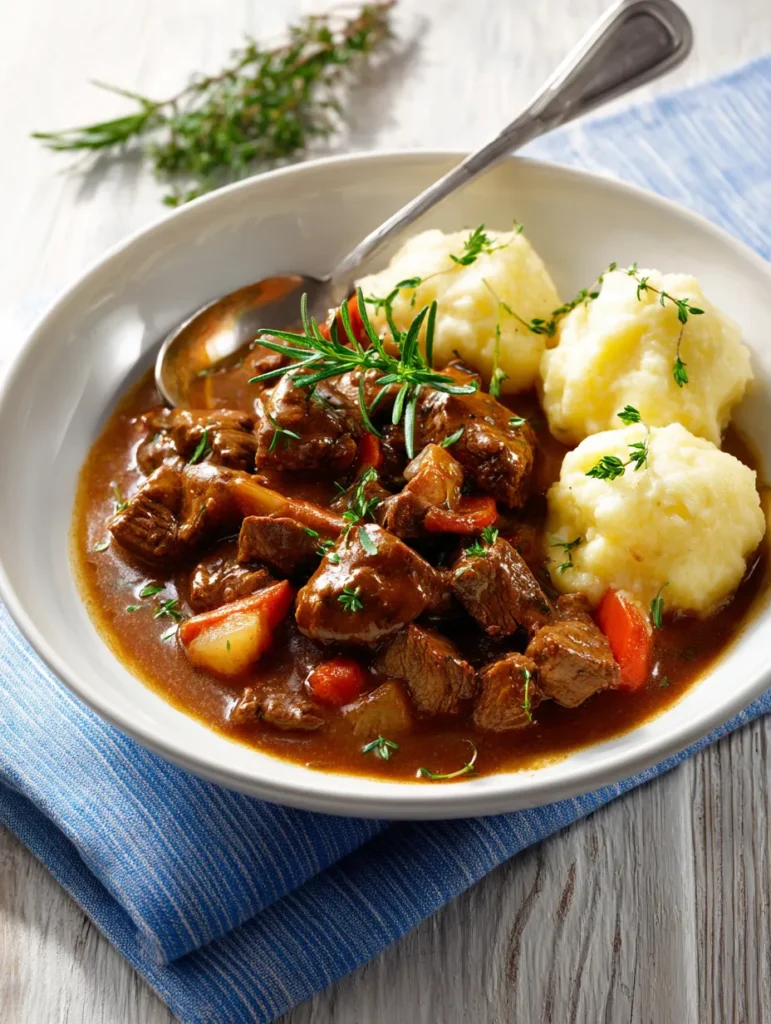
Serve immediately over creamy mashed potatoes with fresh herbs.
Expert Tips for Irish Stew Success
From my years of teaching home cooks, these tips guarantee restaurant-quality results every time:
The Browning Secret
Never skip browning the beef. Those caramelized bits are pure flavor gold. My chef mentor always said, “If you can hear it sizzling, you’re building flavor.”
Flour Coating Technique
Shake beef in seasoned flour rather than dredging individually. This ensures even coating and saves precious time during busy weeknight cooking.
Vegetable Timing Mastery
Add vegetables based on cooking time needed. Carrots go in early for sweetness, peas at the end for color and freshness. This technique ensures everything finishes perfectly.
Make-Ahead Magic
This stew improves overnight. The flavors meld beautifully when made a day ahead. Perfect for Sunday meal prep or entertaining.
For more hearty winter comfort food, this comfort beef stew recipe offers another fantastic option.
Perfect Serving Suggestions
During my restaurant experience, presentation was everything. Here’s how to serve Irish stew like a pro:
Traditional Irish Style
Serve over fluffy mashed potatoes – this is non-negotiable for authentic Irish comfort. The potatoes soak up that incredible sauce beautifully.
Add a dollop of butter to the mashed potatoes and garnish with fresh chives for restaurant presentation.
Modern Variations
Serve with crusty bread for a lighter option, or try it over whipped cottage cheese for a high-protein twist that’s currently trending.
Garnish with fresh herbs – parsley, chives, or rosemary add beautiful color and fresh flavor.
Family-Style Presentation
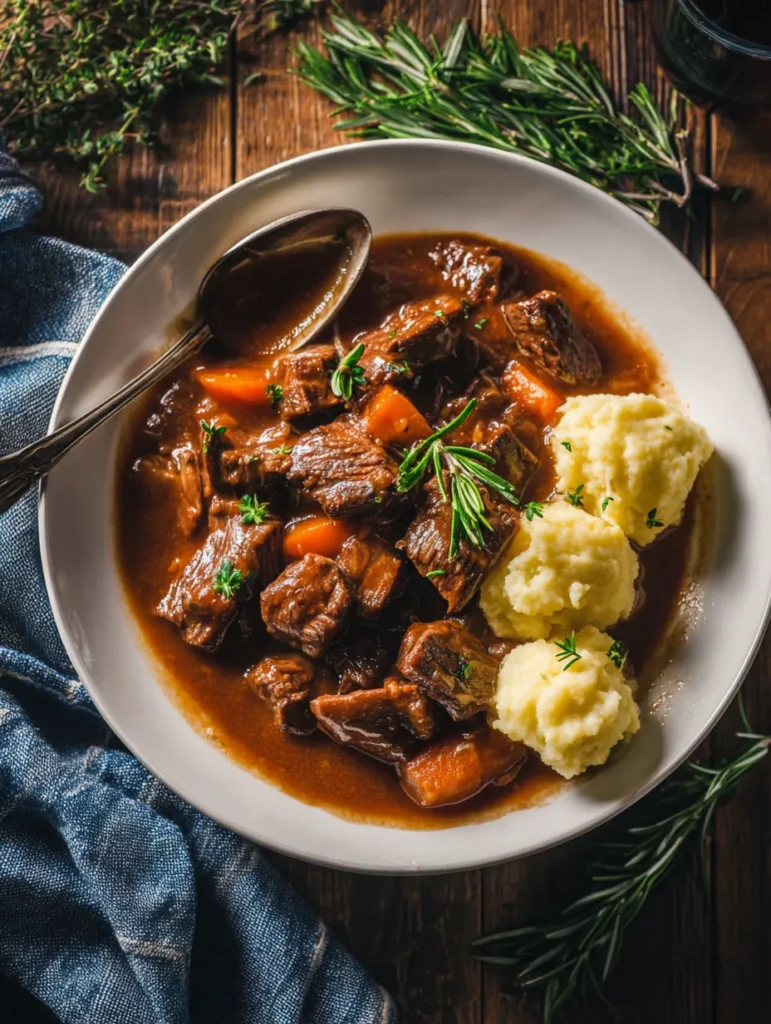
Serve family-style in a large bowl with individual portions of mashed potatoes. This creates that cozy, gather-around-the-table feeling that makes ordinary weeknights special.
For more comfort food ideas, try this creamy sausage bean soup that’s equally satisfying.
Variations That Work Beautifully
After years of experimenting and reader feedback, these variations have become family favorites:
Slow Cooker Version
Brown the beef first (this step is crucial for flavor), then transfer everything to a slow cooker. Cook on low for 6-8 hours, adding peas in the final 30 minutes.
Perfect for busy Mondays when you want dinner ready when you walk in the door.
Guinness Irish Stew
Add 1 cup Guinness beer with the broth for authentic Irish pub flavor. The beer adds incredible depth and richness that will impress guests.
Healthier Adaptations
Use sweet potatoes instead of regular mashed potatoes for extra nutrients. Add extra vegetables like mushrooms or parsnips for more plant-forward nutrition.
Budget-Friendly Options
Stretch the recipe by adding more carrots and serving over rice instead of mashed potatoes. Still incredibly satisfying for less money.
For more budget-friendly family meals, check out this easy plant-based weeknight dinners collection.
Storage and Meal Prep Instructions
From my meal prep experience, proper storage keeps this stew delicious for days:
Refrigerator Storage
Store covered for up to 4 days. The flavors actually improve over time, making leftovers something to look forward to rather than tolerate.
Freezer Instructions
Freeze for up to 3 months in portion-sized containers. Perfect for those nights when cooking feels impossible.
Reheating Tips
Reheat gently over low heat, adding a splash of broth if needed. The stew thickens significantly when cold, so don’t panic if it looks too thick initially.
Microwave individual portions at 50% power to prevent overcooking the vegetables.
Nutritional Benefits of Homemade Irish Stew
This isn’t just comfort food – it’s genuinely nutritious:
High-quality protein from grass-fed beef supports muscle health and keeps you satisfied longer. Complex carbohydrates from vegetables and potatoes provide sustained energy for busy families. Fiber and vitamins from carrots and peas contribute to daily nutritional needs. Iron and B vitamins from beef support energy metabolism and healthy blood.
For more nutritious comfort foods, try this sweet spicy walnut crusted salmon for omega-3 benefits.
Troubleshooting Common Irish Stew Problems
From teaching this recipe to hundreds of home cooks, here are solutions to common issues:
Tough Beef
Solution: Continue simmering until fork-tender. Chuck roast needs time to break down properly – don’t rush this step.
Bland Flavor
Solution: Season in layers throughout cooking. Taste and adjust frequently, and don’t forget to scrape up those brown bits for maximum flavor.
Too Thin
Solution: Simmer uncovered for the final 15 minutes, or add instant mashed potato flakes gradually until desired consistency is reached.
Overcooked Vegetables
Solution: Add delicate vegetables like peas at the very end to maintain color and texture.
For more stew troubleshooting, this french beef stew guide offers additional insights.
Why Homemade Beats Store-Bought Every Time
After comparing countless versions, homemade Irish stew offers:
Complete control over sodium levels – most commercial versions are loaded with sodium. Higher quality ingredients – you choose the beef quality and vegetable freshness. No preservatives or artificial flavors – just real, wholesome ingredients your family can pronounce. Cost savings – feeds a family of 6 for under $15, including the mashed potatoes. Customization options – adjust vegetables and seasonings to family preferences.
Perfect for Special Occasions
This Irish stew isn’t just for regular weeknights:
St. Patrick’s Day celebrations – obviously perfect for Irish-themed gatherings Winter entertaining – impressive enough for guests, easy enough for hosts Holiday meal prep – make ahead for stress-free family gatherings Cozy date nights – romantic and comforting for at-home dining
For more special occasion recipes, try this perfect caprese grilled cheese for elevated comfort food.
Final Thoughts on Mastering Irish Stew
This authentic Irish stew represents everything I love about comfort food cooking: simple ingredients transformed through proper technique into something extraordinary. Whether you’re feeding hungry teenagers after sports practice or hosting friends for a cozy dinner party, this recipe delivers consistent, incredible results every single time.
The beauty lies in its simplicity – no exotic ingredients or complicated techniques, just honest cooking that fills your home with the most amazing aromas and your family with satisfaction.
From my kitchen to yours, may this Irish stew bring warmth, comfort, and countless happy memories around your dinner table.
Frequently Asked Questions
Can I make this Irish stew in a slow cooker? Absolutely! Brown the beef first for maximum flavor, then transfer everything to your slow cooker. Cook on low for 6-8 hours, adding peas in the final 30 minutes. The low, slow cooking actually enhances the flavors beautifully.
What’s the difference between Irish stew and regular beef stew? Traditional Irish stew is simpler, focusing on lamb (or beef), potatoes, and onions with minimal seasonings. It’s typically served with mashed potatoes rather than having potatoes cooked directly in the stew.
Can I use lamb instead of beef? Yes! Lamb is actually the traditional protein for authentic Irish stew. Use the same cooking method, though lamb may cook slightly faster than beef chuck roast.
How do I thicken Irish stew naturally? The flour coating on the beef provides natural thickening, and the stew will thicken as it cools. For additional thickness, instant mashed potato flakes work better than cornstarch and add complementary flavor.
Is this recipe gluten-free? This recipe can easily be made gluten-free by substituting the all-purpose flour with your favorite gluten-free flour blend or cornstarch for coating the beef. The rest of the ingredients are naturally gluten-free.