
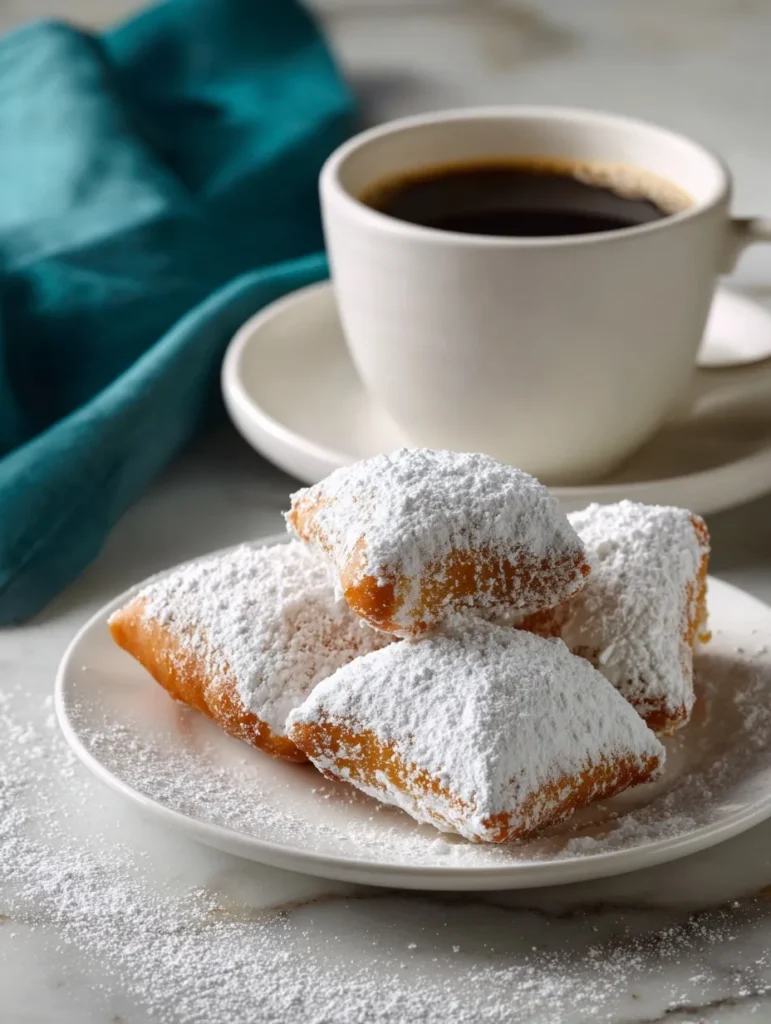
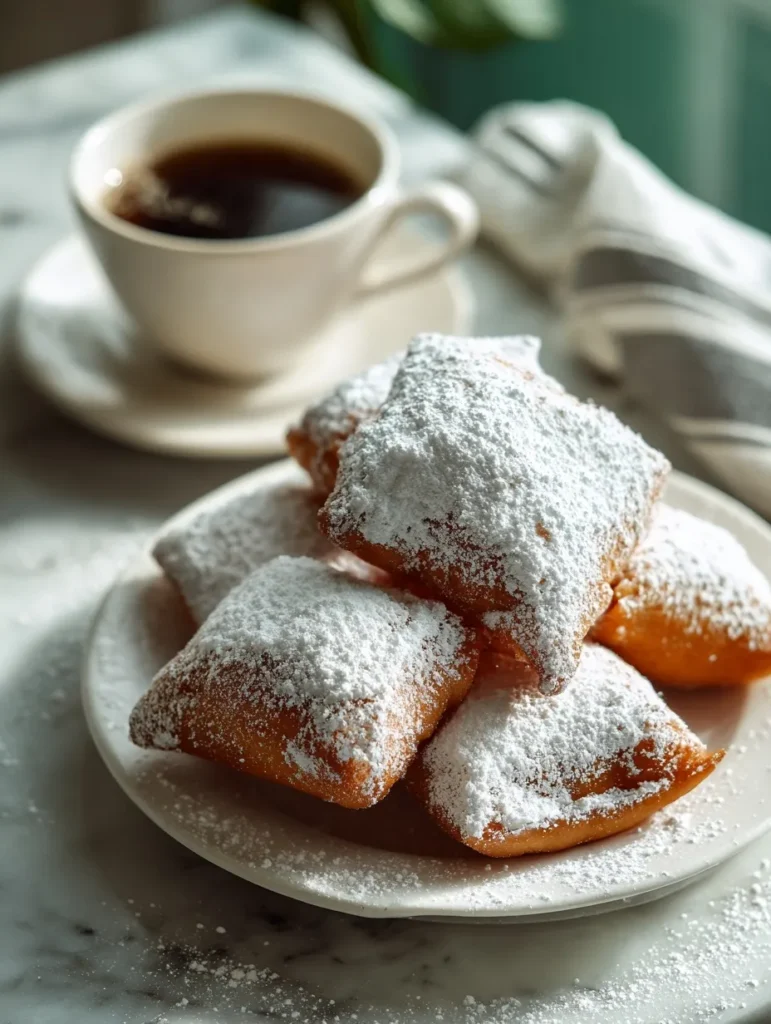
Who needs a plane ticket to New Orleans when you can whip up authentic Café du Monde-style beignets right in your kitchen? These pillowy, sugar-dusted gems are about to become your new obsession.
Since you’re here, make sure to check out these amazing treats too:
- Nutella Stuffed Croissants – Another decadent breakfast favorite
- Funnel Cake Bites – Carnival vibes at home
- Churro Bites – Crispy cinnamon perfection
- Easy Cinnamon Twists – Quick pastry magic
- Delicious Cruffins – The croissant-muffin hybrid you need
Why These Beignets Beat the Box Mix Every Time
Look, I get it. The Café du Monde mix is convenient, and honestly? It’s not terrible. But here’s the thing – when you make these from scratch, you control everything. No mysterious “and/or” ingredients listed on some corporate packaging. Just real ingredients creating that perfect hollow “bump” that makes beignets legendary.
I’ve tested countless beignet recipes, and most of them require hours of rising time. But authentic New Orleans beignets? They’re quick, no-rise beauties that puff up like magic in hot oil. This recipe nails that exact texture – crispy outside, airy inside, with just enough chew to remind you why people travel thousands of miles for these little pillows of joy.
Ingredients
Here’s what you need for about 2 dozen beignets (perfect for a weekend breakfast crowd):
The Dough:
- 2¼ teaspoons active dry yeast
- ½ cup warm water
- ½ cup 2% evaporated milk
- 1 extra large egg (room temperature, lightly beaten)
- 1 teaspoon pure vanilla extract
- 2 tablespoons unsalted butter, melted
- ¼ cup granulated sugar, divided
- ½ teaspoon baking soda
- 1 teaspoon kosher salt
- 3 cups unbleached all-purpose flour
For Frying:
- 4 cups vegetable oil
The Magic Touch:
- Confectioners’ sugar (and I mean LOTS of it)
Pro tip: That leftover evaporated milk? Don’t let it go to waste! Use it for another batch of beignets or whip up some creamy mac and cheese for dinner. Win-win situation right there 🙂
Instructions
Step 1: Wake Up That Yeast
In your stand mixer bowl (fitted with the dough hook), dissolve the yeast and 1 tablespoon of sugar in warm water. Wait about 5 minutes until it gets foamy – this tells you your yeast is alive and ready to party.
Step 2: Build Your Dough
Add the evaporated milk, beaten egg, vanilla, melted butter, remaining sugar, baking soda, salt, and flour to the yeast mixture. Beat on medium-high speed for exactly 1 minute. You want a sticky dough – don’t worry, that’s perfect!

Step 3: Roll It Out
Transfer your dough to a well-floured work surface. Dust with more flour and roll it to about ⅛ inch thickness. Using a pastry wheel (or sharp knife), cut into 2-inch squares. Don’t stress about perfect shapes – those irregular edges actually add character!
Step 4: The Frying Magic
Heat your oil to 370°F – this temperature is crucial! Too low and they won’t puff properly; too high and they’ll burn before cooking through.
Gently drop the squares into the hot oil, just a few at a time. Watch them rise and puff (it’s honestly mesmerizing), then flip them when golden brown. The whole process takes maybe 2-3 minutes per batch.
Step 5: Sugar Heaven
Drain on paper towels for about 30 seconds, then generously dust with confectioners’ sugar. I’m talking about a proper New Orleans-style sugar storm here – don’t be shy!
The Secret Behind Perfect Puffing
Ever wonder why some homemade beignets turn out dense and cake-like? The magic is in the dual leavening system. Most recipes rely solely on yeast with a long rise time, but authentic beignets use both yeast AND baking soda with zero rising time. This creates that signature hollow interior without the heavy, bread-like texture.
The combination gives you the best of both worlds – the flavor complexity from yeast and the immediate lift from baking soda. It’s basically chemistry working in your favor!
Storage and Serving Tips
Best served: Immediately, while still warm Storage: These are really meant to be eaten fresh, but leftovers can be stored in an airtight container for 1 day Reheating: Pop them in a 350°F oven for 2-3 minutes to crisp up again
Serving size: Plan for 3-4 beignets per person (though let’s be honest, people will probably eat more)
Troubleshooting Your Beignets
They’re not puffing: Your oil temperature is too low. Get it back up to 370°F.
They’re browning too fast: Oil’s too hot. Let it cool down a bit.
They taste yeasty: Make sure you’re using the exact measurements – too much yeast overpowers everything else.
Dough is too sticky: Add a little more flour when rolling, but don’t go overboard. Slightly sticky dough = tender beignets.
Complete FAQ
Can I make the dough ahead of time? While this recipe is designed for immediate use, some readers have successfully refrigerated the dough overnight. The texture might change slightly, but it’s worth experimenting with if you want to prep ahead.
What oil works best for frying? Vegetable oil is ideal because of its neutral flavor and high smoke point. Canola oil works great too. Avoid olive oil – the flavor competes with the delicate beignet taste.
Can I bake these instead of frying? Honestly? No. Baking won’t give you that signature puffed texture that makes beignets special. The hot oil is what creates the steam that makes them “soufflé” into those perfect pillows.
How do I know when the oil is ready? A candy thermometer is your best friend here. No thermometer? Drop a small piece of dough in – it should sizzle immediately and float to the surface within seconds.
Why use evaporated milk instead of regular milk? Evaporated milk adds richness and helps create that tender crumb texture. Regular milk will work in a pinch, but the results won’t be quite as authentic.
Why You’ll Love This Recipe
These beignets deliver everything you crave from the New Orleans original – that crispy-tender contrast, the satisfying chewiness, and enough powdered sugar to make you look like you wrestled with a flour sack (in the best possible way).
Unlike those time-consuming recipes that require hours of rising, this version respects your busy schedule. Mix, roll, fry, devour – the whole process takes under an hour. Perfect for weekend mornings when you want something special but don’t want to spend all day in the kitchen.
Plus, there’s something deeply satisfying about making these from scratch. Every bite tastes like a little victory, and your kitchen will smell absolutely incredible. Fair warning though – once you master these, you might become the designated beignet maker for every family gathering. Not the worst problem to have, IMO! 🙂