
Looking for perfect Vanilla French Beignets that taste like they’re straight from New Orleans? These pillowy, golden treats are surprisingly easy to make at home and will transform your kitchen into a magical French café!
Picture this: warm, fluffy clouds of dough dusted with powdered sugar, infused with aromatic vanilla that makes your whole house smell like heaven. Whether you’re planning a special brunch or want to surprise your family on a weekend morning, these beignets deliver restaurant-quality results every single time.
What Makes Vanilla French Beignets So Special?
Vanilla French Beignets are known for their light, pillowy texture and rich, indulgent taste, traditionally served hot with a generous dusting of powdered sugar. The secret lies in the perfect balance of yeast-risen dough and the aromatic depth that pure vanilla extract brings to every bite.
Unlike dense donuts, authentic beignets achieve their signature airy texture through proper proofing and the right oil temperature. The vanilla enhancement elevates these from simple fried dough to an extraordinary breakfast experience that rivals the famous beignets from Café du Monde in New Orleans.
The beauty of homemade beignets is the control you have over ingredients – using high-quality vanilla extract creates those warm, floral notes that make each bite absolutely irresistible.

Essential Ingredients for Perfect Vanilla French Beignets
Start with these carefully selected ingredients to ensure your beignets turn out perfectly fluffy and delicious every time:
Main Dry Ingredients:
- 2½ cups all-purpose flour – provides the structure and creates that tender, pillowy texture
- ¼ cup granulated sugar – feeds the yeast and adds subtle sweetness to the dough
- 2 teaspoons active dry yeast – creates the signature airy rise that makes beignets so light
- ½ teaspoon salt – enhances all flavors and controls yeast activity for perfect fermentation
Wet Ingredients:
- 1 cup warm milk (110°F) – enriches the dough and creates tender texture when combined with flour
- 1 tablespoon unsalted butter, melted – adds richness and contributes to the golden color
- 1 tablespoon pure vanilla extract – the star ingredient that transforms ordinary dough into aromatic perfection
For Frying and Finishing:
- Vegetable oil for deep frying – maintains consistent temperature for even cooking
- Powdered sugar for dusting – the traditional finishing touch that makes beignets irresistible
💡 Chef’s Secret: Always use pure vanilla extract rather than imitation vanilla – the difference in aroma and flavor is remarkable and worth the extra cost.
Essential Equipment Needed:
- Deep-fry thermometer – ensures perfect 360°F oil temperature for golden results
- Large mixing bowl – allows room for dough to double in size during rising
- Clean kitchen towel – covers dough during proofing to maintain warmth and moisture
How to Make Vanilla French Beignets (Step by Step)
Step 1: Prepare the Dry Ingredient Base
Combine 2½ cups all-purpose flour, ¼ cup granulated sugar, 2 teaspoons active dry yeast, and ½ teaspoon salt in a large mixing bowl. Whisk together thoroughly to ensure the yeast and sugar are evenly distributed throughout the flour – this creates the foundation for perfect rising.
Step 2: Create the Wet Ingredient Mixture
In a separate bowl, whisk together 1 cup warm milk (about 110°F – it should feel pleasantly warm to touch), 1 tablespoon melted unsalted butter, and 1 tablespoon pure vanilla extract. The temperature is crucial – too hot will kill the yeast, too cool won’t activate it properly.
Step 3: Combine and Form the Dough
Gradually pour the wet ingredients into the dry ingredients while stirring with a wooden spoon. Continue mixing until a soft, slightly sticky dough forms. Don’t worry if it seems a bit tacky – this moisture will create the tender texture you want.
Step 4: Knead to Perfection
Transfer the dough to a lightly floured surface and knead for 8-10 minutes until the dough becomes smooth and elastic. Proper kneading develops the gluten structure that gives beignets their characteristic chew while maintaining lightness.
Step 5: First Rise for Maximum Fluffiness
Place the kneaded dough in a greased bowl, turning once to coat all sides. Cover with a clean kitchen towel and let rise in a warm, draft-free area for about 1.5 hours, or until doubled in size. This slow rise develops incredible flavor and texture.
Step 6: Shape the Beignets
Once risen, gently punch down the dough and roll it out on a floured surface to about ¼ inch thickness. Using a sharp knife or pizza cutter, cut into 2×2 inch squares. Clean cuts help the beignets puff up properly during frying.
Step 7: Heat Oil to Perfect Temperature
Pour about 2 inches of vegetable oil into a deep, heavy pot and heat to exactly 360°F. Use a candy thermometer to maintain this temperature – it’s the key to golden, non-greasy beignets.
Step 8: Fry to Golden Perfection
Working in small batches to avoid overcrowding, carefully add beignet squares to the hot oil. Fry for 1-2 minutes on each side until puffed and golden brown. The beignets should float and bubble vigorously when the oil temperature is correct.
Step 9: Drain and Dust
Using a slotted spoon, remove the golden beignets and drain briefly on paper towels. While still warm, generously dust with powdered sugar using a fine-mesh sieve for even coverage.
Step 10: Serve Immediately
Serve beignets hot and fresh for the ultimate experience. The contrast between the warm, tender interior and the sweet powdered sugar coating is absolutely divine.
Pro Tips for Perfect Vanilla French Beignets
Temperature Control is Everything
Maintaining consistent oil temperature at 360°F is crucial for success. If the oil is too hot, beignets brown too quickly and remain raw inside. Too cool, and they absorb oil and become greasy. Invest in a good thermometer – it’s the difference between good and extraordinary beignets.
Don’t Skip the Proofing
Proper dough rising creates the signature airy texture that makes beignets special. The dough should feel light and slightly jiggly when properly proofed. Rushing this step results in dense, heavy beignets that lack the characteristic fluffiness.
⚠️ Common Mistake: Overworking the Dough
Once you’ve achieved smooth, elastic dough, stop kneading. Overworked dough becomes tough and prevents proper rising, resulting in chewy rather than tender beignets.
Batch Frying Strategy
Fry only 3-4 beignets at a time to maintain oil temperature and ensure even cooking. Overcrowding drops the oil temperature and creates unevenly cooked results.
Chef’s Secret: The Vanilla Enhancement
For even more vanilla flavor, add ½ teaspoon vanilla extract to the powdered sugar and mix well before dusting. This creates an extra layer of aromatic sweetness that vanilla lovers adore.
Storage and Make-Ahead Tips
While beignets are best served immediately, you can prepare the dough the night before and refrigerate it after the first rise. Let it come to room temperature before shaping and frying for equally delicious results.
Easy Vanilla French Beignet Variations
Cinnamon Sugar Beignets
Replace the powdered sugar with a mixture of ½ cup granulated sugar and 2 teaspoons ground cinnamon. Toss the warm beignets in this mixture for a warming spice variation that’s perfect for fall mornings.
Chocolate-Filled Beignets
Before cutting the dough, spread a thin layer of Nutella or chocolate chips over half the dough, fold over, then cut into squares. The melted chocolate center creates an indulgent surprise.
Orange Vanilla Beignets
Add 1 tablespoon fresh orange zest to the dough along with the vanilla for a bright, citrusy twist that pairs beautifully with morning coffee.
Mini Beignet Bites
Cut the dough into 1×1 inch squares for adorable mini beignets perfect for parties or when you want to try multiple flavors. Reduce frying time to 30-45 seconds per side.
Perfect Serving Suggestions for Vanilla French Beignets
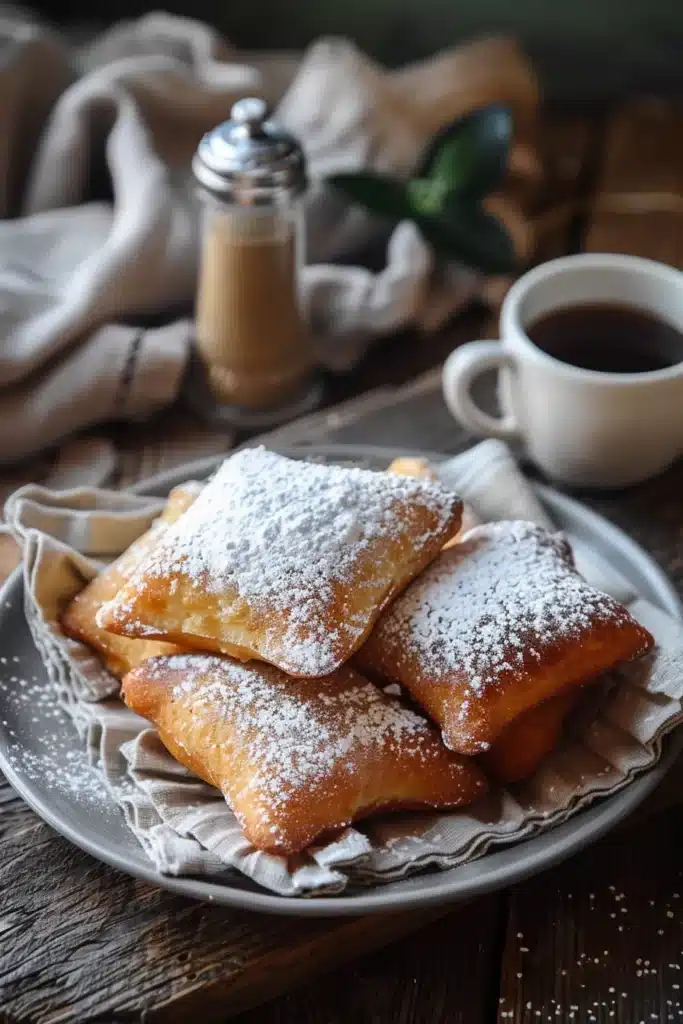
Traditional New Orleans Style pairs these beignets with a steaming cup of café au lait – equal parts strong coffee and hot milk. The bitter coffee perfectly balances the sweet, pillowy beignets for an authentic French Quarter experience.
For brunch entertaining, arrange beignets on a beautiful platter with fresh strawberries and whipped cream on the side. The colorful presentation and complementary flavors create an Instagram-worthy spread that guests will remember.
Seasonal serving ideas include pairing with warm apple cider in fall 🍂, hot chocolate during winter months ❄️, or fresh berry compote in spring and summer 🌸☀️. Each combination highlights different flavor notes in the vanilla-infused dough.
Pro serving tip: Dust beignets with powdered sugar just before serving to maintain the pristine white appearance. The sugar tends to absorb into warm beignets over time.
Frequently Asked Questions About Vanilla French Beignets
Can I make beignet dough ahead of time?
Yes! Prepare the dough through the first rise, then refrigerate overnight covered tightly. Let it come to room temperature for about 30 minutes before rolling and cutting. This actually improves flavor development.
What oil is best for frying beignets?
Vegetable oil or canola oil work best because of their neutral flavor and high smoke point. Avoid olive oil as it burns at high temperatures and imparts unwanted flavor.
How do I know when the oil is ready without a thermometer?
Drop a small piece of dough into the oil – if it immediately bubbles vigorously and starts browning within 30 seconds, your oil is ready. If it sinks and bubbles slowly, the oil needs more heating.
Can I bake beignets instead of frying?
While you can bake them at 375°F for 12-15 minutes until golden, the texture will be more like a dinner roll than traditional airy beignets. Frying creates the signature crispy exterior and fluffy interior.
How long do beignets stay fresh?
Beignets are best enjoyed immediately but will stay relatively fresh for 2 days stored in an airtight container. Reheat in a 350°F oven for 3-4 minutes to restore some crispness.
What’s the difference between beignets and donuts?
Beignets are made from yeast-raised dough that’s rolled flat and cut into squares, while donuts are typically shaped into rings. Beignets have a lighter, more pillowy texture compared to the denser structure of most donuts.
Can I make these gluten-free?
Yes, but substitute the all-purpose flour with a gluten-free flour blend that contains xanthan gum. The texture will be slightly different, but still delicious. You may need to add an extra tablespoon of liquid.
Why didn’t my beignets puff up?
This usually indicates the oil temperature was too low, the yeast was inactive (check expiration dates), or the dough wasn’t properly proofed. Ensure your yeast foams when mixed with warm liquid before proceeding with the recipe.
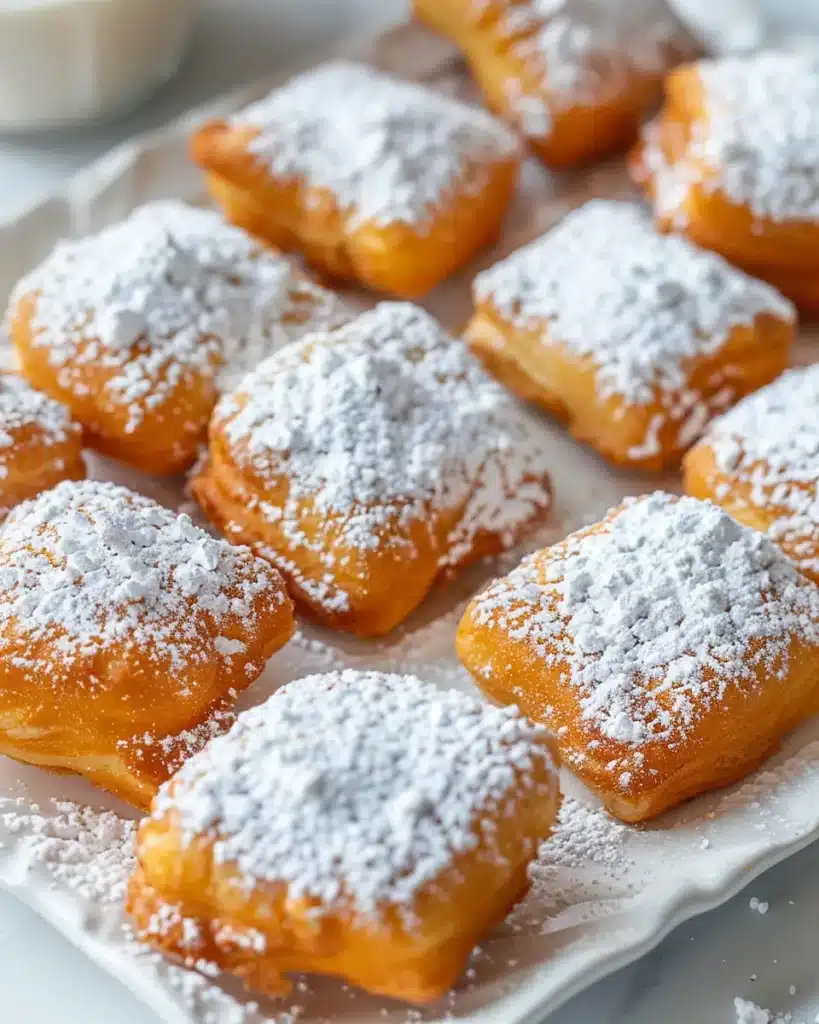
The Bottom Line: These Perfect Vanilla French Beignets bring the magic of New Orleans directly to your kitchen with simple ingredients and foolproof techniques. The combination of proper proofing, precise oil temperature, and quality vanilla creates bakery-worthy results that will have everyone asking for your secret. Whether you’re treating yourself to a special weekend breakfast or impressing guests at brunch, these pillowy, golden beignets deliver pure happiness in every powdered sugar-dusted bite!
Ready to transform your morning routine? Heat that oil, dust off your apron, and prepare for the most amazing homemade beignets you’ve ever tasted! ✨