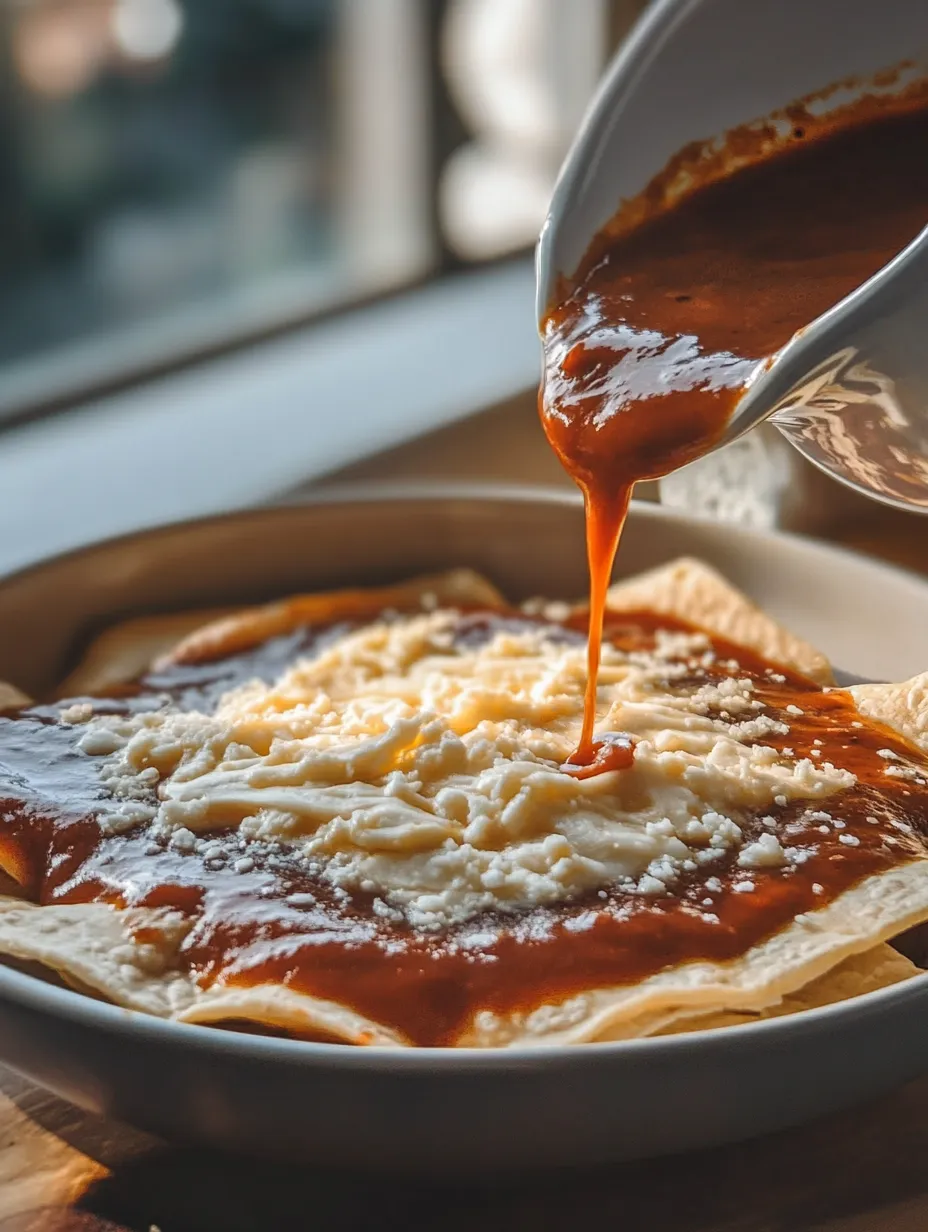
This homemade enchilada sauce recipe transforms ordinary pantry ingredients into restaurant-quality magic in just 15 minutes. I’ll never forget the night I almost ruined my sister’s birthday dinner with watery, flavorless enchiladas – that kitchen catastrophe led me to discover this game-changing technique that my family now requests every week.
Three years ago, I confidently promised my family I’d make my sister Sarah’s favorite enchiladas for her 30th birthday dinner. I’d made them dozens of times before using store-bought sauce—what could go wrong? Everything, apparently. The canned sauce I grabbed was watery and bland, turning my carefully rolled enchiladas into a soggy, disappointing mess. As I watched my sister’s face fall when she took that first bite, I knew I had to figure out how to make enchilada sauce from scratch that would never let me down again.
What is enchilada sauce? Enchilada sauce is a rich, flavorful sauce made from chili powder, tomatoes, and spices that coats enchiladas during baking, infusing them with authentic Mexican flavor. The best homemade versions create a silky, medium-thick consistency that clings perfectly to tortillas without making them soggy.
After months of testing and countless batches, I’ve perfected this foolproof homemade enchilada sauce that delivers restaurant-quality results every single time. This recipe uses simple pantry staples but employs specific techniques I learned through trial and error to create deep, complex flavors that will make your family beg for enchilada night every week.
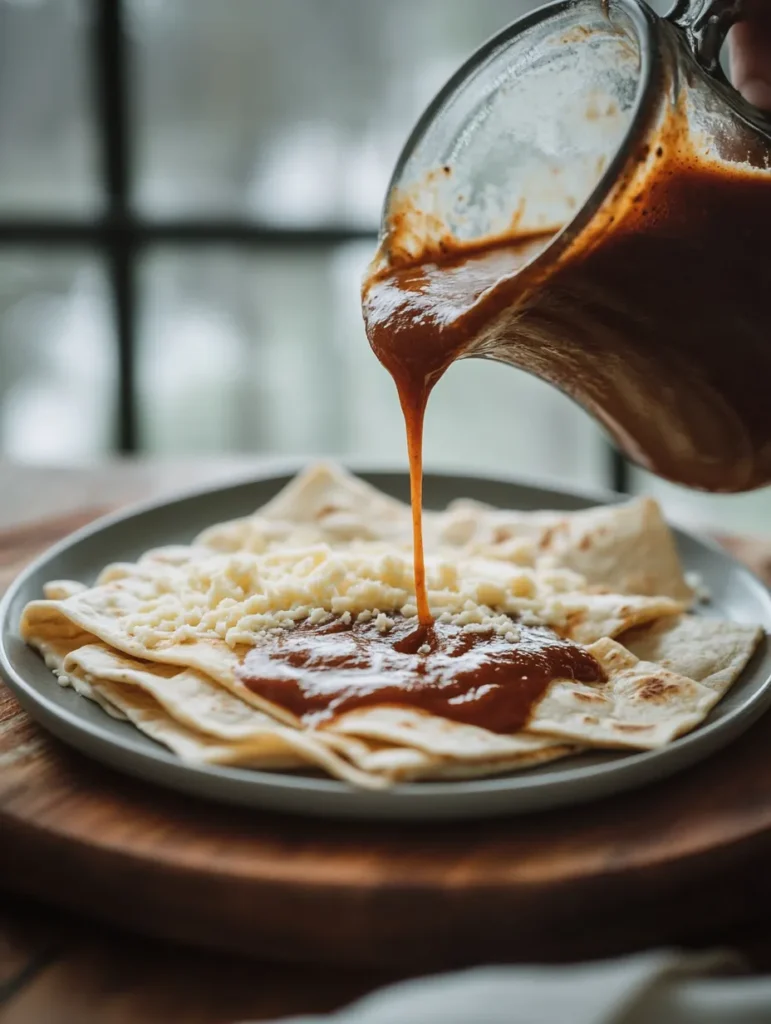
Why My Homemade Enchilada Sauce Will Change Your Cooking Game
Quick Overview:
- Ready in 15 minutes with zero chopping or blending required
- Uses pantry staples you probably already have on hand
- Costs 75% less than buying multiple cans of sauce
- Completely customizable for heat level and flavor preferences
- Freezes beautifully for quick weeknight meals
I discovered this technique after ruining my sister’s birthday dinner with watery canned sauce. Now, three years later, this has become my family’s most requested recipe. My husband actually gets excited when I announce “enchilada night,” and my kids have started rating restaurant enchiladas against “mom’s sauce” (homemade always wins).
The Enchilada Sauce Ingredients That Make All the Difference
After testing dozens of recipes and ingredient combinations, these specific ingredients and proportions create the perfect balance of flavor, texture, and authenticity:
The Essential Base:
- 3 tablespoons vegetable oil (I learned olive oil can make the sauce slightly bitter)
- 3 tablespoons all-purpose flour (creates the perfect thickening roux)
- 2 tablespoons chili powder (not cayenne – see my notes below!)
- 1 teaspoon ground cumin (adds that earthy, warming depth)
- 1/2 teaspoon garlic powder (fresh garlic burns too easily in this technique)
- 1/4 teaspoon dried oregano (Mexican oregano if you can find it)
- 1/4 teaspoon salt (start here and adjust to taste)
- Pinch of cinnamon (my secret ingredient that adds incredible depth)
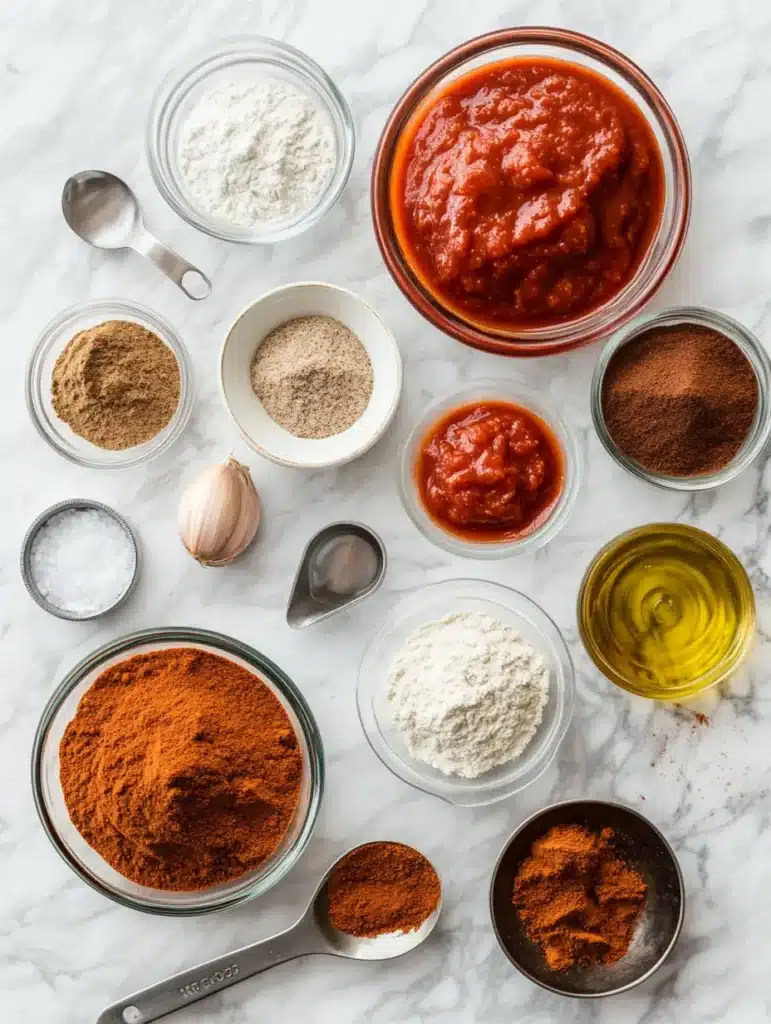
The Liquid Components:
- 2 tablespoons tomato paste (concentrated flavor without wateriness)
- 2 cups chicken or vegetable broth (the base that brings everything together)
- 1 teaspoon apple cider vinegar (brightens all the flavors)
- Black pepper to taste
Pro Tip from Experience: I used to use tomato sauce instead of tomato paste and always ended up with thin, watery sauce. Tomato paste concentrates the tomato flavor without adding excess liquid, creating that perfect consistency that clings to enchiladas without pooling at the bottom of the pan.
Essential Tools for Perfect Enchilada Sauce Every Time
Based on my countless batches, these tools make the difference between smooth success and lumpy disasters:
- Medium heavy-bottomed saucepan (prevents hot spots that burn spices)
- Wire whisk (absolutely essential for smooth sauce)
- Measuring cups and spoons (precision matters with the roux ratio)
- Heat-resistant spatula for scraping every bit of goodness
- Fine-mesh strainer (optional, but helpful if you end up with lumps)
I learned the hard way that using a thin-bottomed pan causes the spices to burn before the flour cooks properly, creating bitter flavors that ruin the entire batch.
My Step-by-Step Method for Foolproof Enchilada Sauce
This technique took me months to perfect after countless batches of lumpy, bitter, or flavorless attempts. Every step matters for achieving that silky, restaurant-quality consistency.
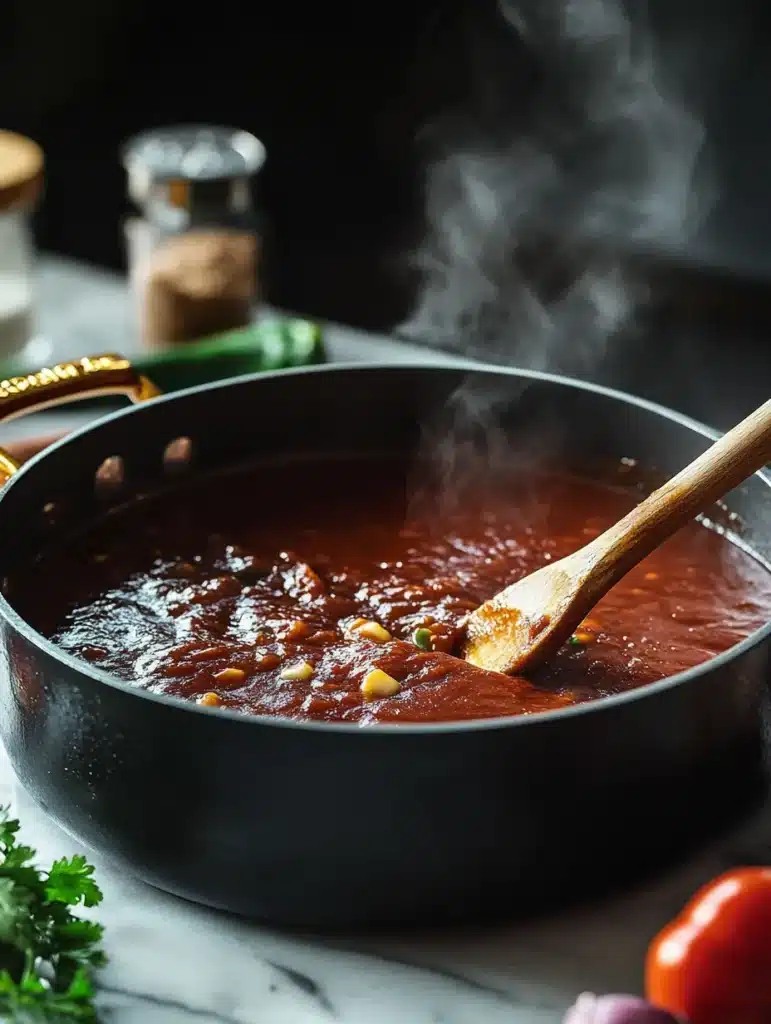
Step 1: Create the Perfect Roux Base
Heat your oil in a medium saucepan over medium heat. When it shimmers (but doesn’t smoke), add the flour and whisk constantly for exactly 60 seconds. This creates what’s called a roux – the thickening base that gives your sauce body. I used to rush this step and ended up with raw flour taste that no amount of simmering could fix.
Step 2: Toast the Spices for Maximum Flavor
Add chili powder, cumin, garlic powder, oregano, salt, and cinnamon to the roux. Whisk constantly for 30 seconds until the mixture becomes fragrant and deepens in color. This brief toasting step releases oils in the spices that create layers of flavor impossible to achieve by simply stirring them in later.
Critical Timing Note: I learned the hard way that cooking spices longer than 30 seconds creates bitter flavors. Set a timer – this isn’t the place for guesswork.
Step 3: Build the Base with Tomato Paste
Whisk in the tomato paste until completely smooth with no red streaks visible. This concentrated tomato flavor becomes the backbone of your sauce. I discovered that adding the paste here (rather than with the liquid) prevents it from forming lumps that never fully dissolve.
Step 4: Gradually Add the Liquid
Here’s where most people mess up – and where I failed dozens of times before mastering this technique. Pour in the broth gradually, about 1/2 cup at a time, whisking constantly after each addition. This prevents lumps from forming and ensures a silky-smooth consistency.
If you dump all the liquid in at once (like I used to do), you’ll get lumps that are nearly impossible to whisk out completely.
Step 5: Simmer to Perfection
Bring the sauce to a gentle simmer, then reduce heat to maintain barely bubbling for 5-7 minutes, whisking occasionally. The sauce will thicken slightly and develop a gorgeous, glossy appearance. Don’t worry if it seems a bit thin – it thickens more as it cools.
Step 6: The Finishing Touch
Remove from heat and whisk in the apple cider vinegar. This bright acid balances all the rich flavors and makes the sauce taste more complex and authentic. Season with additional salt and pepper to taste.
What I’ve Learned About Perfect Enchilada Sauce Consistency
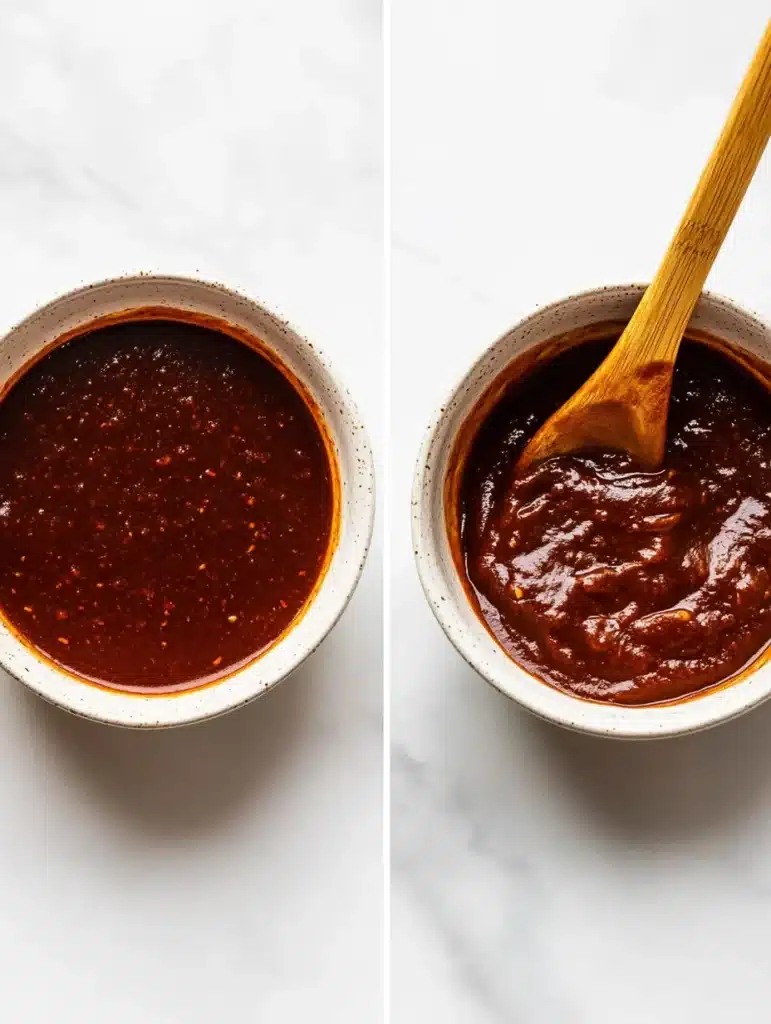
After making this sauce hundreds of times, I’ve discovered the ideal consistency should coat the back of a spoon but still pour easily. When you dip a spoon into finished sauce, it should cling without being gloppy or running off immediately.
Troubleshooting Thickness Issues:
- Too thick? Whisk in warm broth, 1 tablespoon at a time
- Too thin? Simmer uncovered for 2-3 more minutes, whisking frequently
- Lumpy despite your best efforts? Strain through fine-mesh strainer (though this shouldn’t happen if you follow my gradual liquid method)
My Favorite Enchilada Sauce Variations and Customizations
Over the years, I’ve experimented with countless variations based on my family’s preferences and what I have on hand:
Spicy Smoky Version
Replace 1 tablespoon of regular chili powder with chipotle chili powder and add 1/4 teaspoon smoked paprika. This creates incredible depth with gentle heat that my husband absolutely loves. I use this variation when making Southern smothered chicken – the smoky flavors complement each other perfectly.
Mild Family-Friendly Version
Use only 1 tablespoon chili powder and add 1 teaspoon brown sugar. Perfect for kids or those sensitive to spice. This was essential when my mother-in-law (who can’t handle any heat) comes for dinner.
Rich Mole-Inspired Version
Add 1 tablespoon unsweetened cocoa powder with the spices and increase the cinnamon to 1/2 teaspoon. This creates complex, layered flavors reminiscent of traditional mole sauce.
Green Enchilada Sauce Alternative
Replace tomato paste with 1 cup roasted, diced green chiles and 1/4 cup fresh cilantro. Blend until smooth after simmering. I developed this variation when I couldn’t find good green enchilada sauce at our local stores.
Pro Tip: I always make a double batch and freeze half in ice cube trays. Once frozen, I transfer the cubes to freezer bags for easy portioning. Two cubes equal about 1/4 cup – perfect for individual servings or quick weeknight meals.
How to Use This Enchilada Sauce Like a Pro
This versatile sauce transforms so many dishes beyond traditional enchiladas. Here are my family’s favorite applications:
For Perfect Enchiladas Every Time
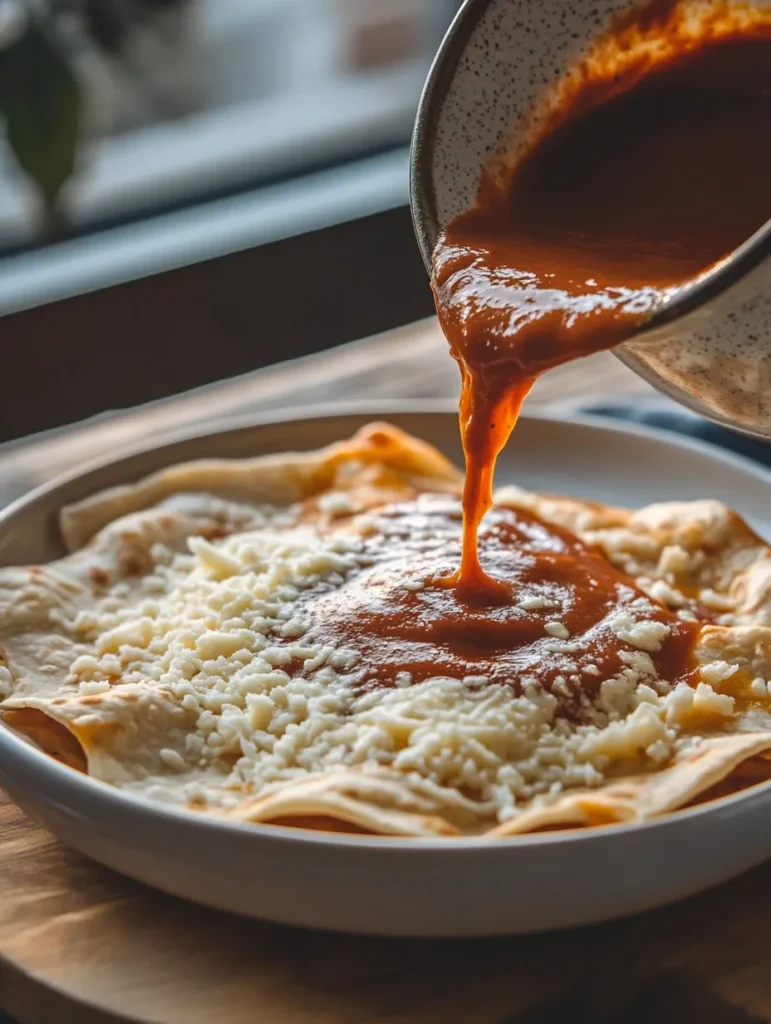
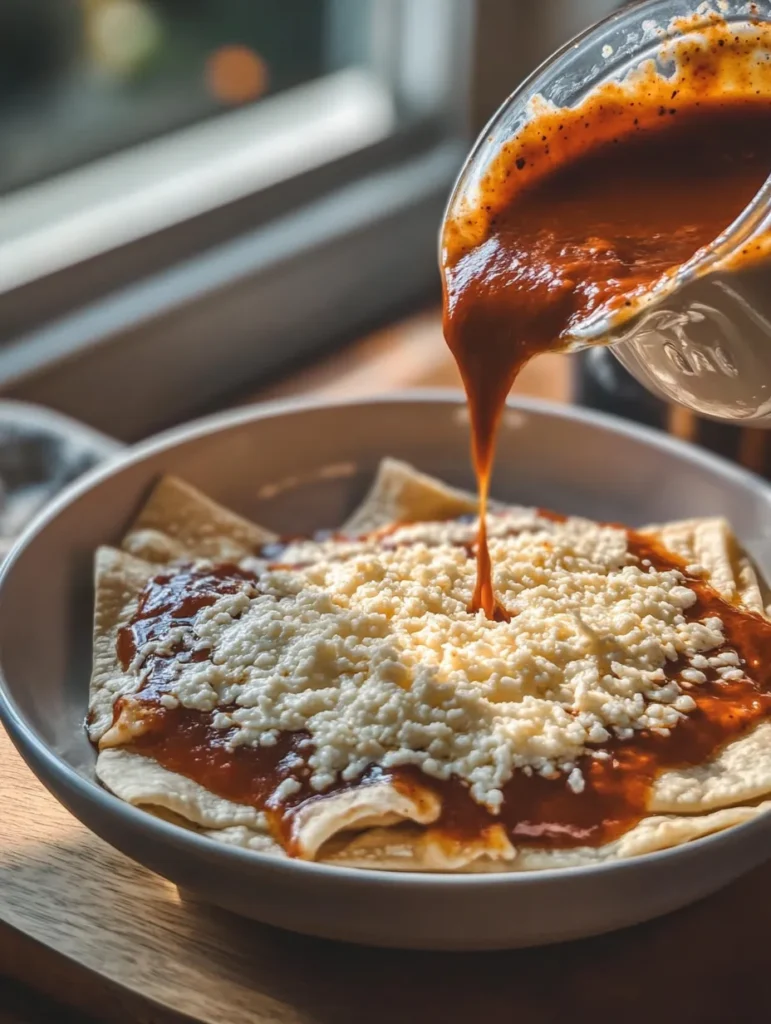
Use about 3 cups total – 1 cup spread on the bottom of your baking dish, 1 cup for dipping tortillas before filling, and 1 cup to pour over the top before baking. This three-layer approach prevents soggy bottoms while ensuring every bite is perfectly sauced. The technique works beautifully whether you’re making traditional cheese enchiladas or my homemade chipotle ranch grilled chicken burrito style enchiladas.
Creative Ways We Use This Sauce
- Simmer sauce for chicken or pork – creates tender, flavorful protein like my crispy hot honey feta chicken
- Mix into Spanish rice for restaurant-style flavor, especially with pineapple chicken and rice
- Breakfast enchiladas – pour over eggs and cheese for amazing morning meals
- Soup base – thin with additional broth for quick enchilada soup
- Marinade for grilled meats – use my quick chicken marinade formula as base, then add this sauce
Storage Wisdom from Experience: This sauce keeps perfectly in the refrigerator for up to 1 week and freezes for up to 3 months. I’ve learned to let it cool completely before storing to prevent condensation that can dilute the flavors.
My Biggest Enchilada Sauce Mistakes and How to Avoid Them
Learning to make perfect enchilada sauce required plenty of failures. Here are the mistakes that taught me the most:
Mistake #1: Using the Wrong Chili Powder
I once grabbed “chili powder” from an international market that was actually pure cayenne. The resulting sauce was inedibly spicy and had no depth of flavor. Always use American-style chili powder, which is a blend of chiles and spices, not pure ground chile.
Mistake #2: Burning the Spices
Early in my sauce-making journey, I’d get distracted and let the spices cook too long, creating bitter, acrid flavors that ruined entire batches. Set a 30-second timer when toasting spices – this isn’t optional.
Mistake #3: Adding Liquid Too Quickly
This was my most frequent early mistake. Dumping all the broth in at once creates lumps that never fully dissolve, resulting in texture issues that persist even after blending. Add liquid gradually while whisking constantly.
Mistake #4: Skipping the Roux Step
I tried shortcuts using cornstarch or skipping thickeners entirely. Both failed miserably – cornstarch created gummy texture, and no thickener resulted in watery sauce that made soggy enchiladas. The flour roux is non-negotiable for proper consistency.
Comprehensive FAQ Based on My Sauce-Making Experience
What makes homemade enchilada sauce better than store-bought?
Homemade sauce offers superior flavor depth, customizable heat levels, and much better consistency. Store-bought versions are often thin, oversalted, and contain preservatives that affect taste. Plus, making your own costs about 75% less than buying multiple cans.
Can I make this sauce without tomato paste?
While tomato paste creates the best flavor and consistency, you can substitute with 1/2 cup tomato sauce and reduce the broth to 1 1/2 cups. The sauce will be slightly thinner and less rich, but still delicious.
How spicy is this enchilada sauce?
Using 2 tablespoons of regular chili powder creates a mild-medium heat level – flavorful but family-friendly. For more heat, add 1/4 teaspoon cayenne pepper or use chipotle chili powder.
What’s the best way to store leftover sauce?
Refrigerate in airtight containers for up to 1 week, or freeze for up to 3 months. I freeze in ice cube trays for easy portioning – each cube equals about 2 tablespoons.
Can I use this sauce for dishes other than enchiladas?
Absolutely! This sauce works beautifully as a simmer sauce for meats, a base for soups, mixed into rice, or as a marinade. It’s incredibly versatile.
Why does my sauce sometimes turn out bitter?
Bitterness usually results from burning spices (cook for only 30 seconds) or using olive oil instead of neutral oil. Some brands of chili powder are also more bitter than others.
How can I make this sauce gluten-free?
Replace all-purpose flour with equal amounts of rice flour, cornstarch, or gluten-free flour blend. The technique remains exactly the same.
What if my sauce turns out too thick or too thin?
For thick sauce, whisk in warm broth 1 tablespoon at a time. For thin sauce, simmer uncovered for 2-3 more minutes. The sauce also thickens as it cools.
The Secret to Restaurant-Quality Enchiladas at Home
The difference between good enchiladas and extraordinary ones lies in the sauce quality and application technique. This homemade sauce, combined with proper layering (sauce on bottom, dipped tortillas, filling, more sauce on top), creates enchiladas that rival any Mexican restaurant.
My family now requests this enchilada sauce for every celebration, and I’ve shared this recipe with dozens of friends who’ve reported similar success. The transformation from that disastrous birthday dinner to becoming known as the “enchilada expert” in our family happened because I refused to settle for mediocre sauce again.
The Bottom Line: Once you taste homemade enchilada sauce made with proper technique, you’ll never go back to the canned versions. This recipe delivers authentic flavor, perfect consistency, and the satisfaction of creating restaurant-quality results in your own kitchen.