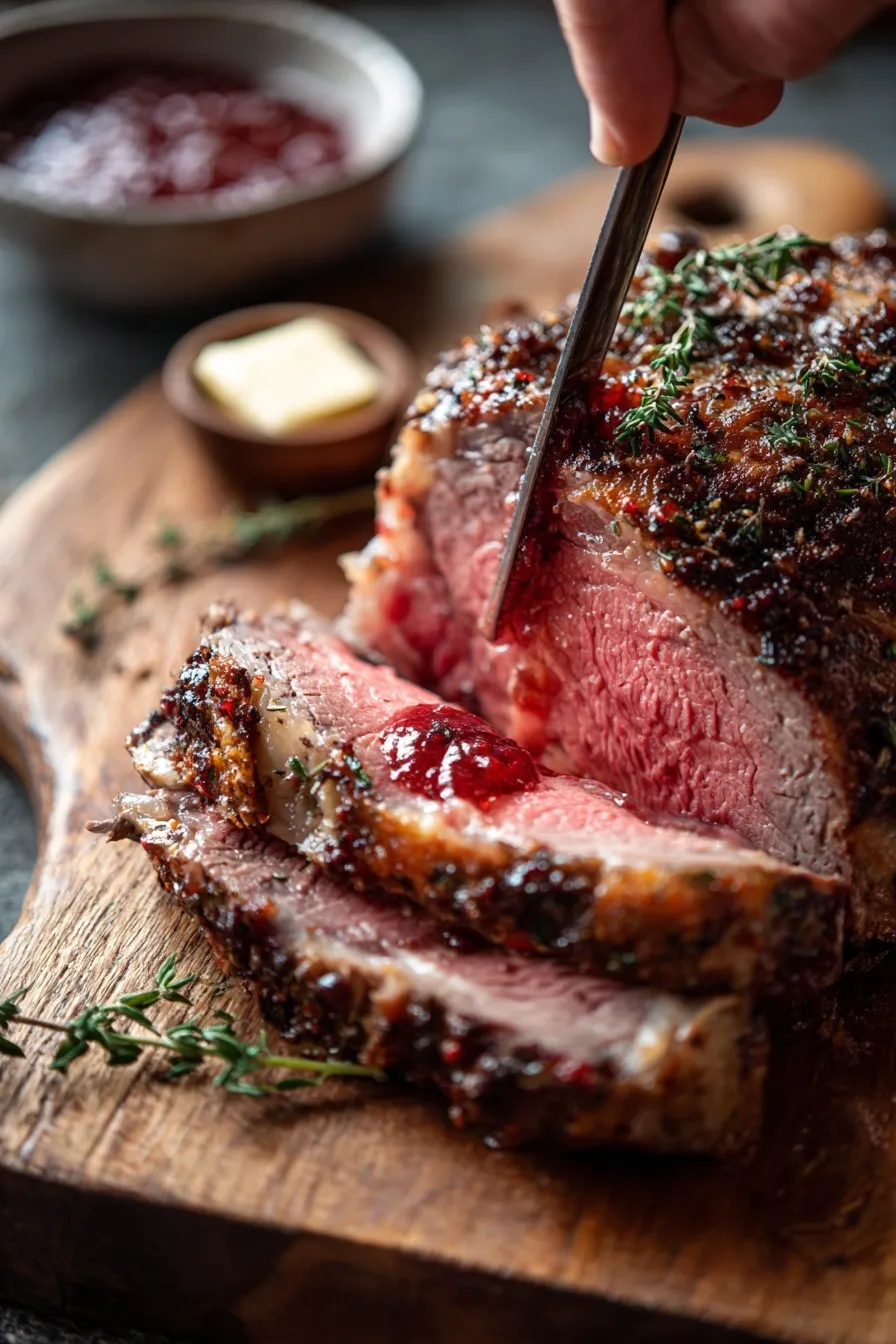
This foolproof prime rib recipe uses the closed oven method—cook at 500°F for 5-6 minutes per pound, then turn off the oven and don’t open the door for 2 hours. Perfect medium-rare every single time with zero guesswork or stress! 🥩
Since you’re here, make sure to check out these related recipes:
- Garlic Butter Beef Rice Skillet
- Korean BBQ Steak Rice Bowls
- Amazing Beef Rolls Recipe
- Sweet Spicy Walnut Crusted Salmon
- Balsamic Baked Chicken Breast
Why This Foolproof Prime Rib Recipe Works
Ever wonder how restaurants get prime rib perfectly pink and juicy every single time?
This foolproof prime rib recipe uses the closed oven method that’s literally impossible to mess up—the high initial heat sears the outside while the residual heat in a turned-off oven gently brings it to perfect medium-rare. No temperature checking every 10 minutes, no stressing about overcooking, no dry meat. Just season, roast, and walk away for 2 hours.
Here’s what makes this prime rib irresistible:
- Virtually foolproof: The closed oven method eliminates overcooking—follow the timing and it’s perfect every time
- Hands-off cooking: After the initial sear, you literally turn the oven off and don’t touch it for 2 hours
- Restaurant-quality results: Perfectly pink center with a flavorful crust that rivals steakhouse prime rib
- Special occasion worthy: This is the showstopping centerpiece that makes Christmas dinner or celebrations memorable
The combination of high-heat searing and gentle residual cooking creates that perfect balance of crusty exterior and juicy, pink interior. The seasoning blend enhances the beef’s natural flavor without overpowering it. It’s the holiday roast that makes you look like a culinary genius! 🎄
Master the 500-Degree Prime Rib Rule for Holiday Success
PLACEMENT: Add this section BEFORE your ingredients list or as an H3 under your existing section
When it comes to foolproof prime rib recipes, the 500-degree rule has revolutionized how home cooks approach this intimidating cut of meat. This award-winning cooking method transforms what was once a high-stress centerpiece into a guaranteed success story for Christmas dinners, Easter celebrations, and any special occasion that demands perfection.
The genius of this closed oven technique lies in its mathematical precision: exactly 5 minutes per pound at 500°F, followed by 2 hours of hands-off cooking that delivers restaurant-quality results every single time.
Whether you’re hosting your first holiday gathering or you’re a seasoned cook looking for a fail-safe prime rib method, this no-peek approach eliminates the guesswork that makes prime rib intimidating. The result? A perfectly medium-rare standing rib roast with a golden crust and juicy pink interior that will have your guests convinced you’re a culinary genius.
Ingredients
Want to know the secret to never opening the oven door during cooking?
The key is trusting the process completely—the trapped heat in a closed 500°F oven continues cooking the roast perfectly to medium-rare without any intervention. Opening the door releases that heat and ruins everything.
For the Prime Rib:
- 1 (4-6 lb) beef (halal-certified) prime rib roast, bone-in
- 3 tbsp olive oil or softened butter
- 1 tbsp + 1 tsp onion salt
- 1 tbsp + 1 tsp seasoned salt
- 1 tbsp + 1 tsp garlic powder
- 2 tsp coarsely ground black pepper
- 1 tsp dried thyme or rosemary (optional)
For Horseradish Cream Sauce:
- 1 cup heavy whipping cream
- 3 tbsp prepared horseradish
- Pinch of salt
- Dash of hot sauce (optional) 🌶️
For Serving:
- Au jus or beef gravy
- Fresh herbs for garnish
The bone-in prime rib roast should be 4-6 pounds for this timing to work—adjust by 5-6 minutes per pound. Prime grade has more marbling than choice grade and costs more, but both work beautifully. Seasoned salt and onion salt create that signature steakhouse crust.
Step-by-Step Instructions
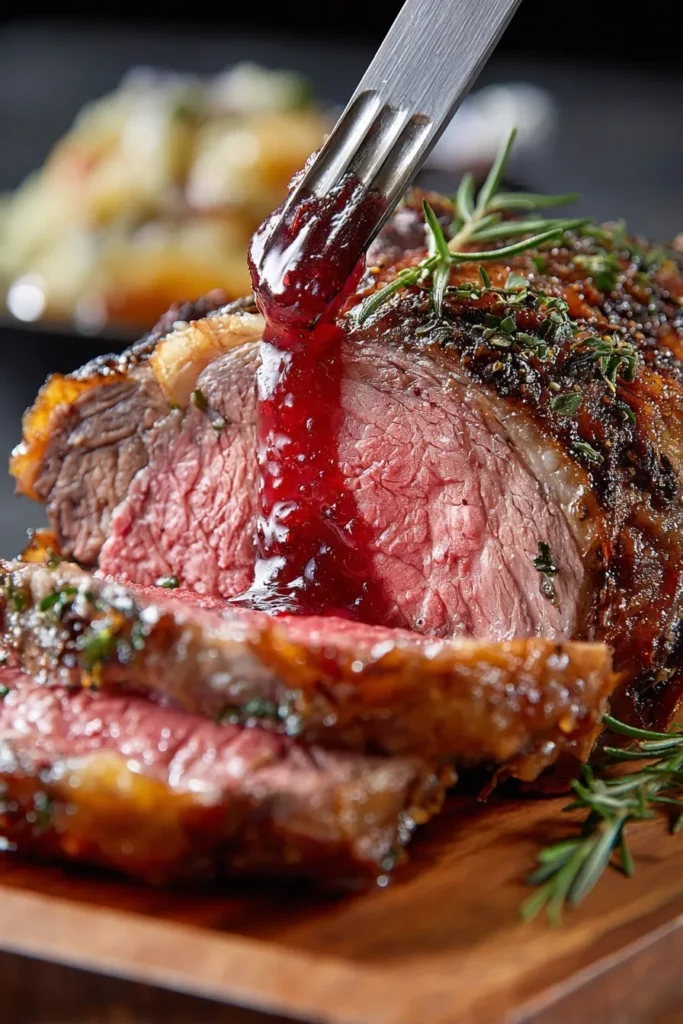
1. Bring to room temperature: Remove the prime rib roast (halal-certified) from the refrigerator and let it sit at room temperature for 3-4 hours before cooking. This is crucial for even cooking—cold meat straight from the fridge won’t cook evenly and you’ll end up with cold centers.
2. Preheat to extreme heat: Preheat your oven to 500°F (or as high as your oven will go). Make sure the oven rack is positioned in the center. This high initial heat is what creates the flavorful crust quickly before the interior overcooks.
3. Prepare the seasoning blend: In a small bowl, mix together 1 tablespoon + 1 teaspoon each of onion salt, seasoned salt, and garlic powder for a total of 1/4 cup of seasoning mix. Add the black pepper and optional dried herbs. This makes enough to generously coat the roast.
4. Season the roast: Rub the olive oil or softened butter all over the entire roast—this helps the seasonings stick and promotes browning. Pat the seasoning mixture generously on both ends of the roast as well as the fat side. Don’t worry if the salt doesn’t stick perfectly to the fat—it will be fine.
5. Set up for roasting: Place the seasoned roast on a roasting rack, bone-side down and fat-side up, in a large roasting pan. The rack allows hot air to circulate underneath for even cooking. Insert a meat thermometer into the thickest part of the roast, making sure it doesn’t touch the bone.
6. Initial high-heat roast: Place the roast in the preheated 500°F oven, uncovered. Roast for exactly 5-6 minutes per pound. For a 5-pound roast, this means 25-30 minutes. Set a timer and don’t open the door during this time. The outside should develop a beautiful brown crust.
7. The magic happens: After the initial cooking time, turn the oven OFF completely. DO NOT OPEN THE OVEN DOOR FOR TWO HOURS. This is the most important step! The trapped heat gently finishes cooking the roast to perfect medium-rare. Walk away, watch a movie, take a nap—just don’t peek!
8. Check temperature and rest: After 2 hours, remove the roast and check the internal temperature—it should read 130-135°F for medium-rare. Let the roast rest, tented loosely with foil, for 15-20 minutes before carving. This allows juices to redistribute throughout the meat.
9. Make horseradish sauce: While the roast rests, whip the heavy cream until soft peaks form. Gently fold in the horseradish, salt, and optional hot sauce until just combined. Refrigerate until ready to serve.
10. Carve and serve: Remove the bones (save for soup or stock!) and slice the roast into thick slices, about 1/2 inch each. Serve immediately with horseradish cream sauce and au jus.
Pro tip: If you have a self-cleaning oven with heavy insulation, check the temperature after 1 hour and 45 minutes instead of the full 2 hours—these ovens hold heat extremely well and may cook faster than regular ovens.
Essential Equipment for Prime Rib
Large Roasting Pan with Rack
A heavy-duty roasting pan with a rack elevates the meat so hot air circulates underneath for even cooking. The rack prevents the bottom from steaming and ensures proper browning on all sides.
Reliable Meat Thermometer
An instant-read or probe thermometer is essential for checking final temperature without guessing. Digital thermometers give precise readings in seconds to prevent overcooking this expensive cut.
Sharp Carving Knife (10-12 Inch)
A long, razor-sharp carving knife slices through the roast cleanly for beautiful presentation. Dull knives tear the meat and make carving difficult, especially near the bones.
Large Cutting Board with Juice Groove
A spacious board with a groove catches precious beef juices while carving. Wood or bamboo boards are easier on knife edges and look impressive for tableside presentation.
Le Creuset Enameled Roasting Pan (PREMIUM)
Professional-grade enameled cast iron distributes heat perfectly for even browning at high temperatures. The heavy construction prevents warping and goes from oven to table beautifully for serving.
Wüsthof Classic Carving Set (PREMIUM)
Restaurant-quality German steel knives maintain razor-sharp edges through countless holiday roasts. The carving knife and sturdy fork make elegant, uniform slices that showcase your perfectly cooked prime rib.
What to Serve With Prime Rib
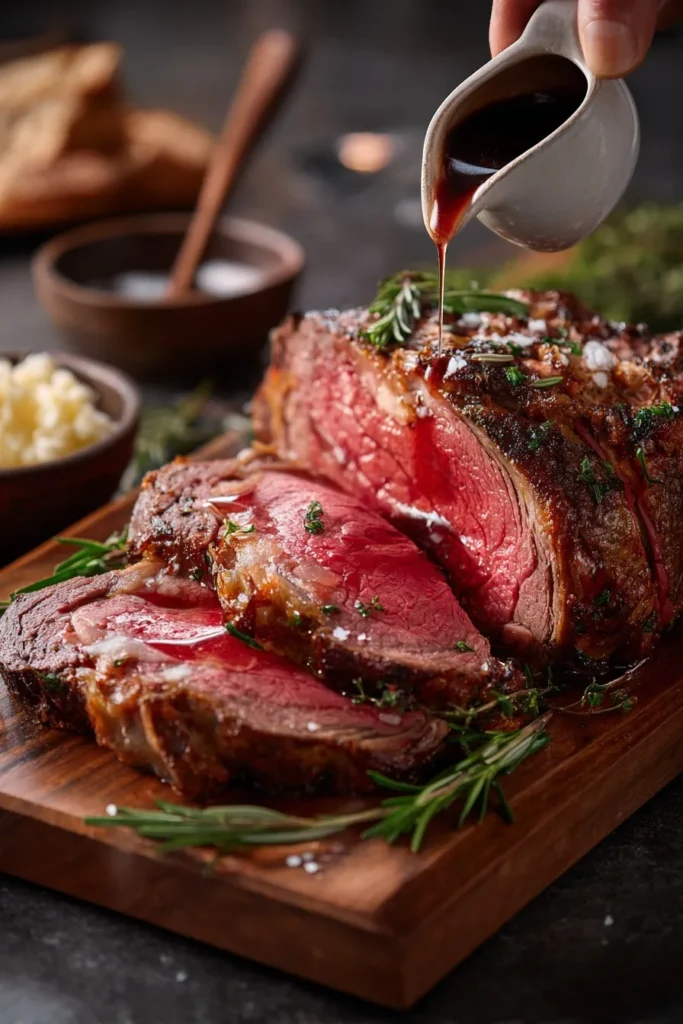
Looking for the perfect classic sides for your holiday feast?
Creamy horseradish mashed potatoes are steakhouse perfection alongside prime rib. Try my perfect garlic mashed potatoes for ultimate comfort.
Yorkshire pudding brings traditional British elegance to Christmas dinner. The crispy, airy popovers soak up beef juices and au jus beautifully.
Roasted Brussels sprouts with bacon add festive color and crispy texture. My garlic parmesan roasted vegetables work wonderfully too.
Creamed spinach or green bean casserole create rich, indulgent sides worthy of this special roast. The creamy vegetables balance the meaty main course.
Dinner rolls or Parker House rolls are essential for soaking up au jus. My garlic butter dinner rolls are fluffy perfection.
Roasted root vegetables like carrots, parsnips, and potatoes add earthy sweetness. Toss with olive oil, salt, and herbs and roast alongside the prime rib.
Caesar salad brings fresh, crisp contrast to the rich beef. The tangy dressing and crunchy romaine lighten up the meal.
For a complete holiday spread, serve alongside my traditional stuffing or honey glazed carrots for variety guests will love.
Storage and Reheating Guide
Refrigerator Storage
Store leftover prime rib sliced or whole in an airtight container in the refrigerator for up to 4 days. Store in a little au jus or beef broth to keep the meat moist. Prime rib makes incredible sandwiches, salads, and hash the next day.
Freezer Storage
Freeze sliced prime rib for up to 3 months in freezer-safe containers or vacuum-sealed bags. Separate slices with parchment paper for easy grabbing. Freeze in au jus to prevent freezer burn. Thaw overnight in the refrigerator before using.
Reheating Instructions
Reheat sliced prime rib on a baking sheet covered with foil at 250°F for 10-15 minutes until warmed through—don’t overheat or it becomes tough and dry. For sandwiches, serve at room temperature or warm gently in a skillet with butter for 2-3 minutes.
Pro Storage Tips
- Best served fresh: Prime rib is truly best the day it’s made—the texture changes with reheating, though it’s still delicious
- Use for tacos: Transform leftovers into carne asada tacos by marinating in citrus mojo sauce and warming quickly in a skillet
- Save the bones: Freeze the rib bones for making incredible beef stock or soup—they add so much flavor
Recipe Variations
Want to switch things up?
This foolproof prime rib is incredibly versatile—here are delicious ways to customize it for different flavors and preferences.
Herb-Crusted Prime Rib
Mix 2 tablespoons fresh chopped rosemary, 2 tablespoons fresh thyme, and 4 cloves minced garlic with the butter before rubbing on the roast. The fresh herb crust creates incredible aromatic flavor.
Garlic Butter Crusted
Increase garlic to 6 cloves minced mixed into 1/2 cup softened butter. Spread thickly over the entire roast before seasoning. The garlic butter melts into the meat during cooking for intense flavor.
Coffee-Rubbed
Mix 2 tablespoons finely ground coffee with the seasoning blend for a sophisticated espresso crust. The coffee adds deep, complex flavor without tasting like coffee.
Cajun-Spiced
Replace the seasoning blend with 3 tablespoons Cajun seasoning for Louisiana-style spicy prime rib. The bold spices create exciting flavor while the closed oven method keeps it juicy.
Asian-Inspired
Before roasting, brush with a mixture of soy sauce, ginger, sesame oil, and rice vinegar. Season with Chinese five-spice instead of the herb blend for unique Asian flavors.
Horseradish Crusted
Mix 3 tablespoons prepared horseradish into the butter before spreading on the roast. The horseradish creates a spicy, tangy crust that’s perfect for horseradish lovers.
Pro Tips & Tricks
Curious about the insider secrets?
- Choose the right grade—prime grade has more marbling and costs more but delivers superior flavor and tenderness. Choice grade works beautifully too and costs less.
- Bring to room temperature—don’t skip the 3-4 hour rest at room temperature! Cold meat cooks unevenly with cold centers and overcooked edges.
- Don’t open the door—this is THE golden rule! Opening releases the trapped heat that’s gently cooking your roast to perfection. Set a timer and walk away.
- Use bone-in if possible—the bones add incredible flavor and help insulate the meat for more even cooking. Plus, you get those amazing bones for stock later.
- Position fat-side up—the fat bastes the meat as it melts during cooking, keeping everything moist and flavorful throughout.
- Trust the process—yes, it seems crazy to turn the oven off. But this method has worked perfectly for thousands of home cooks. Don’t second-guess it!
- Check oven type—self-cleaning ovens with heavy insulation hold heat better and may cook faster. Check temperature after 1 hour 45 minutes instead of the full 2 hours.
- Save the drippings—collect all pan juices for making incredible au jus. Mix with beef broth and reduce for restaurant-quality sauce. 👌
Frequently Asked Questions
Q: Can you make prime rib ahead of time?
You can season the roast up to 24 hours ahead and refrigerate, but cook it the day you plan to serve it. Prime rib is truly best fresh from the oven—reheating changes the texture, though leftovers are still delicious.
Q: How long does prime rib last in the fridge?
Store in an airtight container for up to 4 days in the refrigerator. Keep in a little au jus or beef broth to maintain moisture. Use leftovers for sandwiches, salads, hash, or tacos.
Q: Can you freeze prime rib?
Freeze sliced prime rib for up to 3 months in freezer-safe containers or vacuum-sealed bags. Separate slices with parchment paper and freeze in au jus. Thaw overnight in the refrigerator before gentle reheating.
Q: What to serve with prime rib?
Serve with mashed potatoes, Yorkshire pudding, roasted vegetables, and horseradish cream sauce for classic steakhouse dinner. Try my garlic mashed potatoes or dinner rolls for perfect pairings.
Q: What if my roast isn’t 5 pounds exactly?
Calculate cooking time using 5-6 minutes per pound at 500°F. For a 4-pound roast, cook for 20-24 minutes. For a 6-pound roast, cook for 30-36 minutes. Always leave in the turned-off oven for 2 hours regardless of size.
Q: What’s the difference between prime and choice grade?
Prime grade has more marbling (fat throughout the meat) and costs more but delivers superior flavor and tenderness. Choice grade is more common, less expensive, and still makes excellent prime rib with this method.
Q: Why do you turn the oven off completely?
The residual heat in a closed 500°F oven gently brings the roast to perfect medium-rare without overcooking. Traditional roasting methods dry out the meat—this closed oven technique keeps it incredibly juicy.
Q: How many servings does prime rib make?
Plan on 3 servings per pound or about 6-8 ounces per person. A 5-pound roast serves 15 people as part of a larger meal or 8-10 people if prime rib is the main focus.
Q: What if I have a gas oven?
Gas ovens don’t hold heat as well as electric. After the initial high-heat roast, reduce temperature to 200°F instead of turning it off completely. Cook until internal temperature reaches 130°F, checking after 90 minutes.
Q: Can you cook prime rib without a rack?
Yes! Create a makeshift rack by placing chunky vegetables (onions, carrots, celery) on the bottom of the pan and setting the roast on top. This elevates the meat for air circulation.
Q: What temperature is medium-rare for prime rib?
Medium-rare is 130-135°F internal temperature after resting. The roast continues cooking while resting, so remove from oven at 125-130°F and let it coast to 130-135°F during the rest period.
Q: Can you use this method for boneless prime rib?
Yes, but bone-in adds more flavor and helps insulate the meat. Boneless may cook slightly faster, so check temperature after 1 hour 45 minutes instead of the full 2 hours.
Ready to Make This?
This foolproof prime rib is the ultimate special occasion roast that delivers restaurant-quality results with virtually zero effort. Using the closed oven method means you can’t mess it up—just follow the timing for perfectly pink, juicy prime rib every single time.
Save this recipe for Christmas dinner and leave a comment if you try it! Share with friends who need a showstopping holiday roast that’s actually foolproof 🙂
Best Foolproof Prime Rib Recipe (500 Rule!)
This foolproof prime rib recipe uses the closed oven method—cook at 500°F for 5-6 minutes per pound, then turn off the oven and don't open the door for 2 hours. Perfect medium-rare every single time with zero guesswork or stress
- Virtually foolproof: The closed oven method eliminates overcooking—follow the timing and it’s perfect every time
- Hands-off cooking: After the initial sear, you literally turn the oven off and don’t touch it for 2 hours
- Restaurant-quality results: Perfectly pink center with a flavorful crust that rivals steakhouse prime rib
- Special occasion worthy: This is the showstopping centerpiece that makes Christmas dinner or celebrations memorable
- 1 (4-6 lb) beef (halal-certified) prime rib roast, bone-in
- 3 tbsp olive oil or softened butter
- 1 tbsp + 1 tsp onion salt
- 1 tbsp + 1 tsp seasoned salt
- 1 tbsp + 1 tsp garlic powder
- 2 tsp coarsely ground black pepper
- 1 tsp dried thyme or rosemary (optional)
- 1 cup heavy whipping cream
- 3 tbsp prepared horseradish
- Pinch of salt
- Dash of hot sauce (optional) 🌶️
- Au jus or beef gravy
- Fresh herbs for garnish
- Bring to room temperature: Remove the prime rib roast (halal-certified) from the refrigerator and let it sit at room temperature for 3-4 hours before cooking. This is crucial for even cooking—cold meat straight from the fridge won’t cook evenly and you’ll end up with cold centers.
- Preheat to extreme heat: Preheat your oven to 500°F (or as high as your oven will go). Make sure the oven rack is positioned in the center. This high initial heat is what creates the flavorful crust quickly before the interior overcooks.
- Prepare the seasoning blend: In a small bowl, mix together 1 tablespoon + 1 teaspoon each of onion salt, seasoned salt, and garlic powder for a total of 1/4 cup of seasoning mix. Add the black pepper and optional dried herbs. This makes enough to generously coat the roast.
- Season the roast: Rub the olive oil or softened butter all over the entire roast—this helps the seasonings stick and promotes browning. Pat the seasoning mixture generously on both ends of the roast as well as the fat side. Don’t worry if the salt doesn’t stick perfectly to the fat—it will be fine.
- Set up for roasting: Place the seasoned roast on a roasting rack, bone-side down and fat-side up, in a large roasting pan. The rack allows hot air to circulate underneath for even cooking. Insert a meat thermometer into the thickest part of the roast, making sure it doesn’t touch the bone.
- Initial high-heat roast: Place the roast in the preheated 500°F oven, uncovered. Roast for exactly 5-6 minutes per pound. For a 5-pound roast, this means 25-30 minutes. Set a timer and don’t open the door during this time. The outside should develop a beautiful brown crust.
- The magic happens: After the initial cooking time, turn the oven OFF completely. DO NOT OPEN THE OVEN DOOR FOR TWO HOURS. This is the most important step! The trapped heat gently finishes cooking the roast to perfect medium-rare. Walk away, watch a movie, take a nap—just don’t peek!
- Check temperature and rest: After 2 hours, remove the roast and check the internal temperature—it should read 130-135°F for medium-rare. Let the roast rest, tented loosely with foil, for 15-20 minutes before carving. This allows juices to redistribute throughout the meat.
- Make horseradish sauce: While the roast rests, whip the heavy cream until soft peaks form. Gently fold in the horseradish, salt, and optional hot sauce until just combined. Refrigerate until ready to serve.
- Carve and serve: Remove the bones (save for soup or stock!) and slice the roast into thick slices, about 1/2 inch each. Serve immediately with horseradish cream sauce and au jus.