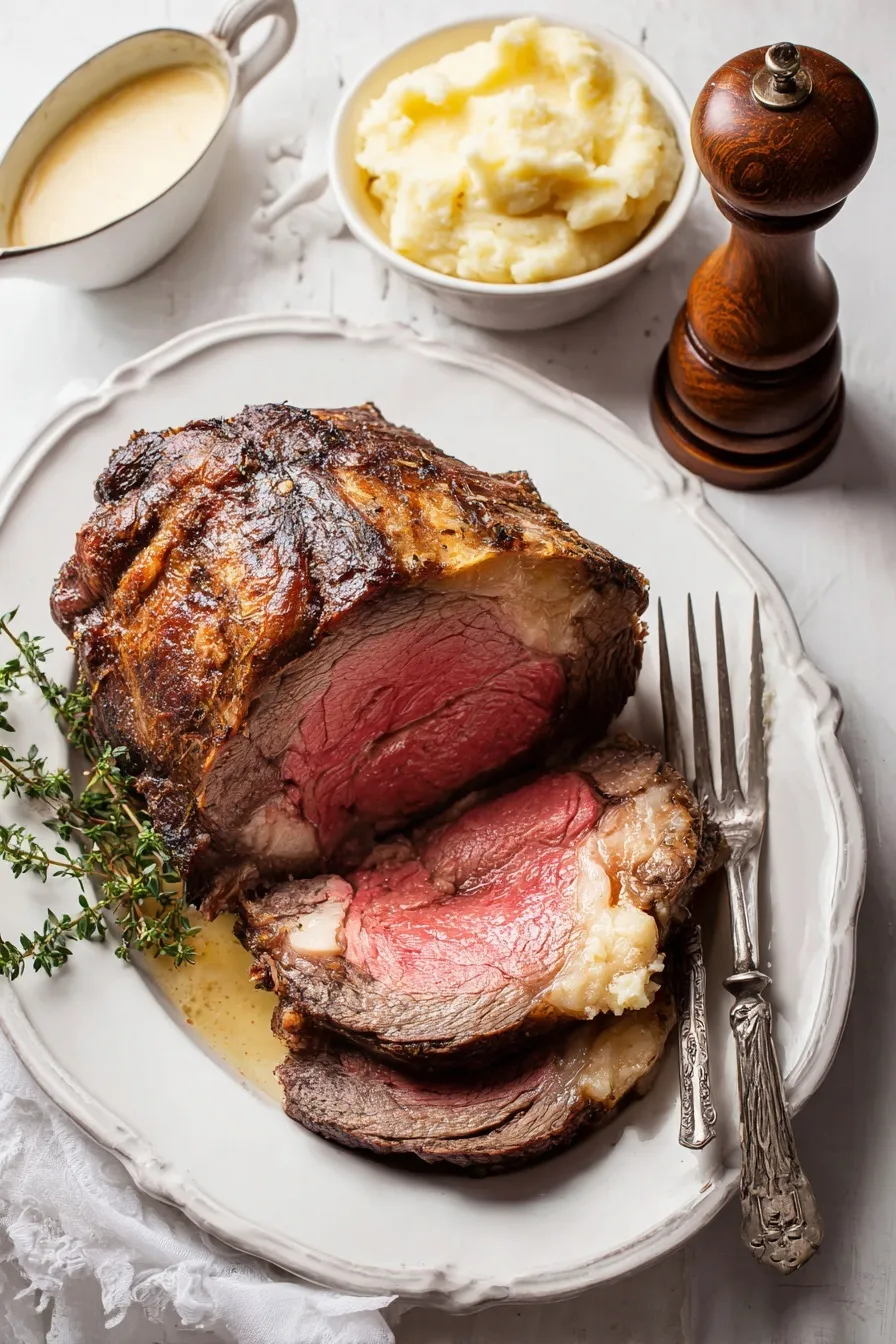
This slow roasted prime rib recipe delivers tender, juicy perfection every time—start with high heat to brown the crust, then slow roast at 325°F until medium-rare. Perfect for Christmas dinner or special occasions with just 5 ingredients! 🎄
Since you’re here, make sure to check out these related recipes:
- Perfect Garlic Mashed Potatoes
- Traditional Thanksgiving Stuffing Recipe
- French Onion Broccoli Cheese Casserole
- Garlic Butter Dinner Rolls
- Honey Glazed Corn Casserole
Why This Slow Roasted Prime Rib Recipe Works
Ever wonder why restaurant prime rib stays so incredibly tender and juicy?
This slow roasted prime rib recipe uses the reverse-sear method—high heat first to create a flavorful crust, then gentle low heat to cook evenly throughout. The secret is bringing the roast to room temperature for 2+ hours before cooking and removing it 5-10°F below target temp. This ensures perfectly pink, tender beef from edge to center.
Here’s what makes this prime rib irresistible:
- Foolproof technique: High-heat sear followed by slow roasting guarantees even cooking and prevents overcooking
- Simple ingredients: Just butter, garlic, and herbs create restaurant-quality flavor without complicated rubs
- Perfectly tender: Slow roasting at 325°F preserves natural juices for melt-in-your-mouth texture
- Holiday showstopper: This impressive roast makes Christmas dinner or special celebrations truly memorable
The combination of the initial 500°F sear and slow 325°F roasting creates that ideal balance of crispy, caramelized crust and juicy, pink interior. The garlic herb butter melts into the beef during cooking for incredible flavor. It’s the centerpiece that makes every holiday meal unforgettable! 🥩
Ingredients
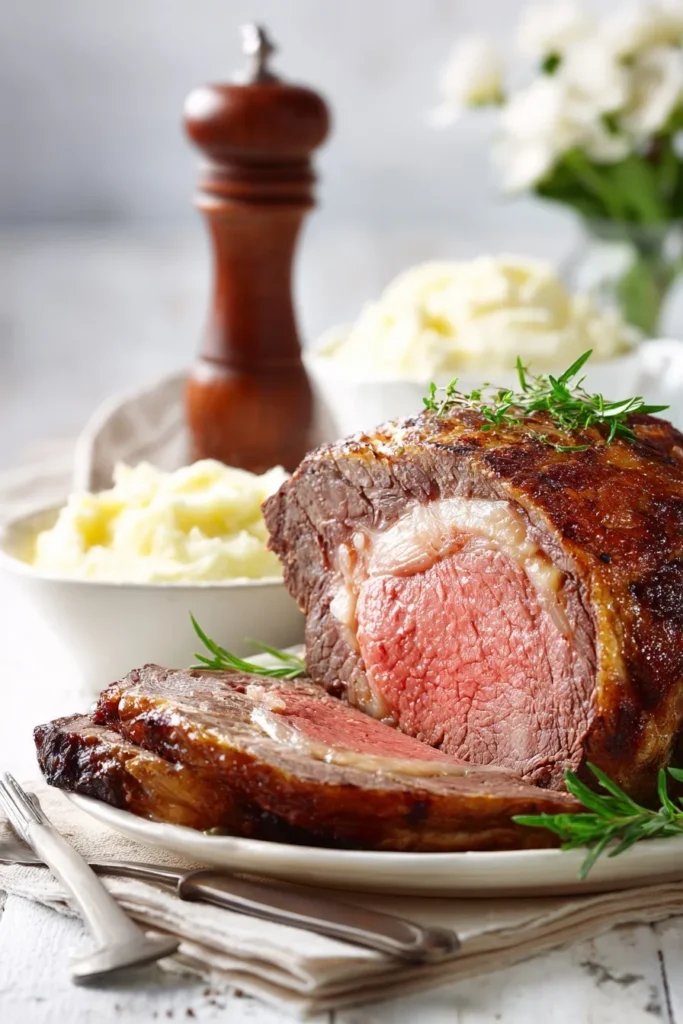
Want to know the secret to getting prime rib cooked evenly throughout?
The key is bringing the roast to room temperature for 2+ hours before cooking—cold meat from the fridge cooks unevenly with overcooked edges and cold centers, while room-temp meat roasts perfectly.
For the Prime Rib:
- 1 (5 lb) bone-in beef (halal-certified) prime rib roast
- Kosher salt (for seasoning and crust)
- 3 tbsp unsalted butter, softened
- 2 tbsp olive oil
- 6 cloves garlic, minced
- 2 tsp ground black pepper
- 1 tsp dried thyme
- 1/2 tsp dried rosemary
For Serving:
- Horseradish cream sauce
- Au jus or pan drippings
- Fresh herbs for garnish 🌿
The bone-in prime rib roast adds incredible flavor and makes impressive presentation—plan for 1 pound per person. Softened butter helps the garlic and herbs adhere while adding richness. Fresh garlic is essential for authentic steakhouse flavor.
Step-by-Step Instructions
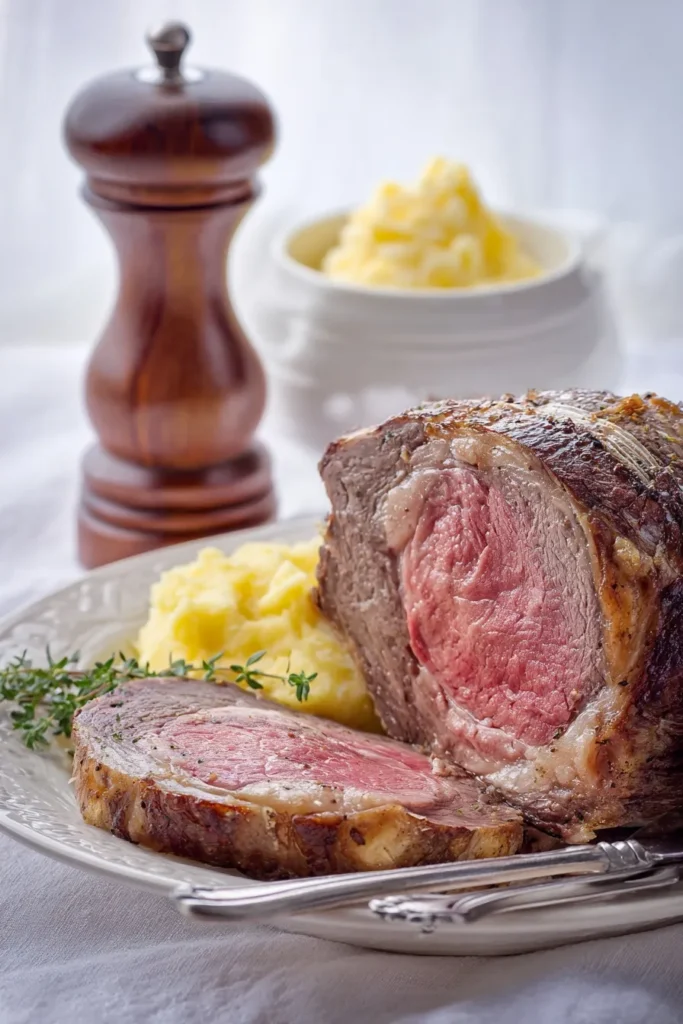
1. Bring to room temperature: Remove the prime rib roast (halal-certified) from the refrigerator and place it bone-side down in a roasting pan. Season generously on all sides with kosher salt—don’t be shy! Cover loosely with plastic wrap and let sit at room temperature for at least 2 hours (or up to 4 hours). This crucial step ensures even cooking throughout.
2. Preheat and prep: Preheat your oven to 500°F. Remove the plastic wrap and pat the roast completely dry with paper towels—moisture prevents proper browning. Make sure the roast is positioned bone-side down in the roasting pan.
3. Make the herb butter: In a small bowl, combine the softened butter, olive oil, minced garlic, 1 teaspoon salt, black pepper, dried thyme, and dried rosemary. Mix until well blended into a paste. This aromatic rub will create a flavorful crust.
4. Apply the rub: Spread the herb butter mixture evenly over the entire roast, coating all sides generously. Use your hands to press the mixture into the meat, ensuring complete coverage. The butter will melt during cooking and baste the roast.
5. Initial high-heat sear: Place the roast in the preheated 500°F oven for exactly 15 minutes. This high heat quickly browns the exterior and creates a flavorful, caramelized crust while sealing in juices. Don’t open the oven door during this time.
6. Reduce and slow roast: After 15 minutes, reduce the oven temperature to 325°F. Continue roasting slowly until the internal temperature reaches your desired doneness. Use a meat thermometer inserted into the thickest part (not touching bone) to monitor temperature.
7. Temperature guide: Cook to the following internal temperatures, remembering to remove 5-10°F early since the roast continues cooking while resting:
- Rare: 115-120°F (about 15-17 minutes/pound total)
- Medium-Rare: 125-130°F (about 17-20 minutes/pound total)
- Medium: 135-140°F (about 20-23 minutes/pound total)
- Medium-Well: 145-150°F (about 23-25 minutes/pound total)
8. Rest the roast: Remove the roast from the oven when it reaches 5-10°F below your target temperature. Tent loosely with aluminum foil and let rest for 15-20 minutes (or up to 30 minutes for larger roasts). This resting period allows juices to redistribute throughout the meat.
9. Carve and serve: If bone-in, place the roast bone-side up on a cutting board. Use a sharp carving knife to slice along the bones, separating the meat. Then slice the roast against the grain into 1/2-inch thick slices. Serve immediately with au jus and horseradish sauce.
Pro tip: Save all the pan drippings and browned bits from the roasting pan—mix with beef broth and simmer for 5 minutes to create incredible homemade au jus that elevates every bite.
Essential Equipment for Slow Roasted Prime Rib
Heavy-Duty Roasting Pan
A sturdy roasting pan with high sides holds the large roast and collects drippings for making au jus. Heavy-gauge pans prevent warping at high temperatures and distribute heat evenly.
Reliable Meat Thermometer
An instant-read or probe thermometer is absolutely essential for perfectly cooked prime rib. Digital thermometers give precise readings in seconds, eliminating guesswork with this expensive cut.
Sharp Carving Knife (10-12 Inch)
A long, razor-sharp carving knife slices through the roast cleanly for beautiful presentation. The long blade makes smooth, even cuts, especially when carving around bones.
Kitchen Twine
Butcher’s twine ties the roast together between the ribs, holding the meat and juices together during cooking. This ensures even cooking and makes carving easier afterward.
Le Creuset Enameled Roasting Pan (PREMIUM)
Professional-grade enameled cast iron distributes heat perfectly for even browning and slow roasting. The beautiful pan goes from oven to table for elegant presentation and makes incredible au jus from the drippings.
Thermapen Digital Thermometer (PREMIUM)
Restaurant-quality digital thermometers give instant, precise readings in under 2 seconds. The accuracy prevents overcooking this expensive roast and ensures perfect doneness every single time you cook prime rib.
What to Serve With Slow Roasted Prime Rib
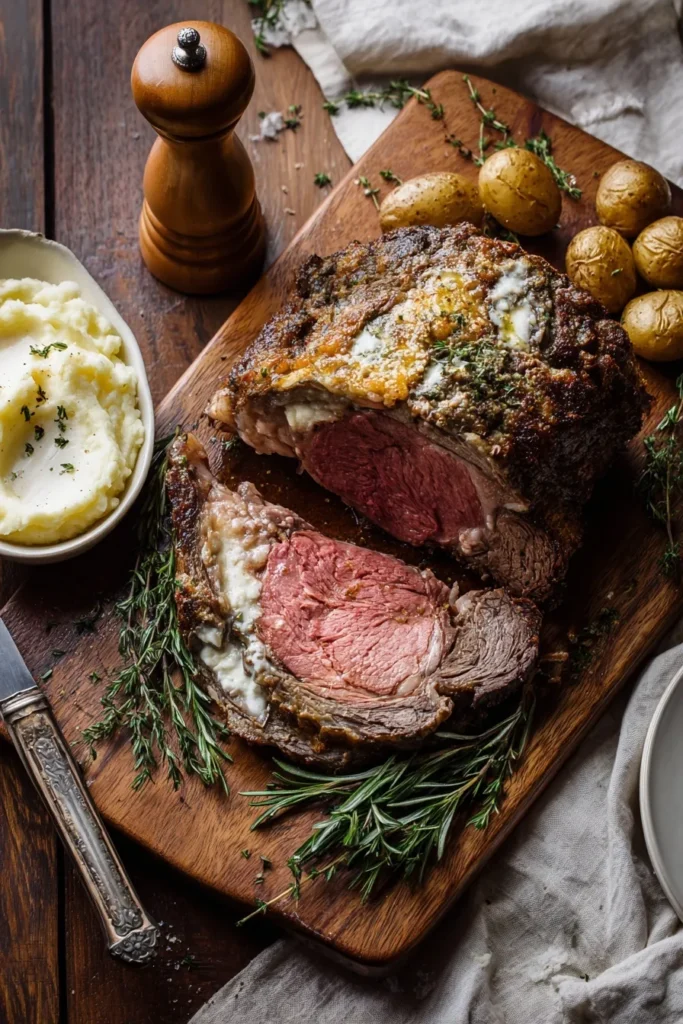
Looking for the perfect classic sides for your holiday feast?
Creamy mashed potatoes are steakhouse perfection alongside prime rib. Try my perfect garlic mashed potatoes or caramelized onion mashed potatoes for ultimate comfort.
Yorkshire pudding brings traditional British elegance to Christmas dinner. The crispy, airy popovers soak up beef juices and au jus beautifully.
Green bean casserole or Brussels sprouts add festive green color. My green bean casserole is creamy perfection.
Twice-baked potatoes create rich, indulgent individual portions. The cheesy, creamy filling complements the beefy main course beautifully.
Creamed spinach brings classic steakhouse elegance with rich, garlicky flavor. The smooth, creamy texture balances the meaty roast.
Dinner rolls are essential for soaking up au jus. My garlic butter dinner rolls are fluffy, buttery perfection.
Roasted root vegetables like carrots, parsnips, and potatoes add earthy sweetness. Toss with olive oil and herbs and roast alongside the prime rib.
For a complete holiday spread, serve alongside my traditional stuffing or honey glazed carrots for variety guests will love.
Storage and Reheating Guide
Refrigerator Storage
Store leftover prime rib sliced or whole in an airtight container in the refrigerator for up to 3-4 days. Cool slightly before storing and keep in a little au jus or beef broth to maintain moisture. Prime rib makes incredible French dip sandwiches the next day.
Freezer Storage
Freeze sliced prime rib for up to 3 months in freezer-safe containers or vacuum-sealed bags. Separate slices with parchment paper for easy grabbing. Freeze in au jus to prevent freezer burn. Thaw overnight in the refrigerator before reheating.
Reheating Instructions
Gently reheat sliced prime rib in a small pot on the stovetop with leftover au jus or beef stock for about 5 minutes over medium-low heat. Don’t overheat or the meat becomes tough and dry. For sandwiches, serve at room temperature or warm gently.
Pro Storage Tips
- Best served fresh: Prime rib is truly best the day it’s made—the texture changes with reheating, though it’s still delicious for sandwiches and tacos
- Use for French dip: Transform leftovers into incredible French dip sandwiches with toasted baguette, provolone, and warm au jus for dipping
- Save the bones: Freeze the rib bones for making rich beef stock—they add incredible depth of flavor to soups and sauces
Recipe Variations
Want to switch things up?
This slow roasted prime rib is incredibly versatile—here are delicious ways to customize it for different flavors and occasions.
Fresh Herb Crusted
Replace dried herbs with 2 tablespoons each fresh chopped rosemary and thyme mixed into the butter. Fresh herbs create more intense, aromatic flavor and look beautiful on the finished roast.
Horseradish Crusted
Mix 3 tablespoons prepared horseradish into the butter mixture before spreading on the roast. The spicy, tangy crust is perfect for horseradish lovers and creates bold flavor.
Coffee-Rubbed
Add 2 tablespoons finely ground coffee to the herb butter for sophisticated espresso crust. The coffee adds deep, complex flavor without tasting like coffee—it enhances the beef’s natural richness.
Montreal Steak Seasoning
Replace the herb mixture with 3 tablespoons Montreal steak seasoning for bold, peppery flavor. The coarse pepper and garlic create classic steakhouse taste.
Asian-Inspired
Before roasting, brush with a mixture of soy sauce, ginger, sesame oil, and five-spice powder instead of the herb butter. This creates unique Asian flavors perfect for non-traditional holidays.
Cajun-Spiced
Replace herbs with 2 tablespoons Cajun seasoning for Louisiana-style spicy prime rib. The bold spices create exciting flavor while the slow roasting keeps it incredibly tender.
Pro Tips & Tricks
Curious about the insider secrets?
- Room temperature is crucial—don’t skip the 2+ hour rest at room temperature! Cold meat cooks unevenly with cold centers and overcooked edges.
- Pat completely dry—use paper towels to thoroughly dry the roast before applying the herb butter. Moisture prevents proper browning and crust formation.
- Remove early—take the roast out when it’s 5-10°F below your target temperature. Carryover cooking will bring it to perfect doneness during resting.
- Use a thermometer—guessing doneness ruins expensive prime rib. Invest in a quality instant-read thermometer and check the thickest part.
- Don’t skip resting—the 15-20 minute rest period is essential for redistributing juices throughout the meat. Cutting too soon releases all those precious juices.
- Tie the roast—even bone-in roasts benefit from tying with kitchen twine between the ribs. This holds everything together during cooking.
- Choose bone-in—bones add incredible flavor and help insulate the meat for more even cooking. Plus, you get those amazing bones for stock later.
- Save the drippings—collect all pan juices and browned bits for making incredible au jus. Mix with beef broth and reduce for restaurant-quality sauce. 👌
Frequently Asked Questions
Q: Can you make slow roasted prime rib ahead of time?
You can season the roast up to 24 hours ahead and refrigerate, but cook it the day you plan to serve it. Prime rib is truly best fresh from the oven—reheating changes the texture significantly.
Q: How long does prime rib last in the fridge?
Store in an airtight container for up to 3-4 days in the refrigerator. Keep sliced meat in a little au jus or beef broth to maintain moisture. Use leftovers for French dip sandwiches, tacos, or breakfast hash.
Q: Can you freeze slow roasted prime rib?
Freeze sliced prime rib for up to 3 months in freezer-safe containers or vacuum-sealed bags. Separate slices with parchment paper and freeze in au jus. Thaw overnight in the refrigerator before gentle stovetop reheating.
Q: What to serve with slow roasted prime rib?
Serve with mashed potatoes, Yorkshire pudding, green bean casserole, and horseradish cream sauce for classic holiday dinner. Try my garlic mashed potatoes or dinner rolls for perfect pairings.
Q: What’s the best temperature for prime rib?
Medium-rare (130°F) is ideal for prime rib—it’s tender, juicy, and shows off the beautiful pink color. Remove from oven at 125°F and let it rise to 130°F during resting.
Q: How much prime rib per person?
Plan on 1 pound per person for bone-in roasts (bones add weight) or 1/2 to 3/4 pound per person for boneless. A 5-pound bone-in roast serves 5 people generously with leftovers.
Q: What’s the difference between bone-in and boneless?
Bone-in adds more flavor, makes impressive presentation, and helps insulate the meat for even cooking. Boneless is easier to slice and cooks slightly faster. Both work beautifully with this method.
Q: Why do you start at high heat then reduce temperature?
The high heat 500°F sear quickly browns the exterior and creates a flavorful crust. Reducing to 325°F allows gentle, even cooking throughout without drying out the meat.
Q: How do you know when prime rib is done?
Use a meat thermometer inserted into the thickest part (not touching bone). Remove at 125°F for medium-rare, 135°F for medium, or 145°F for medium-well. It will rise 5-10°F during resting.
Q: Can you cook prime rib without a thermometer?
Don’t attempt it! A thermometer is essential for properly cooking this expensive cut. Guessing doneness leads to overcooked, dry meat or undercooked centers.
Q: What if I don’t have 2 hours for room temperature?
Let it sit out as long as possible—even 1 hour helps. Cold meat won’t cook evenly, so plan ahead and remove from the fridge early in the day.
Q: Can you use this method for boneless prime rib?
Yes! Boneless may cook 5-10 minutes faster per pound, so check temperature earlier. The method works perfectly for boneless, though bone-in adds more flavor.
Ready to Make This?
This slow roasted prime rib is the ultimate holiday centerpiece that delivers tender, juicy perfection every single time. The simple high-heat sear followed by gentle slow roasting ensures even cooking from edge to center—no dry edges or cold centers!
Save this recipe for Christmas dinner and leave a comment if you try it! Share with friends who need a showstopping holiday roast that’s easier than they think 🙂