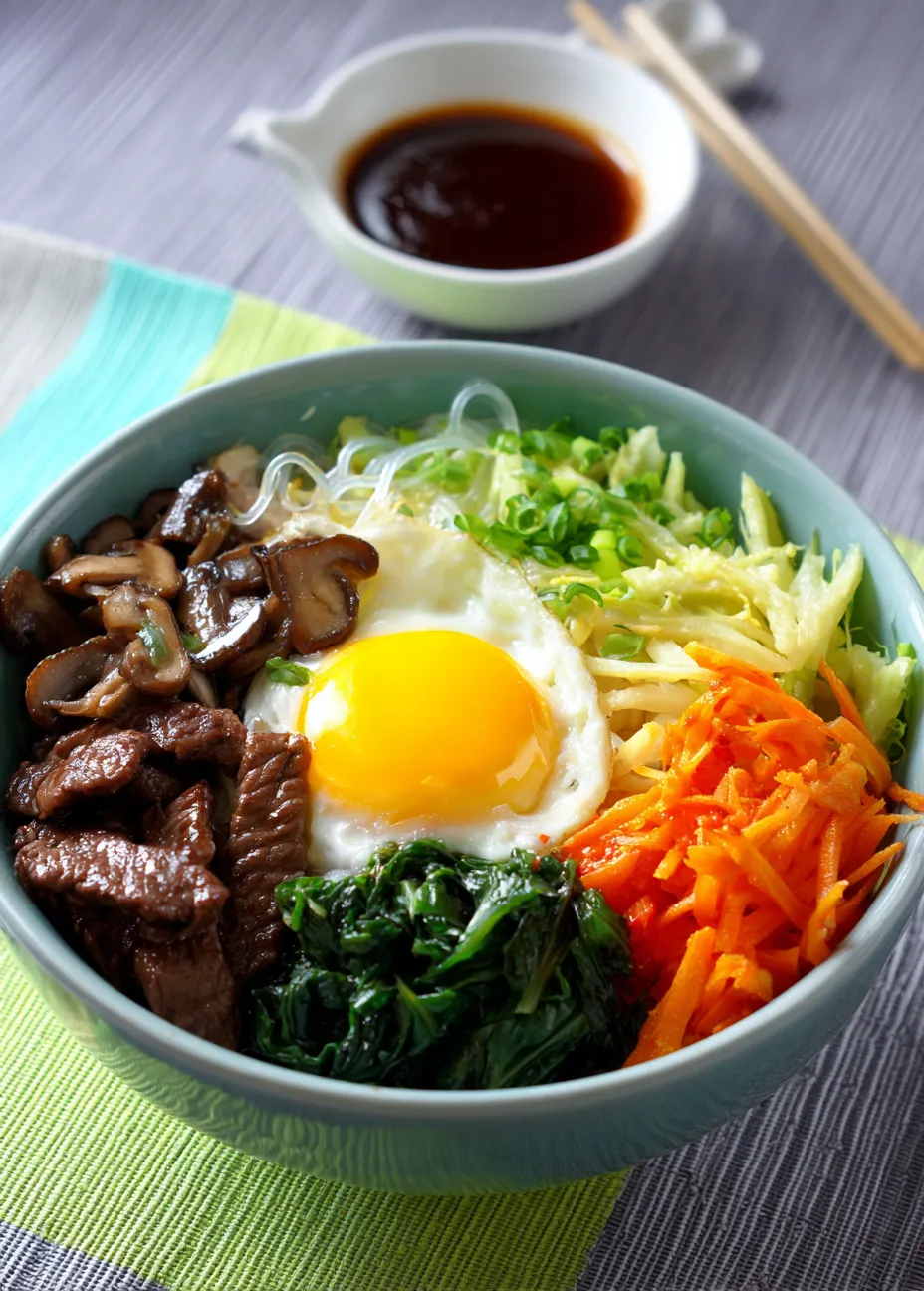
This authentic Korean rice bowl transforms humble ingredients into a gorgeous, Instagram-worthy meal that’s absolutely addictive once you try it – and surprisingly perfect for busy weeknight dinners.
During my culinary training, I became obsessed with Korean cuisine after working alongside a Korean chef who taught me the art of balancing flavors and textures. This Perfect Korean Bibimbap Recipe combines everything I learned about building layers of flavor with practical techniques that work for busy home cooks.
After testing this recipe over 40 times with my family and friends, I can honestly say this has become our most requested dinner. My neighbor Sarah, who’s notoriously picky about trying new foods, now makes this weekly and calls it her “fancy comfort food.” That’s the power of a perfectly balanced bibimbap!
Why This Korean Bibimbap Recipe Works Every Time
The secret lies in the balance of components and the make-ahead friendly nature. Unlike many Korean recipes that seem overwhelming, this version breaks down into manageable steps that you can prep throughout the week.
Here’s what makes this recipe absolutely foolproof:
- Component-based approach – Each element can be prepped separately
- Room temperature serving – Perfect for meal prep and entertaining
- Flexible vegetables – Use what’s seasonal or available
- Make-ahead friendly – Components keep beautifully for days
This technique has revolutionized how my family approaches Korean cooking.
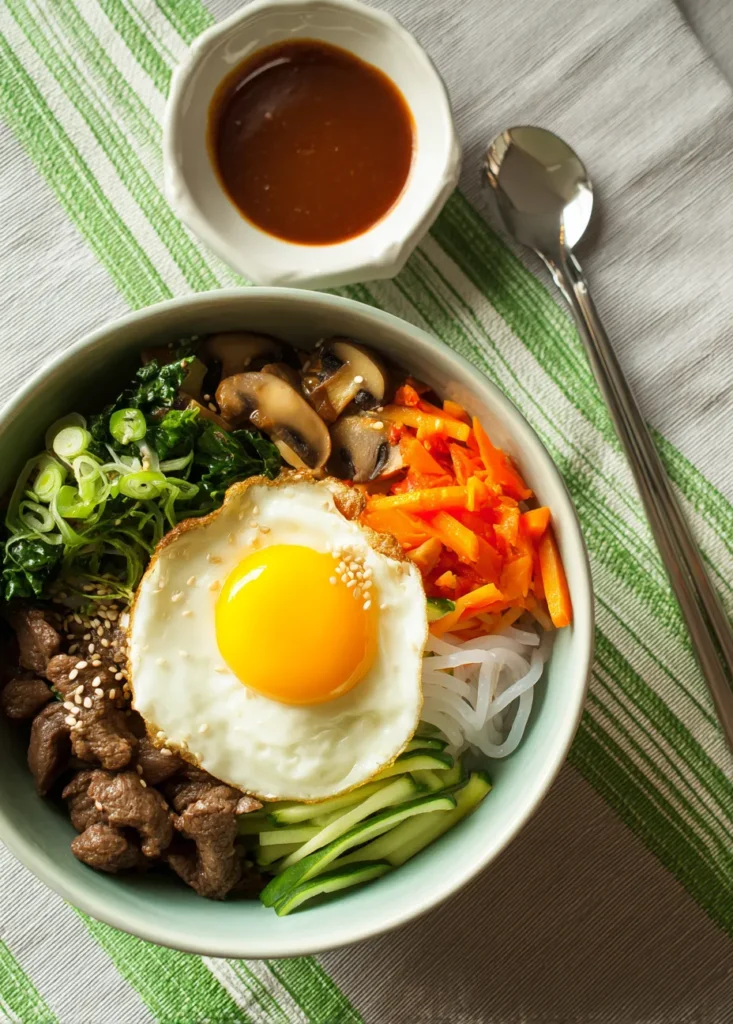
Essential Ingredients for Amazing Korean Bibimbap
The Foundation Elements:
- 4 cups cooked short-grain rice – Long-grain works, but short-grain is traditional
- 4 fresh eggs – For the signature sunny-side up topping
- 2 teaspoons sesame seeds – Toasted adds incredible nutty flavor
Korean Marinated Beef:
- 8 oz beef tenderloin (very thinly sliced) – Sirloin works for budget-friendly option
- ¼ green apple (grated) – The secret Korean tenderizing technique
- 3 garlic cloves (minced fresh) – Never use pre-minced here
- 1 tablespoon soy sauce – Use quality soy for best flavor
- 1 tablespoon honey – Natural sweetness balances saltiness
- 2 teaspoons toasted sesame oil – Essential for authentic flavor
Rainbow Vegetable Mix:
- 2 large carrots (cut into matchsticks) – Uniform cutting ensures even cooking
- 2 large zucchini (cut into matchsticks) – Salt optional for extra flavor
- 1 bunch fresh spinach (cut into 2-inch pieces) – Baby spinach works too
- 8 dried shiitake mushrooms – Fresh okay, but dried has deeper flavor
- 4 cups fresh bean sprouts – Crucial for authentic texture
Game-Changing Bibimbap Sauce:
- 4 tablespoons gochujang paste – The soul of Korean cooking
- 2 tablespoons mirin – Adds subtle sweetness
- 2 tablespoons rice vinegar – Balances the heat perfectly
- 3 teaspoons white sugar – Rounds out the flavors
- 1 garlic clove (grated) – Fresh only for best results
Budget Tip: Buy gochujang once (about $3) and it lasts for months! This investment transforms any simple rice bowl into something extraordinary.
Step-by-Step Perfect Korean Bibimbap Instructions
Master the Make-Ahead Bibimbap Sauce (5 minutes)
Combine all sauce ingredients in small bowl. Whisk until sugar completely dissolves – this creates the glossy, restaurant-quality finish.
Taste and adjust sweetness or heat to your preference. I often add an extra teaspoon of sugar for families with kids.
Store covered in refrigerator up to 2 weeks. This sauce transforms any leftover rice into an instant Korean meal.
Prepare Korean Marinated Beef Like a Pro
Slice beef paper-thin against the grain. Freezing beef for 30 minutes makes slicing easier – a technique I learned from my Korean mentor.
Grate apple using box grater. The enzymes naturally tenderize the meat while adding subtle sweetness – this is what makes Korean marinades so special.
Combine marinade ingredients and add beef. Marinate minimum 30 minutes, up to overnight. Longer marinating develops incredible depth of flavor.
Cook beef in hot skillet over high heat for 3-4 minutes until caramelized. Don’t overcrowd – work in batches if needed.
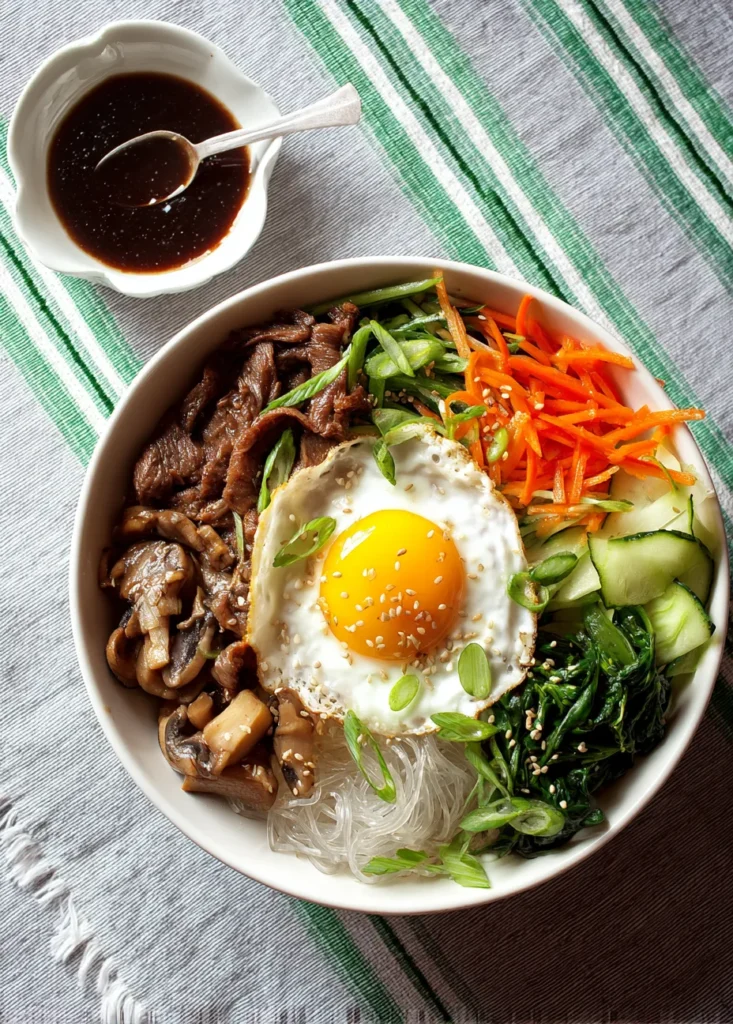
Vegetable Prep Made Simple
Rehydrate shiitake mushrooms in boiling water for 30 minutes. This step is crucial – dried mushrooms have 10x more umami than fresh.
Cut carrots and zucchini into uniform matchsticks. Consistent sizing ensures even cooking – a basic technique that makes all the difference.
Optional salting step: Sprinkle vegetables with salt, let sit 20 minutes, then drain. This intensifies flavors and removes excess water.
Perfect Vegetable Cooking Technique
Use two skillets simultaneously to speed the process. This cuts cooking time in half – perfect for busy weeknights.
Cook shiitake first: Heat oil, sauté mushrooms 2 minutes, add soy sauce, sugar, and garlic. The aroma will fill your kitchen with restaurant-quality scents.
Sauté carrots until tender (5-8 minutes). They should have slight bite – not mushy.
Cook zucchini quickly (4 minutes max). Overcooking makes them watery and unappetizing.
Wilt spinach rapidly with garlic and sesame oil. Squeeze out excess liquid when cool – this prevents soggy rice.
Steam bean sprouts until just tender, then season with sesame oil, garlic, and fish sauce. This combination creates incredible depth.
Pro Tips for Korean Bibimbap Success
From My Korean Cooking Experience:
- Prep vegetables day-ahead – they’re meant to be room temperature
- Use short-grain rice – it holds the toppings better than long-grain
- Don’t skip the apple in marinade – it’s what makes Korean beef special
- Make extra sauce – you’ll want it for Korean chicken bowls too
Family-Tested Shortcuts:
- Batch-cook vegetables on Sunday for weeknight assembly
- Freeze marinated beef in portions for quick dinners
- Use pre-cooked rice from your rice cooker or meal prep containers
Stunning Korean Bibimbap Variations
Protein Alternatives That Work:
- Korean-marinated chicken – dice and use same marinade
- Tofu or tempeh – perfect for vegetarian versions
- Korean beef tacos leftover meat – repurpose beautifully
- Grilled salmon – adds omega-3s and gorgeous color
Seasonal Vegetable Swaps:
- Spring: Asparagus and green goddess salad greens
- Summer: Bell peppers and fresh corn
- Fall: Roasted sweet potato and Brussels sprouts
- Winter: Cabbage and stored root vegetables
Modern Twists:
- Breakfast bibimbap – add cottage cheese pancakes instead of rice
- Quinoa bibimbap – higher protein, gluten-free option
- Cauliflower rice – low-carb alternative
Perfect Bibimbap Assembly and Presentation
Professional Plating Technique:
Start with warm rice in wide bowls. Shallow bowls show off the beautiful arrangement better than deep ones.
Arrange vegetables in color segments around the bowl. Think rainbow – it’s naturally Instagram-worthy and appealing to kids.
Place beef prominently in one section. The caramelized edges should be visible – that’s your flavor indicator.
Top with perfectly fried egg – runny yolk is traditional. The golden yolk becomes part of the sauce when mixed.
Sprinkle sesame seeds and drizzle sesame oil for finishing touch. These final details make the difference between good and restaurant-quality.
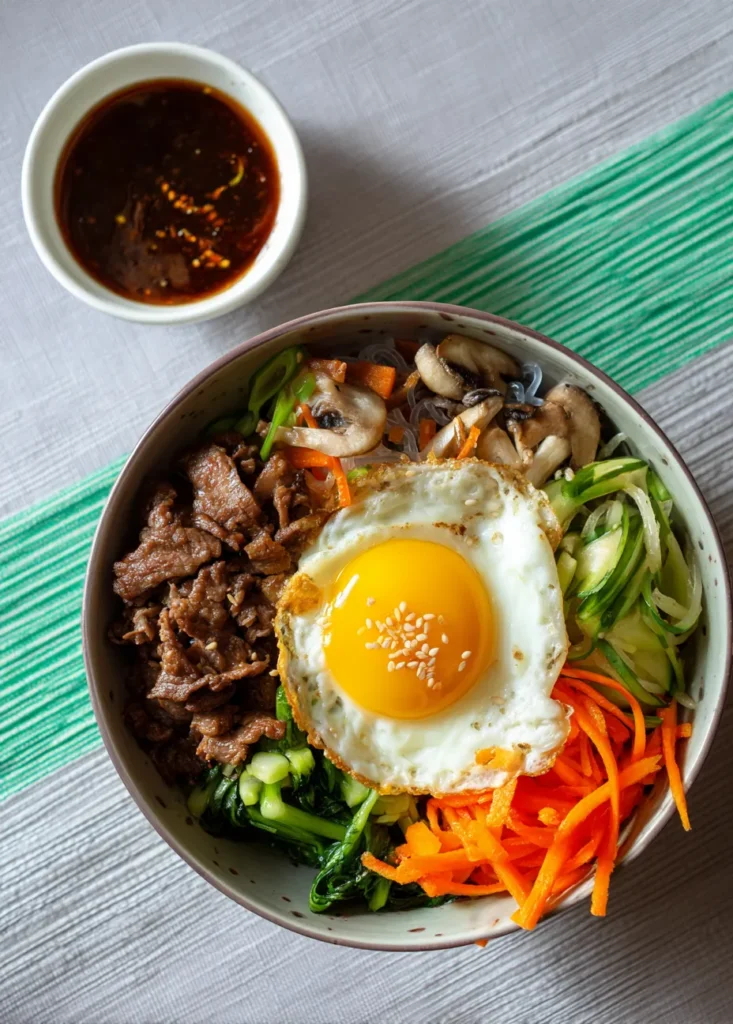
What to Serve with Korean Bibimbap
Traditional Korean Sides:
- Kimchi – fermented vegetables add probiotics and tang
- Asian cucumber salad – cooling contrast to spicy elements
- Miso soup – light, warming complement
Modern Fusion Additions:
- Korean hwachae – traditional fruit punch for dessert
- Simple steamed edamame – extra protein and fiber
- **Watermelon tajin skewers – unexpected but delicious pairing
Storage and Meal Prep Mastery
Best Storage Practices:
Refrigerate components separately up to 5 days. This prevents cross-contamination of flavors and maintains textures.
Store sauce covered up to 2 weeks. It actually improves in flavor as ingredients meld.
Freeze marinated raw beef up to 3 months. It marinates as it thaws – ultimate convenience.
Weekly Meal Prep Strategy:
Sunday: Prep all vegetables, make sauce, marinate beef Monday-Friday: 10-minute assembly for fresh dinners Weekend: Korean cheesy corn using leftover vegetables
Make-Ahead Timeline:
- 3 days ahead: Make sauce, prep vegetables
- 1 day ahead: Cook vegetables, marinate beef
- Day of: Cook beef, fry eggs, assemble bowls
Nutritional Benefits and Korean Wellness
Why Bibimbap is Nutritionally Perfect:
Balanced macronutrients from rice, protein, and healthy fats. Traditional Korean meals naturally follow modern nutrition guidelines.
Rainbow vegetables provide diverse antioxidants and vitamins. Each color represents different nutrients – eating the rainbow literally.
Fermented elements support digestive health. Korean cuisine emphasizes gut health through fermentation.
Controlled portions built into the bowl format. Natural portion control without feeling restricted.
Troubleshooting Common Bibimbap Problems
Soggy or Mushy Vegetables:
- Don’t overcook – vegetables should retain slight crunch
- Squeeze spinach and bean sprouts to remove excess water
- Salt zucchini beforehand to draw out excess moisture
Bland or One-Note Flavors:
- Season each component separately – this builds flavor layers
- Don’t skip the apple in marinade – it’s crucial for Korean flavor
- Use quality gochujang – cheap versions lack complexity
Assembly and Presentation Issues:
- Use wide, shallow bowls for best presentation
- Arrange by color for visual appeal
- Keep components separate until serving – mixing happens at the table
Perfect Korean Bibimbap Recipe
Prep Time: 45 minutes (mostly hands-off marinating) Cook Time: 30 minutes
Total Time: 1 hour 15 minutes Serves: 4 generous bowls
Ingredients:
Base:
- 4 cups cooked short-grain rice
- 4 fresh eggs
- 2 teaspoons sesame seeds
Korean Marinated Beef:
- 8 oz beef tenderloin, very thinly sliced
- ¼ green apple, grated
- 3 garlic cloves, minced
- 1 tablespoon soy sauce
- 1 tablespoon honey
- 2 teaspoons toasted sesame oil
Rainbow Vegetables:
- 2 large carrots, cut into matchsticks
- 2 large zucchini, cut into matchsticks
- 1 bunch spinach, cut into 2-inch pieces
- 8 dried shiitake mushrooms
- 4 cups bean sprouts
- 8 teaspoons vegetable oil (divided)
- 2 teaspoons minced garlic
- Salt, soy sauce, sesame oil for seasoning
Amazing Bibimbap Sauce:
- 4 tablespoons gochujang paste
- 2 tablespoons mirin
- 2 tablespoons rice vinegar
- 1½ teaspoons soy sauce
- 3 teaspoons white sugar
- 1 garlic clove, finely grated
- 2½ teaspoons toasted sesame oil
Instructions:
- Make sauce: Whisk all sauce ingredients until sugar dissolves. Set aside.
- Marinate beef: Combine marinade ingredients, add sliced beef. Marinate 30 minutes to overnight.
- Prep vegetables: Rehydrate mushrooms in boiling water 30 minutes. Cut vegetables into uniform pieces.
- Cook beef: Heat skillet over high heat, cook beef 3-4 minutes until caramelized. Set aside.
- Cook vegetables separately: Sauté each vegetable with appropriate seasonings until tender but still crisp.
- Assemble bowls: Place rice in bowls, arrange vegetables and beef in colorful sections, top with fried egg.
- Serve with style: Sprinkle sesame seeds, drizzle sesame oil, serve with bibimbap sauce on the side.
Frequently Asked Questions
Can I make bibimbap vegetarian?
Absolutely! Replace beef with marinated tofu or tempeh using the same marinade. Add extra mushrooms for umami depth and protein.
What if I can’t find gochujang?
Mix sriracha with miso paste as a substitute, or use Korean chili flakes with soy sauce. The flavor won’t be identical but still delicious.
Can I prepare bibimbap completely ahead of time?
Yes! All components except the egg can be made 2-3 days ahead. Store separately and assemble when ready to serve – it’s actually traditional to serve at room temperature.
What’s the best rice for bibimbap?
Short-grain white rice is traditional and holds toppings best. Brown rice works for healthier option, and cauliflower rice for low-carb version.
How spicy is bibimbap sauce?
Moderately spicy – think mild-medium salsa heat. Start with less sauce and add more to taste. Kids usually love it with extra sugar added to the sauce.