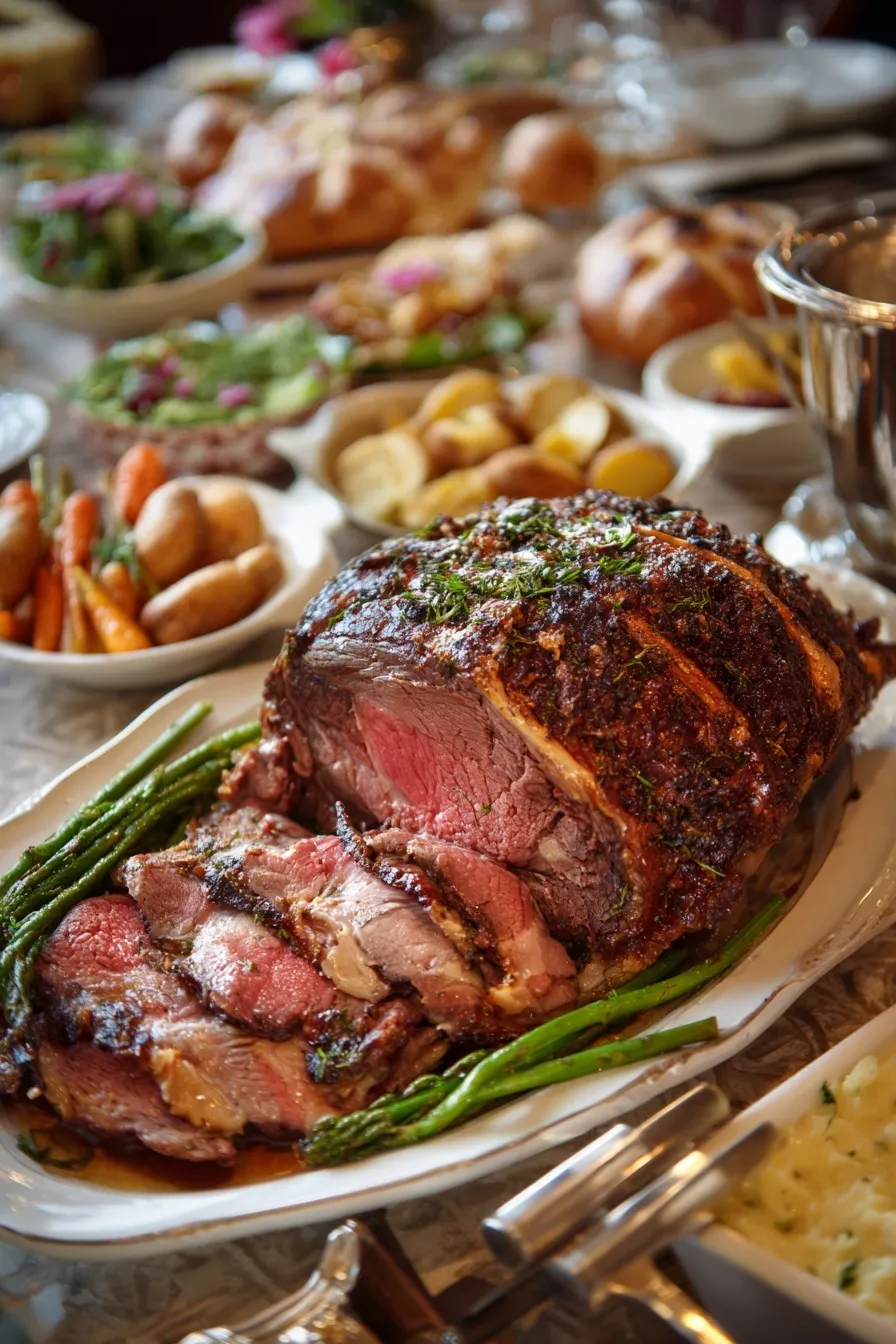
This reverse sear prime rib recipe delivers restaurant-quality results—roast low and slow at 200°F until 120°F internal, rest for 45 minutes, then blast at 500°F for a crispy crust. Evenly cooked edge to edge with no gray band! 🥩
Since you’re here, make sure to check out these related recipes:
- Garlic Butter Beef Rice Skillet
- Korean BBQ Steak Rice Bowls
- Perfect Garlic Mashed Potatoes
- Traditional Thanksgiving Stuffing
- Garlic Butter Dinner Rolls
Why This Reverse Sear Prime Rib Recipe Works
Ever wonder how steakhouses get prime rib perfectly pink from edge to edge with no overcooked gray band?
This reverse sear prime rib recipe uses J. Kenji López-Alt’s tested technique—low and slow roasting at 200°F cooks the meat evenly throughout, then a final 500°F blast creates a crispy, caramelized crust. The 45-minute rest after slow roasting allows the exterior to cool slightly, preventing overcooking during the sear. This means you get maximum juiciness with that perfect crust.
Here’s what makes this reverse sear method irresistible:
- Evenly cooked throughout: No thick gray band of overcooked meat—just perfect pink from crust to center
- Make-ahead friendly: Rest for 45-60 minutes after slow roasting, freeing your oven for sides like Yorkshire pudding
- Foolproof timing: The final sear takes just 10 minutes right before serving—no more timing stress
- Restaurant-quality crust: The high-heat finish creates a deeply browned, crispy exterior that rivals steakhouses
The combination of gentle low-temperature cooking followed by intense high heat creates that ideal balance of tender, juicy interior and crispy, flavorful crust. The long rest period is the secret weapon—it lets you control exactly when dinner is served. It’s the prime rib method that guarantees success every single time! 🎄
Ingredients
Want to know the secret to perfectly even cooking with no gray band?
The key is slow roasting at 200°F until the center reaches 120°F—this gentle heat cooks the meat evenly throughout without overcooking the outer layers, then the quick high-heat sear adds the crust.
For the Prime Rib:
- 1 (6-8 lb) bone-in beef (halal-certified) prime rib roast
- 1/4 cup kosher salt (for dry brining)
- 2 tbsp black pepper, coarsely ground
- 6 cloves garlic, minced
- 2 tbsp olive oil
- 2 tbsp Dijon mustard
- 2 sprigs fresh rosemary, chopped
- 1 tbsp fresh thyme leaves
For Horseradish Cream:
- 1/2 cup crème fraîche or sour cream
- 1/2 cup sour cream
- 1/3 cup Dijon mustard
- 1/4 cup prepared horseradish
- 2 tbsp fresh chives, chopped
- Salt and pepper to taste 🌿
The bone-in prime rib should be well-marbled for maximum flavor and tenderness. Kosher salt for overnight dry brining creates incredible crust and seasons deeply. Fresh rosemary and thyme add aromatic complexity that dried herbs can’t match.
Step-by-Step Instructions
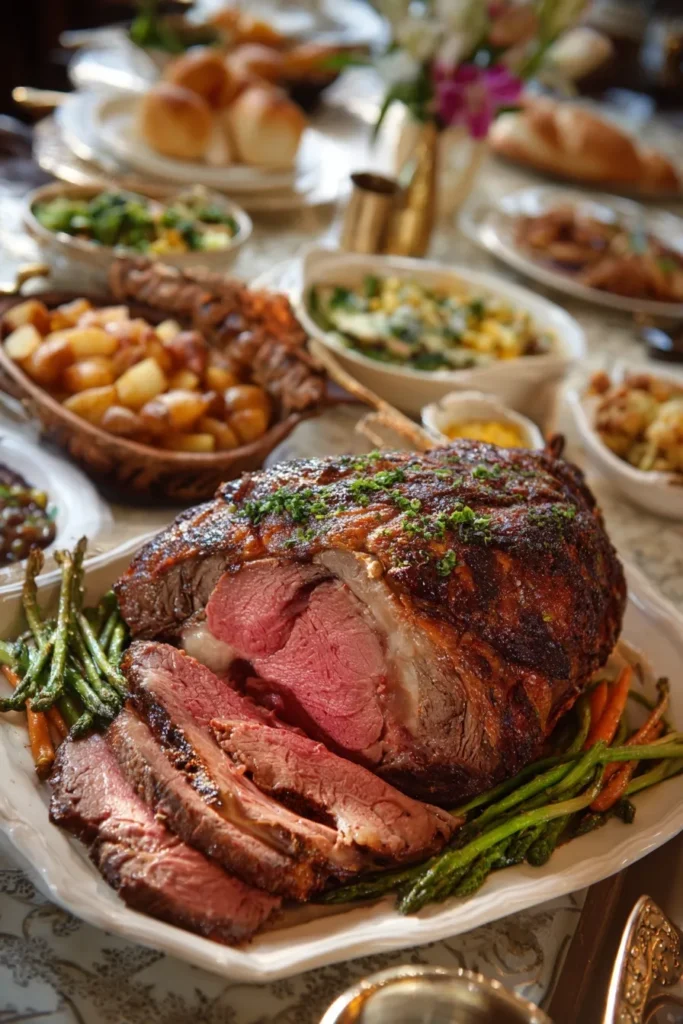
1. Dry brine overnight: The night before cooking, place the unwrapped prime rib (halal-certified) on a tray. Generously salt all over with kosher salt—use the full 1/4 cup. Refrigerate uncovered overnight to air-dry the exterior. This creates the ultimate crust and deeply seasons the meat.
2. Bring to room temperature: Remove the prime rib from the refrigerator 2 hours before cooking. Let it sit at room temperature—this ensures even cooking throughout. Cold meat straight from the fridge won’t cook evenly.
3. Make the herb paste: In a small bowl, mix the black pepper, minced garlic, Dijon mustard, chopped rosemary, thyme, and olive oil into a paste. This aromatic rub adds incredible flavor to the crust.
4. Apply the rub: Pat the roast dry with paper towels, then spread the herb mixture evenly over the entire roast, coating all sides. Press it into the meat for maximum flavor. Insert a probe thermometer into the thickest part of the roast.
5. Slow roast: Preheat oven to 200°F. Place the prime rib on a roasting pan, bone-side down (fat-side up). Roast slowly until the internal temperature reaches 120°F for medium-rare (or 130°F for medium). This takes approximately 3.5-5 hours depending on the size—plan for about 45-60 minutes per pound.
6. The critical rest: Remove the roast from the oven when it hits your target temperature. Cover loosely with foil and let rest for 45-60 minutes. This is crucial—it allows the exterior to cool slightly and lets you use the oven for other dishes. The roast will NOT overcook during this rest.
7. Preheat for searing: About 15 minutes before you’re ready to serve, preheat your oven to the highest setting—ideally 500-550°F. Let it heat fully for maximum searing power.
8. Final sear: Remove the foil from the rested roast and place it back in the screaming hot oven for 6-10 minutes until the exterior is deeply browned and crispy. Watch carefully—you want a dark, caramelized crust but not burned. For larger roasts, this may take up to 15 minutes.
9. Make horseradish sauce: While the roast sears, whisk together the crème fraîche, sour cream, Dijon mustard, prepared horseradish, chives, salt, and pepper until smooth. Refrigerate until ready to serve.
10. Carve and serve: Remove the roast from the oven. If bone-in, place bone-side up on a cutting board and use a sharp knife to slice along the bones, separating the meat. Slice against the grain into 1/2-inch thick slices. There’s NO need to rest again—serve immediately with horseradish sauce!
Pro tip: For even more impressive presentation and easier carving, ask your butcher to remove the bones and tie them back on with kitchen twine—this makes slicing effortless while maintaining all the flavor benefits of bone-in cooking.
Essential Equipment for Reverse Sear Prime Rib
Reliable Probe Thermometer
A leave-in probe thermometer monitors internal temperature throughout the long slow roast without opening the oven. This is essential for perfect results—guessing doneness ruins expensive prime rib.
Heavy-Duty Roasting Pan
A sturdy roasting pan with high sides holds the large roast and withstands both low and high heat. Heavy-gauge construction prevents warping at 500°F and distributes heat evenly.
Sharp Carving Knife (10-12 Inch)
A long, razor-sharp carving knife makes clean slices through the roast for beautiful presentation. The long blade glides smoothly, especially when carving around bones.
Wire Roasting Rack
A V-shaped or flat rack elevates the meat so hot air circulates underneath for even cooking. This prevents the bottom from steaming and ensures proper browning all around.
ThermaPen Digital Thermometer (PREMIUM)
Professional-grade instant-read thermometers give precise readings in under 2 seconds. The accuracy prevents overcooking this expensive cut and ensures perfect doneness every time you cook prime rib.
All-Clad Stainless Steel Roasting Pan (PREMIUM)
Restaurant-quality tri-ply construction distributes heat perfectly for even roasting at both low and high temperatures. The heavy pan creates incredible fond for au jus and lasts generations with proper care.
What to Serve With Reverse Sear Prime Rib
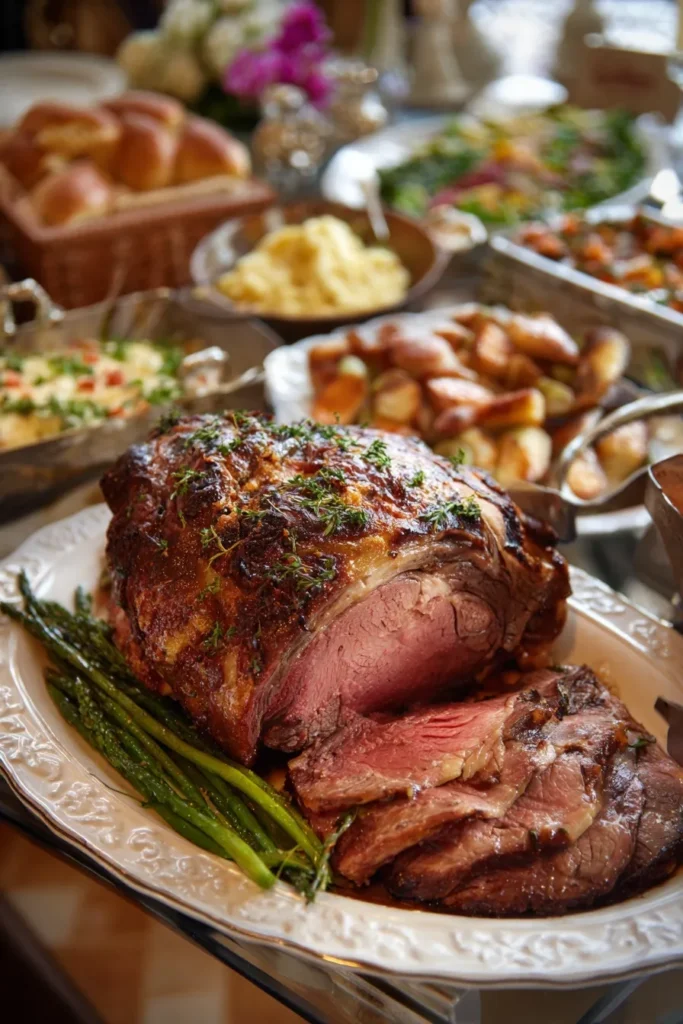
Looking for the perfect classic sides for your holiday feast?
Creamy mashed potatoes or potato gratin are steakhouse perfection alongside prime rib. Try my perfect garlic mashed potatoes for ultimate comfort.
Yorkshire pudding is the traditional accompaniment—the eggy popovers soak up beef juices and au jus beautifully. Make them during the 45-minute rest period using the same oven.
Roasted vegetables like carrots, Brussels sprouts, or green beans add color and freshness. My honey glazed carrots are perfect for holidays.
Creamed spinach brings classic steakhouse elegance with rich, garlicky flavor that complements the beefy main course.
Dinner rolls are essential for soaking up au jus and making leftover sandwiches. My garlic butter dinner rolls are fluffy perfection.
Fresh green salad with vinaigrette provides crisp, fresh contrast to the rich prime rib. The acidity cuts through the fat beautifully.
Horseradish cream sauce is non-negotiable—the tangy, spicy kick enhances every bite of beef.
For a complete holiday spread, serve alongside my traditional stuffing or green bean casserole for variety guests will love.
Storage and Reheating Guide
Refrigerator Storage
Store leftover reverse sear prime rib sliced or whole in an airtight container in the refrigerator for up to 3-4 days. Keep in a little au jus or beef broth to maintain moisture. Prime rib makes incredible French dip sandwiches.
Freezer Storage
Freeze sliced prime rib for up to 3 months in freezer-safe containers or vacuum-sealed bags. Separate slices with parchment paper for easy portioning. Freeze in au jus to prevent freezer burn. Thaw overnight in the refrigerator.
Reheating Instructions
Gently reheat sliced prime rib in a covered baking dish at 250°F for 10-15 minutes until warmed through. Don’t overheat or the meat becomes tough. For sandwiches, serve at room temperature or warm briefly in a skillet with butter.
Pro Storage Tips
- Best served fresh: Reverse sear prime rib is truly best the day it’s made—the texture changes with reheating, though leftovers are still delicious
- French dip sandwiches: Transform leftovers into incredible sandwiches with toasted baguette, provolone, and warm au jus for dipping
- Save the bones: Freeze rib bones for making rich beef stock that adds incredible depth to soups and sauces
Recipe Variations
Want to switch things up?
This reverse sear prime rib is incredibly versatile—here are delicious ways to customize it for different flavors and preferences.
Classic Herb Crusted
Increase fresh herbs to 4 tablespoons each rosemary and thyme mixed with 8 cloves garlic in the paste. The intense herb crust creates bold, aromatic flavor.
Coffee-Crusted
Add 2 tablespoons finely ground espresso to the herb rub for sophisticated flavor depth. The coffee enhances beef’s natural richness without tasting like coffee.
Asian-Inspired
Replace the herb paste with a mixture of soy sauce, ginger, sesame oil, garlic, and Chinese five-spice. This creates unique Asian flavors perfect for non-traditional celebrations.
Peppercorn Crusted
Press 1/4 cup coarsely cracked mixed peppercorns into the oiled roast before the final sear. This creates classic au poivre-style crust with bold pepper flavor.
Smoked Reverse Sear
Do the low-temperature phase on a pellet grill or smoker at 225°F for added smoke flavor, then finish the sear in a 500°F oven. This adds incredible depth.
Garlic Butter Basted
During the final sear, baste with melted garlic butter every 3 minutes for extra richness and flavor. The butter creates an even more luxurious crust.
Pro Tips & Tricks
Curious about the insider secrets?
- Dry brine overnight—salting and air-drying overnight creates incredible crust and deeply seasons the meat. Don’t skip this crucial step for maximum flavor.
- Bring to room temperature—let the salted roast sit out for 2 hours before roasting. Cold meat cooks unevenly with cold centers.
- Use a probe thermometer—leave-in probe thermometers monitor temperature throughout the long cook without opening the oven door and releasing heat.
- Don’t fear the long rest—the 45-60 minute rest after slow roasting is essential for this method. The meat will NOT overcook and stays warm.
- Preheat oven fully—give your oven 15-20 minutes to reach maximum temperature before the final sear. This ensures proper crust formation.
- Watch the sear carefully—the final high-heat blast happens quickly. Check after 6 minutes and continue as needed until deeply browned.
- No need to rest after searing—because you already rested for 45 minutes, slice and serve immediately after the final sear for warm meat.
- Save the drippings—this method doesn’t create many pan drippings, but collect what’s there and mix with beef broth for au jus. 👌
Frequently Asked Questions
Q: Can you make reverse sear prime rib ahead of time?
Yes! After the slow roast, the meat can rest for 45-90 minutes before the final sear. This timing flexibility is perfect for entertaining—do the final sear exactly when you want to serve dinner.
Q: How long does reverse sear prime rib last in the fridge?
Store in an airtight container for up to 3-4 days in the refrigerator. Keep sliced meat in au jus or beef broth to maintain moisture. Use for French dip sandwiches or prime rib hash.
Q: Can you freeze reverse sear prime rib?
Freeze sliced prime rib for up to 3 months in freezer-safe containers or vacuum-sealed bags. Separate slices with parchment paper and freeze in broth. Thaw overnight in the refrigerator before gentle reheating.
Q: What to serve with reverse sear prime rib?
Serve with mashed potatoes, Yorkshire pudding, roasted vegetables, and horseradish cream sauce for classic holiday dinner. Try my garlic mashed potatoes or dinner rolls for perfect pairings.
Q: What temperature is perfect for medium-rare prime rib?
Remove the roast at 120°F internal temperature for perfect medium-rare after searing. The final sear will raise it slightly to 125-130°F. For medium, remove at 130°F.
Q: Why reverse sear instead of traditional roasting?
Reverse searing cooks meat evenly throughout with minimal gray band, while traditional high-then-low creates thick overcooked edges. Reverse sear also allows timing flexibility with the long rest period.
Q: How long does the slow roast take?
Plan for approximately 45-60 minutes per pound at 200°F. A 6-pound roast takes 4.5-6 hours. Use a probe thermometer and remove at 120°F for medium-rare.
Q: Do you need to rest after the final sear?
No! You already rested for 45-60 minutes after the slow roast. Slice and serve immediately after the final sear for perfectly warm meat.
Q: Can you use a gas grill for reverse sear?
Yes! Use indirect heat at 200-225°F for the slow roast, then sear over direct high heat or finish in a 500°F oven. Monitor internal temperature carefully.
Q: What if I don’t have 45 minutes to rest?
The long rest is essential for this method—it allows the exterior to cool so it doesn’t overcook during the sear. If you’re short on time, use a different prime rib method.
Q: Can this work with boneless prime rib?
Yes! Boneless works perfectly but may cook 15-30 minutes faster. Check temperature earlier. Bone-in adds more flavor and helps insulate the meat.
Q: Why doesn’t this method create pan drippings?
The low-temperature roasting doesn’t render much fat. Add beef ribs or oxtail to the pan, or make au jus separately using beef broth and reserved drippings.
Ready to Make This?
This reverse sear prime rib is the ultimate holiday roast that delivers restaurant-quality results with perfectly even cooking from edge to edge. The foolproof timing means you can make dinner happen exactly when you want it—no more stress about keeping meat warm!
Save this recipe for Christmas dinner and leave a comment if you try it! Share with friends who need a showstopping prime rib with zero gray band and perfect timing control 🙂