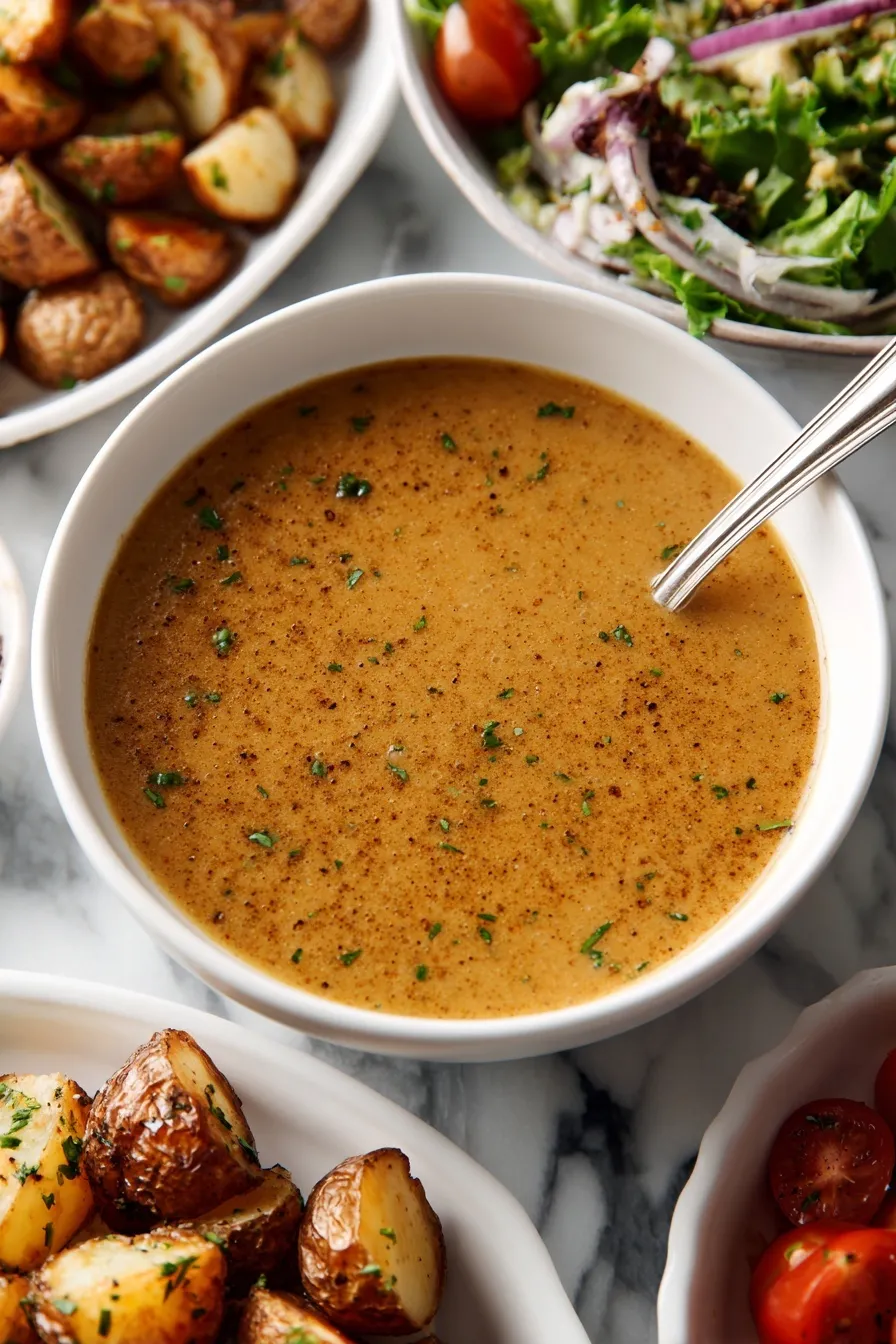
This gravy will make your guests forget about everything else on the table!
Since you are here, make sure to check out these related recipes:
- Creamy Garlic Mashed Potatoes – the perfect pairing
- Traditional Thanksgiving Stuffing Recipe – classic comfort
- Honey Butter Sweet Potatoes – sweet perfection
- Perfect Thanksgiving Stuffing – another great option
- Garlic Parmesan Roasted Sweet Potatoes – savory side magic
Let’s be honest here – gravy can make or break your entire Thanksgiving spread. I’ve seen grown adults literally cry over lumpy, flavorless gravy (okay, that might’ve been me after my first disastrous attempt). But here’s what nobody tells you: perfect gravy is actually ridiculously easy once you know the technique.
This recipe changed everything for me. No more standing over the stove having panic attacks about whether it’ll thicken properly. No more mysterious lumps that seem to appear out of nowhere. Just smooth, rich, absolutely perfect gravy that’ll have people asking for your secret.
Why This Gravy Recipe Works Every Time
The magic is all in the roux – that’s just fancy talk for cooking butter and flour together. This creates the perfect thickening base that won’t separate or get weird on you. Unlike some recipes that use cornstarch (which can get gloopy), flour gives you that classic, silky texture that coats everything beautifully.
Plus, this recipe works whether you have turkey drippings or not. Ran out of drippings? No problem. Turkey still in the oven? Still no problem. You can make incredible gravy with just good-quality stock.
What You’ll Need
The Basics:
- 1/2 cup butter, cut into 8 pieces (I use salted)
- 1 teaspoon coarse black pepper
- 1/2 cup all-purpose flour
- 4 cups pan drippings OR 4 cups halal-certified chicken/turkey stock
That’s literally it. Four ingredients. I told you this was simple!
Equipment That Makes Life Easier:
- Fine mesh strainer
- Large glass measuring cup
- Good whisk (seriously, don’t cheap out here)
- Medium saucepan
The Step-by-Step Magic
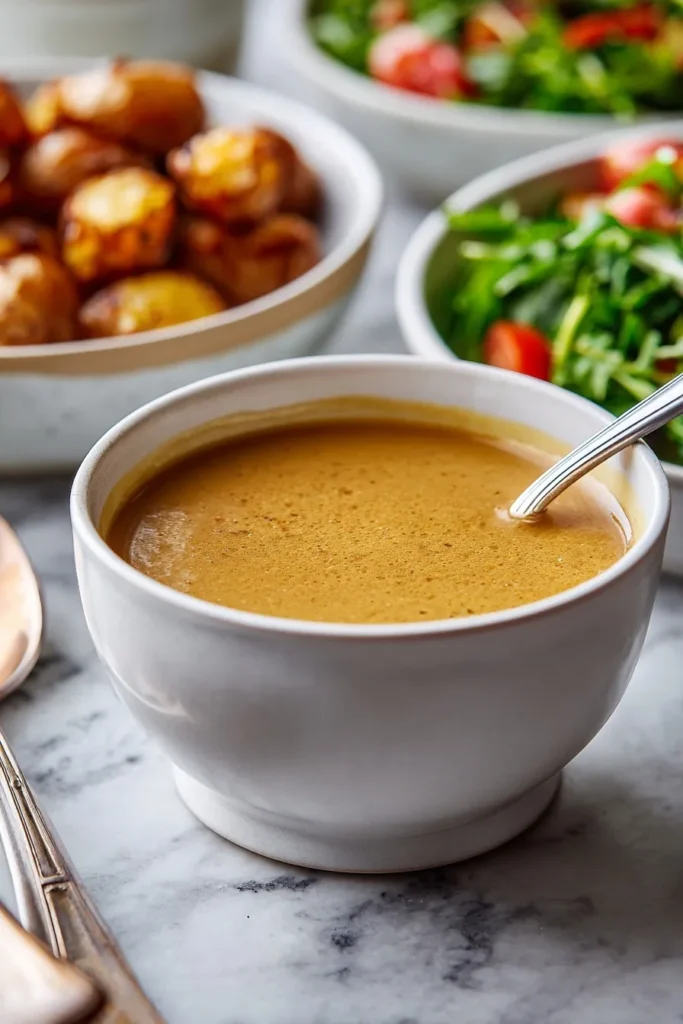
Start with Your Liquid Base: If you’re using turkey drippings (which I totally recommend if you have them), pour everything through a fine mesh strainer first. This catches all the little bits that would otherwise float around in your gravy looking weird.
Let those drippings cool for a few minutes so the fat rises to the top. Then just spoon off that fat layer – we want the flavor, not the grease. If you don’t have a full 4 cups of drippings, just top it off with some good halal-certified chicken stock.
No drippings? No stress! Just use 4 cups of quality chicken or turkey stock. The better your stock, the better your gravy, so don’t go with the cheapest option here.
Make the Roux: In your saucepan over low heat, melt that butter. Once it’s melted, sprinkle in the black pepper. Now comes the important part – slowly whisk in the flour. And I mean slowly. You want to whisk constantly until that flour is completely incorporated and you’ve got this smooth, paste-like mixture.
This is your roux, and it’s what’s going to make your gravy thick and luxurious instead of watery and sad.
The Liquid Addition Game: Here’s where people usually mess up – they dump all the liquid in at once and then wonder why they have lumpy gravy. Don’t be that person!
Add your drippings or stock slowly, maybe 1/2 cup at a time, whisking constantly. Wait for each addition to be completely absorbed before adding more. Yes, it takes a few minutes. Yes, it’s worth it.
Let It Thicken: Once all your liquid is incorporated, let the gravy cook for several minutes. It’ll start thin and gradually thicken up to that perfect, coat-the-spoon consistency. Keep it on low heat and give it an occasional stir.
Pro Tips That’ll Save Your Sanity
Temperature Control: Keep everything on low heat. High heat will burn your roux and give you bitter, lumpy gravy. Low and slow wins this race every time.
Whisk Like You Mean It: That whisk is your best friend here. Constant whisking prevents lumps and keeps everything smooth.
Taste and Adjust: Once your gravy’s thickened, taste it! Need more pepper? Add it. Want more richness? Whisk in an extra tablespoon of butter.
Too Thick? Add a little more stock, one tablespoon at a time, until you hit the right consistency.
Too Thin? Let it cook a little longer, or make a tiny bit more roux (butter + flour) and whisk it in.
Making Gravy for a Crowd
Hosting 20 people? No problem. This recipe doubles and triples beautifully. Just multiply everything equally and use a bigger saucepan.
The best part? You can make this gravy ahead of time! Make it in the morning, then just reheat it gently before dinner. If it gets too thick while sitting, just whisk in a little warm stock to loosen it up.
What Makes This Different from Other Recipes
Most gravy recipes assume you have perfect drippings with just the right amount of fat and flavor. Real life doesn’t work that way! Sometimes your turkey doesn’t give up much drippings. Sometimes those drippings are too fatty. Sometimes you’re making gravy for a crowd and need way more than one turkey could possibly provide.
This recipe works with whatever you’ve got. It’s flexible, forgiving, and consistently delicious whether you’re working with homemade stock or the fancy stuff from the store.
Storage and Reheating
Leftover gravy keeps in the fridge for up to 3 days in an airtight container. To reheat, just warm it gently over low heat, whisking occasionally. It might look a little separated when cold, but a good whisking while warming will bring it right back together.
You can even freeze this gravy for up to 3 months! Just leave some room at the top of your container for expansion. Thaw it overnight in the fridge, then reheat slowly with some gentle whisking.
When Things Go Wrong (Because They Sometimes Do)
Lumpy Gravy: Pour it through a fine mesh strainer. Most lumps will stay behind, and you can continue cooking the smooth gravy.
Too Salty: Add a peeled, diced potato and let it cook for 10 minutes to absorb excess salt, then remove the potato pieces.
Separated Gravy: This usually happens from too high heat. Remove from heat and whisk in a tablespoon of cold butter. Sometimes whisking vigorously will bring it back together.
Burnt Taste: Unfortunately, there’s no fixing this. Start over, but keep the heat lower this time.
Complete FAQs
Q: Can I use cornstarch instead of flour? A: You can, but flour gives better flavor and texture. If you must use cornstarch, mix 3 tablespoons with cold water first, then whisk into hot liquid.
Q: How do I know when the roux is ready? A: It should be smooth and paste-like, with no dry flour visible. Takes about 2-3 minutes of constant whisking.
Q: Can I make this gluten-free? A: Use a 1:1 gluten-free flour substitute, or use cornstarch slurry (cornstarch mixed with cold water) instead.
Q: What if I don’t have enough drippings? A: Just top off with good-quality stock. Even 1 cup of drippings mixed with 3 cups stock makes excellent gravy.
Q: How thick should perfect gravy be? A: It should coat the back of a spoon but still pour easily. Think somewhere between heavy cream and pudding consistency.
The Real Deal About Gravy
Look, I’m not going to lie and tell you that gravy is some mystical culinary art that takes years to master. It’s basically butter, flour, and liquid cooked together with some technique. But that technique matters!
The difference between okay gravy and “holy cow, can I get this recipe?” gravy is all in the details. Taking your time with the roux. Adding liquid slowly. Tasting and adjusting. These little steps turn a basic sauce into something that elevates every single thing on your plate.
I’ve served this gravy to some seriously picky eaters (looking at you, teenage nephews), and it’s never failed to impress. My mother-in-law, who’s made Thanksgiving dinner for 40 years, asked for this recipe after trying it. That’s when you know you’ve got something good.
The best part? Once you master this basic technique, you can adapt it for any occasion. Use the drippings from roast chicken for Sunday dinner gravy. Make it with vegetable stock for a lighter version. Add herbs or wine (well, more stock in our case) for different flavor profiles.
This gravy isn’t just for Thanksgiving – it’s a life skill that’ll serve you well year-round. And trust me, once people know you can make proper gravy, you’ll be invited to a lot more dinner parties!