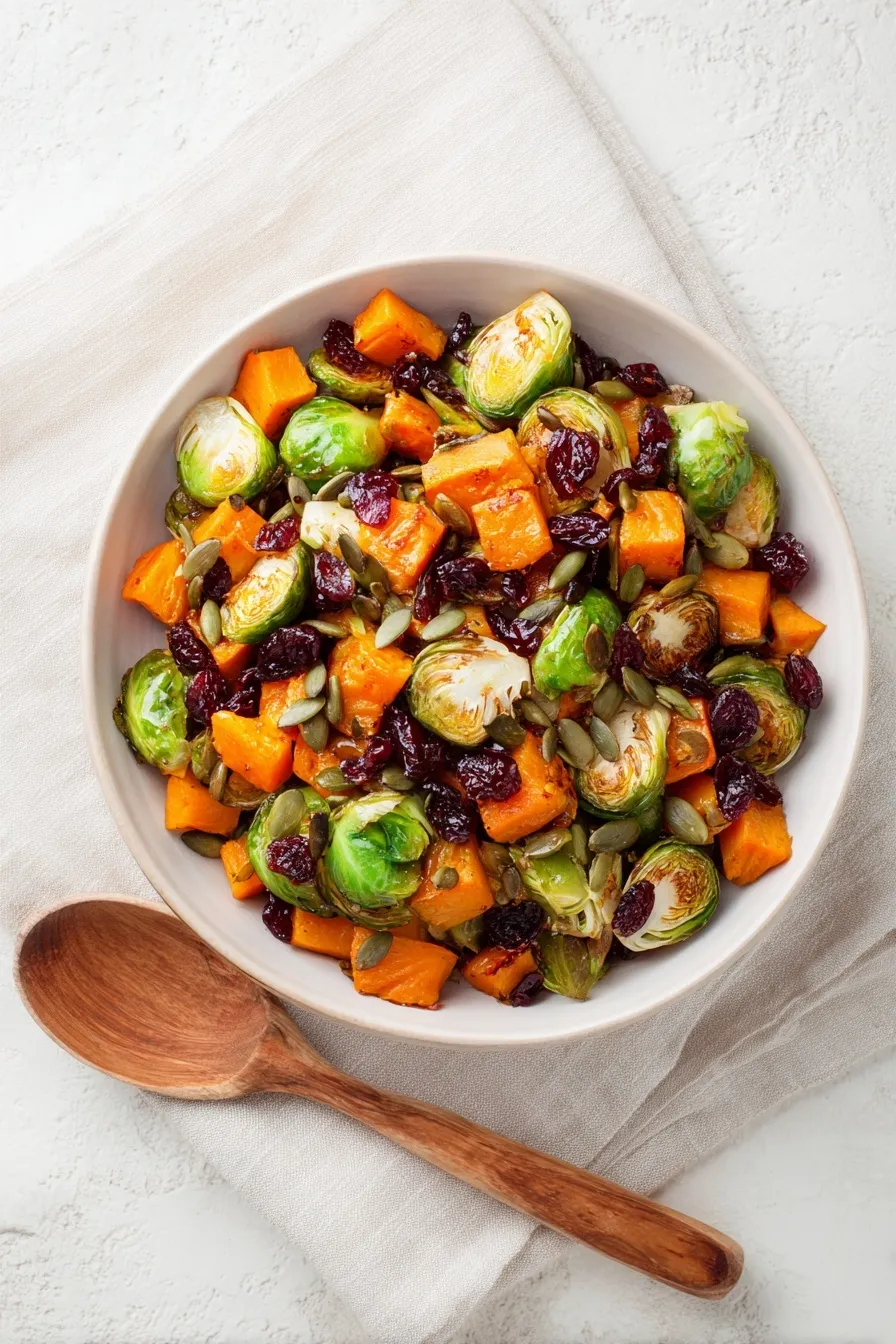
Brussels sprouts and butternut squash roasted with maple syrup, cranberries, and pumpkin seeds create the ultimate fall side dish. Crispy caramelized edges meet sweet-and-savory flavors in every bite, making vegetables actually disappear from the plate.
Since you’re here, make sure to check out these related recipes:
- Brussels Sprouts Butternut Squash Pasta
- Butternut Squash Apple Bake
- Roasted Butternut Squash
- Garlic Parmesan Roasted Sweet Potatoes
- Crispy Brussels Sprouts with Dijon Aioli
Why this Brussels sprouts and butternut squash recipe works
Ever wonder why restaurant vegetables taste so much better than home-cooked versions? High heat and proper spacing make all the difference.
Roasting at 450°F caramelizes the natural sugars in both vegetables, creating crispy golden edges while keeping the insides tender. Using separate sheet pans for Brussels sprouts and butternut squash means each vegetable cooks at its own perfect timing. Adding maple syrup during the final minutes creates glaze without burning. The combination of sweet cranberries, crunchy pumpkin seeds, and earthy vegetables hits every flavor note.
- Perfect fall flavors in one easy side dish
- Naturally vegetarian and packed with fiber
- Make-ahead friendly for busy weeknights
- Sweet and savory balance everyone loves
Ingredients
What makes roasted Brussels sprouts and butternut squash taste absolutely irresistible?
Fresh Brussels sprouts with tight, bright green leaves roast up crispy without bitterness. Small to medium butternut squash has the best texture and sweetness—pre-cut cubes save 15 minutes of prep time. Pure maple syrup (not pancake syrup) adds authentic flavor that honey can’t replicate. Dried cranberries plump up from the residual heat and add tart sweetness.
For the vegetables:
- 1½ pounds Brussels sprouts, trimmed and halved
- 1 small butternut squash, peeled and cubed (about 3 cups)
- 4 tablespoons olive oil, divided
- 1 teaspoon kosher salt, divided
- ½ teaspoon black pepper, freshly ground
For the glaze and toppings:
- 4 tablespoons pure maple syrup
- ½ cup dried cranberries
- ½ cup pumpkin seeds (pepitas)
Step-by-step instructions
1. Preheat your oven to 450°F so it’s fully hot when you’re ready to roast. High heat is essential for getting crispy, caramelized edges instead of mushy, steamed vegetables.
2. Toss butternut squash on one large baking sheet with 2 tablespoons olive oil, ½ teaspoon salt, and half the black pepper. Spread in a single layer without overcrowding to ensure even roasting.
3. Prepare Brussels sprouts on a separate baking sheet with remaining 2 tablespoons olive oil, ½ teaspoon salt, and remaining black pepper. Place them cut-side down for maximum caramelization on the flat surfaces.
4. Roast Brussels sprouts for 15-18 minutes without flipping so their cut sides develop deep brown, crispy edges. Roast butternut squash for 22-25 minutes until tender and golden at the edges.
5. Remove both pans from the oven and drizzle 2 tablespoons maple syrup over each batch. Toss to coat evenly and flip the vegetables for browning on both sides.
6. Return to oven for 5-8 minutes, watching closely so the maple syrup caramelizes without burning. The vegetables should look glossy and deeply golden.
7. Cool slightly for a few minutes, then transfer both batches to a large serving bowl. Toss together while still warm so the residual heat plumps up the cranberries.
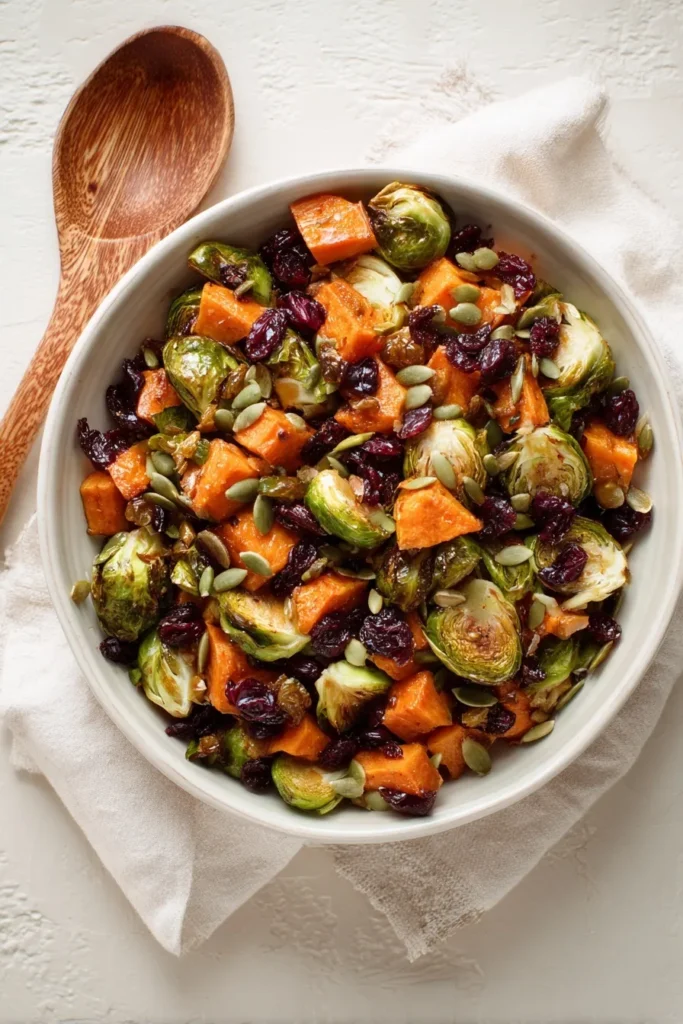
8. Add cranberries and pumpkin seeds, tossing everything together. Finish with an extra drizzle of maple syrup to taste and serve immediately while still warm.
Essential equipment
Two large rimmed baking sheets
Using separate pans for Brussels sprouts and butternut squash lets each vegetable roast at its perfect timing. Rimmed edges contain the olive oil and prevent dripping in your oven.
Sharp vegetable peeler
A good peeler makes quick work of butternut squash’s tough skin without wasting flesh. Y-shaped peelers give you better control than straight peelers on curved surfaces.
Large serving bowl
You need plenty of room to toss the hot vegetables with cranberries and seeds without spilling. A bowl that’s too small means ingredients end up on your counter instead.
Instant-read thermometer (PREMIUM)
Check that butternut squash reaches 205°F for perfectly tender texture. The thermometer also verifies your oven temperature is accurate for proper caramelization.
What to serve with Brussels sprouts and butternut squash
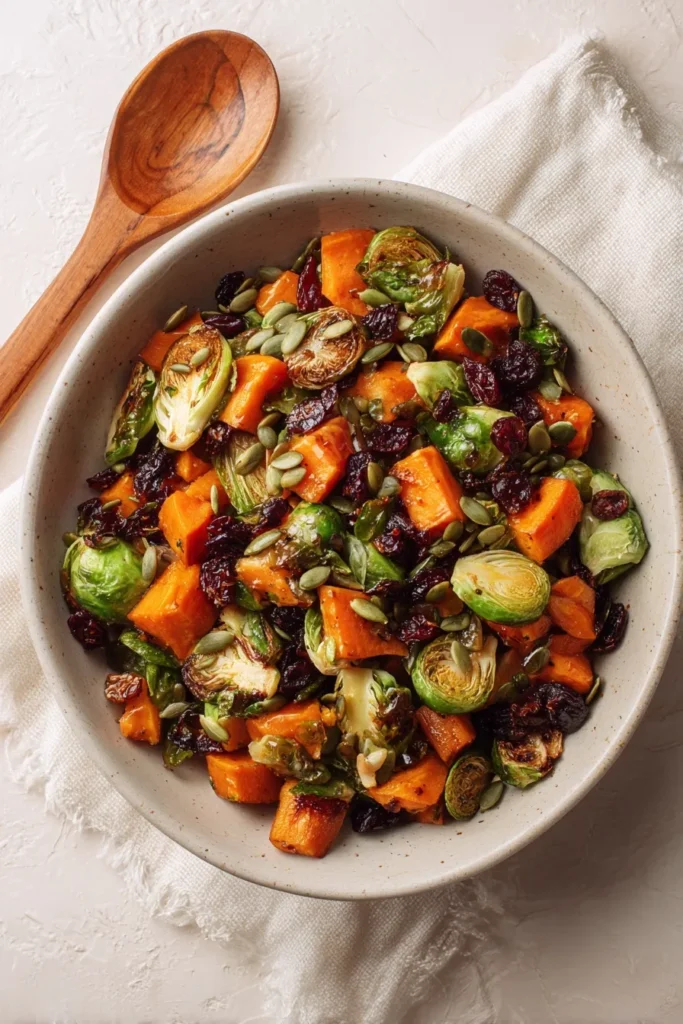
Looking for the perfect main dishes to pair with your roasted vegetables?
Roasted or grilled chicken (halal-certified) pairs beautifully with the sweet-and-savory flavors. Try Crispy Hot Honey Feta Chicken or Brown Sugar Dijon Chicken Thighs. Herb Butter Turkey makes it perfect for Thanksgiving.
For holiday spreads, serve alongside Creamy Garlic Mashed Potatoes and Traditional Thanksgiving Stuffing. Maple Glazed Chicken and Sweet Potatoes creates a complete sheet pan dinner. For vegetarian meals, add quinoa or farro plus a fried egg.
Storage and reheating guide
Refrigerator storage
Store cooled Brussels sprouts and butternut squash in an airtight container for up to 4 days. The flavors actually improve overnight as everything melds together, making leftovers taste even better than day one.
Freezer storage
Freeze cooled vegetables in freezer-safe containers for up to 2 months. The texture softens slightly after freezing but still tastes delicious. Thaw overnight in the refrigerator before reheating.
Reheating instructions
Spread vegetables on a baking sheet and reheat at 350°F for 10 minutes to restore crispy texture. Microwave reheating works for 1-2 minutes but won’t bring back the crispiness you get from oven reheating.
Brussels sprouts and butternut squash variations
Want to customize your favorite fall side dish for different occasions?
Sweet potato swap uses cubed sweet potatoes instead of butternut squash for equally delicious results with less prep work. Nutty version adds chopped pecans or walnuts instead of pumpkin seeds for different crunch. Spicy kick tosses vegetables with red pepper flakes or drizzles with hot honey.
Bacon upgrade adds crumbled turkey bacon (halal-certified) during the final toss for smoky, savory depth. Cheese lovers sprinkle crumbled goat cheese or shaved Parmesan over the hot vegetables. Balsamic glaze replaces maple syrup with balsamic reduction for tangy-sweet flavor instead of straight sweetness.
Pro tips and tricks
Want your Brussels sprouts and butternut squash to turn out perfect every single time?
Don’t overcrowd pans because vegetables need space for air circulation—crowded pans create steam instead of crispy caramelization, so use two pans if needed.
Cut uniform sizes so everything cooks evenly—aim for ½-inch cubes for squash and similar-sized Brussels sprouts halves to prevent some pieces burning while others stay raw.
Add maple syrup late during the final 5-8 minutes only because sugar burns easily at high heat, turning bitter instead of creating that gorgeous glossy glaze.
Place Brussels sprouts cut-side down and resist the urge to flip them so the flat surfaces develop deep brown caramelization that makes them irresistible.
Frequently asked questions
Can you make Brussels sprouts and butternut squash ahead of time?
Yes—prep the vegetables a day ahead by cutting them and storing in separate containers in the fridge. When ready to cook, toss with oil and seasonings, then roast as directed for fresh-roasted taste.
Why are my roasted vegetables mushy instead of crispy?
Overcrowding the pan is the most common culprit because vegetables steam instead of roast. Spread in a single layer using two pans if needed, and make sure your oven reaches 450°F before roasting.
Can you use frozen Brussels sprouts or butternut squash?
Fresh vegetables work best for this preparation because frozen ones contain too much moisture. If you must use frozen, thaw completely and pat very dry with paper towels before roasting.
What can substitute for maple syrup in this dish?
Honey or agave nectar work in a pinch, though you’ll lose that distinctive maple flavor. Use the same amount and add during the final minutes to prevent burning just like maple syrup.
How do you know when butternut squash is done roasting?
The edges should be golden brown and caramelized, and a fork should pierce through easily. The internal temperature should reach 205°F for perfectly tender texture without being mushy.
Can you add protein to make this a main dish?
Absolutely—toss with cooked quinoa or farro and top with a fried egg. Add rotisserie chicken (halal-certified) or crumbled turkey sausage (halal-certified) during the final toss for complete meals.
Why you’ll love this
Ready to transform vegetables into the star of your dinner table? Roasted Brussels sprouts and butternut squash deliver crispy, caramelized perfection with sweet-and-savory flavors.
The maple glaze, tart cranberries, and crunchy pumpkin seeds create layers of texture and taste in every forkful. Whether you’re making the best Brussels sprouts and butternut squash for Thanksgiving or weeknight dinners, everyone goes back for seconds.
Make it tonight and watch vegetables disappear faster than usual.
📌 Save this Brussels sprouts and butternut squash for fall gatherings—it’s guaranteed to convert even veggie skeptics!