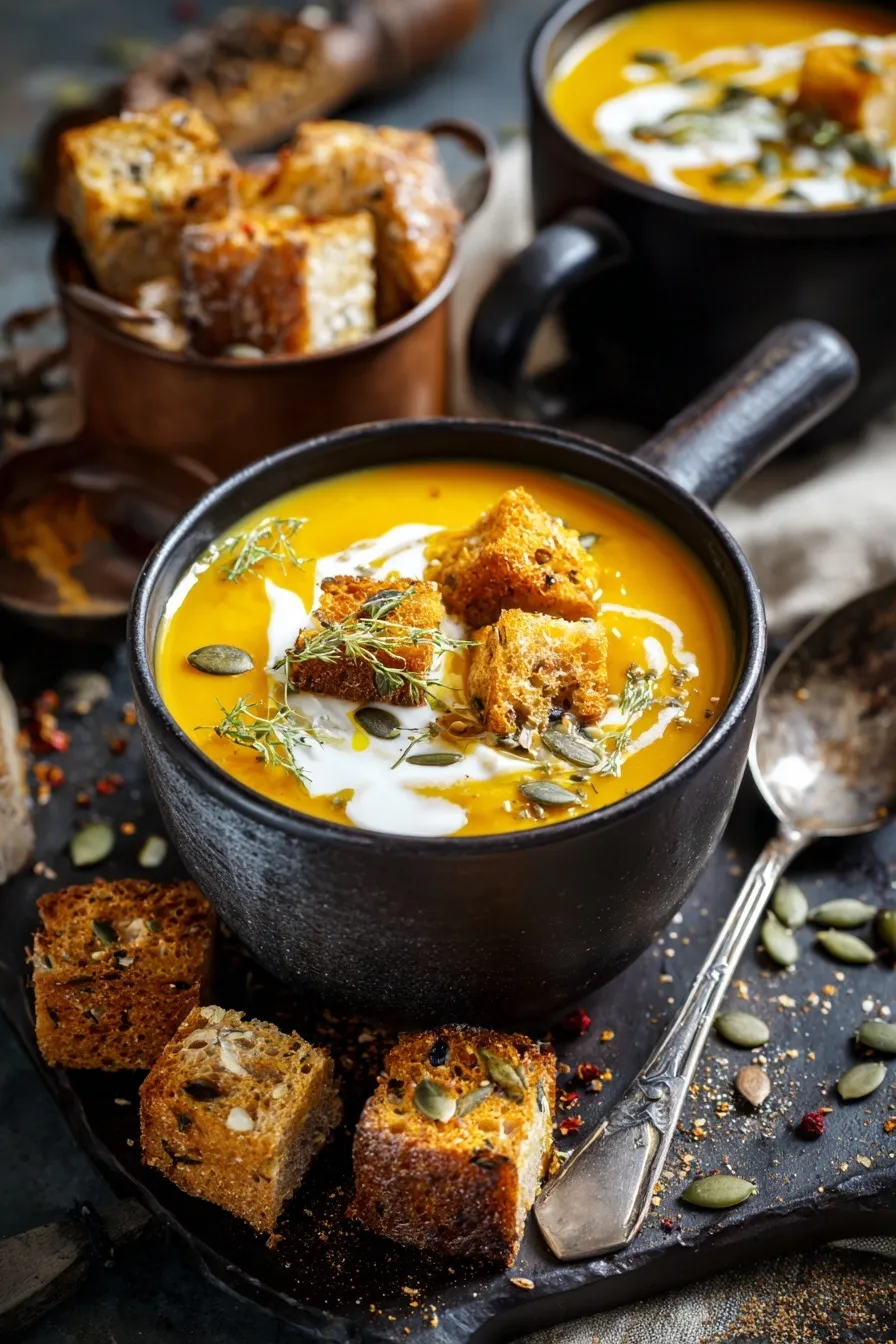
The one-sheet wonder that turns fall vegetables into pure liquid gold.
Since you are here, make sure to check out these amazing roasted vegetable recipes:
- Garlic Parmesan Roasted Sweet Potatoes
- Crispy Smashed Carrots Recipe Roasted Parmesan
- Slow Cooker Maple Brown Sugar Glazed Carrots
- Garlic Butter Roasted Sweet Potatoes Herbs
- Simple Baked Zucchini Parmesan
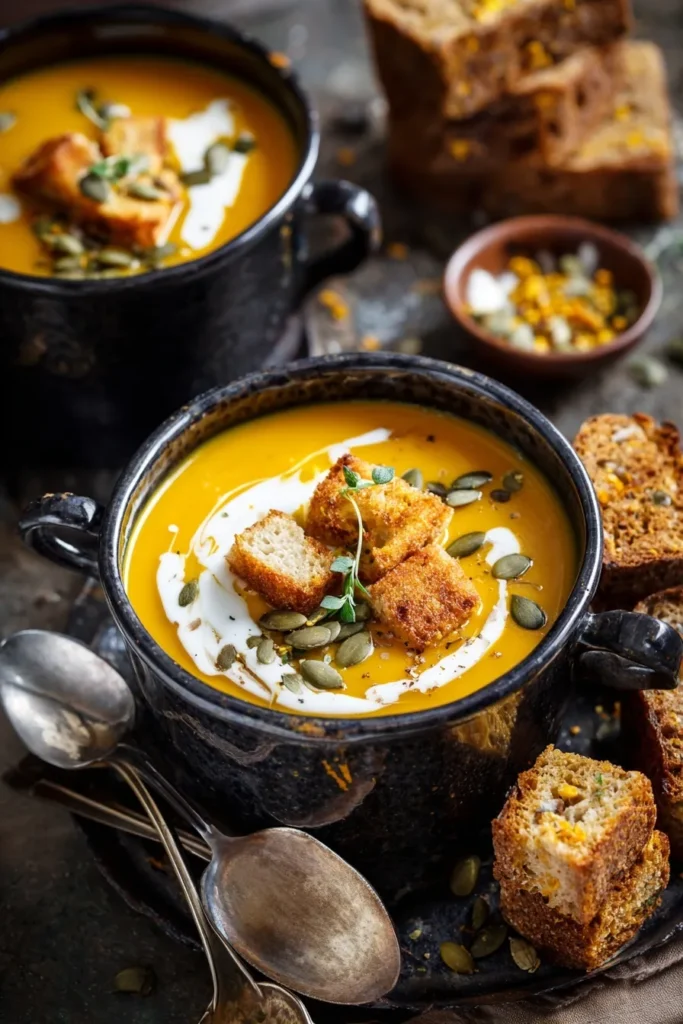
There’s something magical that happens when you roast butternut squash. The edges get all caramelized and sweet, the flesh becomes creamy without any cream, and suddenly you understand why fall is soup season. This roasted butternut squash soup isn’t just another recipe—it’s the one-sheet method that makes everything taste like you spent hours developing flavors.
The genius here is roasting everything together on one baking sheet. The squash, onion, and garlic all get those beautiful caramelized edges that create layers of flavor you simply can’t achieve by just boiling vegetables. Plus, cleanup is a breeze because everything happens on one pan.
I’ve made this soup probably 30 times in the past two years, and it never fails to impress. It tastes like restaurant-quality comfort food but requires minimal effort. Honestly, it’s become my go-to when I want to look like a culinary wizard without actually being one 🙂
Ingredients
This recipe proves that the best soups come from simple, quality ingredients:
The Roasted Vegetable Stars:
- 1 (3-4 lb) butternut squash
- 1 medium onion
- 1 head garlic
- 2 tablespoons olive oil
The Flavor Foundation:
- 1 teaspoon fine sea salt
- ½ teaspoon cracked black pepper
- 1 teaspoon fresh chopped sage
- 1 teaspoon fresh thyme leaves
The Liquid Components:
- 3 cups vegetable stock (or chicken stock)
- ½ cup heavy cream (or coconut milk for dairy-free)
Optional But Amazing Garnishes:
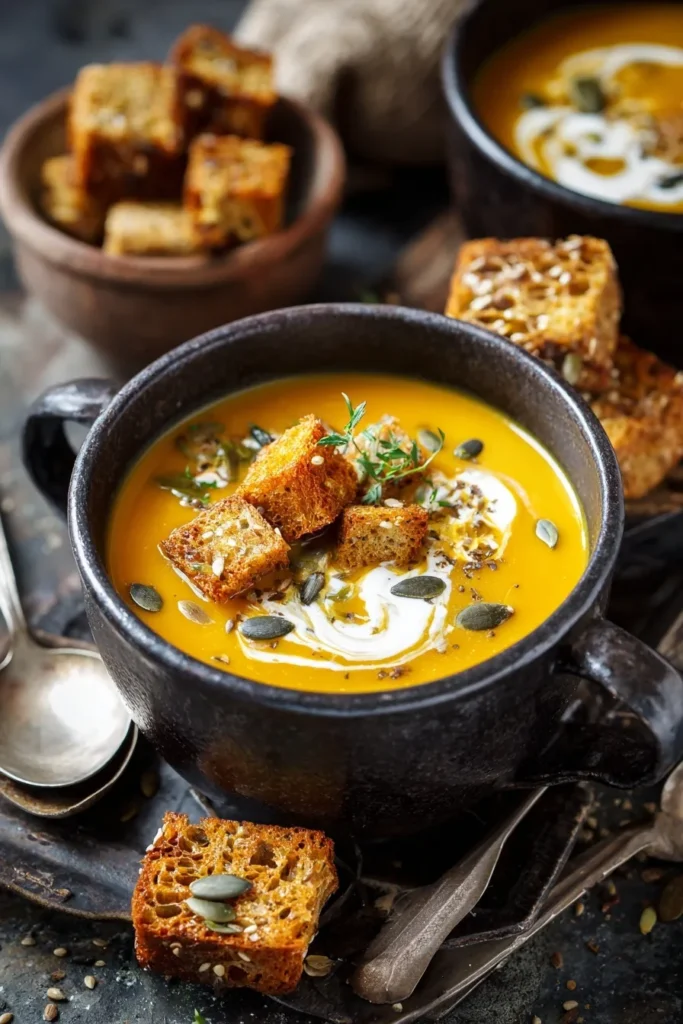
- Homemade croutons
- Roasted butternut squash seeds
- Fresh herbs
- A drizzle of good olive oil
- Crusty bread for dipping
Pro tip: Don’t skip the fresh herbs here. Dried herbs just don’t have the same impact when you’re going for that restaurant-quality flavor profile.
Instructions
Step 1: The Setup Preheat your oven to 425°F and line a large baking sheet with parchment paper. This temperature is crucial—it’s hot enough to caramelize but won’t burn your vegetables.
Step 2: Prep Like a Pro Cut the butternut squash in half lengthwise and scoop out all the seeds (save them for roasting later!). Peel the onion and cut it into four large chunks. Slice off the top of the garlic head to expose the cloves, drizzle with olive oil, and wrap in foil.
Step 3: The Magic Sheet Place the squash cut-side down on the baking sheet along with the onion pieces and wrapped garlic. Drizzle everything with olive oil and season with salt, pepper, sage, and thyme. Make sure everything gets coated—this is where the flavor starts.
Step 4: Roast to Perfection Roast for about 45 minutes until you can easily pierce the squash with a fork and the edges are golden and caramelized. The kitchen should smell absolutely incredible at this point.
Step 5: The Transformation Let everything cool enough to handle, then scoop the squash flesh from the skin. Squeeze the roasted garlic cloves out of their papery skins—they’ll be sweet and buttery perfection.
Step 6: Blend and Finish Transfer the roasted squash, garlic cloves, and onions to a stockpot. Add the vegetable stock and use an immersion blender to puree until silky smooth. Heat gently over low heat, then stir in the heavy cream and adjust seasoning to taste.
Why This Method Changes Everything
Maximum Flavor Development Roasting caramelizes the natural sugars in the vegetables, creating complex flavors that you simply can’t get from boiling or steaming. Those golden, slightly crispy edges? Pure flavor gold.
One-Sheet Simplicity Everything roasts together on one pan, which means less cleanup and more time to enjoy your soup. Plus, the vegetables complement each other as they roast.
Restaurant-Quality Results The depth of flavor from this roasting method rivals expensive restaurant soups, but costs a fraction to make at home.
Foolproof Technique It’s almost impossible to mess this up. As long as you don’t burn the vegetables, you’re guaranteed delicious results.
Storage and Meal Prep
This soup is a meal prep superstar. Store it in airtight containers in the refrigerator for up to 5 days. The flavors actually improve after a day or two, so don’t be surprised if tomorrow’s lunch is even more amazing.
For freezing, let the soup cool completely before transferring to freezer-safe containers. It’ll keep for up to 3 months. Leave about an inch of space at the top since the soup expands when frozen.
When reheating, warm gently on the stovetop over medium-low heat, stirring occasionally. You might need to add a splash of stock if it’s thickened up too much.

Recipe Variations
Spiced Version: Add a pinch of nutmeg, cinnamon, or curry powder during roasting for warming spices that complement the squash beautifully.
Apple Twist: Roast a diced apple alongside the vegetables for extra sweetness and complexity.
Coconut Version: Use coconut milk instead of heavy cream for a dairy-free option with tropical notes.
Protein Boost: Stir in some cooked white beans or chickpeas for extra substance.
Herb Variations: Try fresh rosemary instead of thyme, or add a bay leaf during the final heating.
Perfect Pairings
This soup begs to be served with crusty artisan bread for dipping. The combination of creamy soup and crispy bread is pure comfort food perfection.
Grilled cheese sandwiches are the classic pairing—the gooey cheese and buttery bread complement the smooth soup beautifully. For something lighter, try a spinach salad with walnuts and cranberries.
IMO, the best way to serve this is in your biggest bowls with homemade croutons on top for crunch and a drizzle of good olive oil for richness.
Nutritional Benefits
This soup is basically a vitamin A powerhouse disguised as comfort food. Butternut squash is loaded with beta-carotene, potassium, and fiber. The roasting method preserves these nutrients while concentrating the flavors.
The garlic adds antioxidants and immune-boosting properties, while the fresh herbs contribute additional vitamins and minerals. Even with the cream, each serving provides serious nutritional value.
Each bowl contains approximately 210 calories with 4 grams of fiber and essential vitamins, making it a satisfying yet healthy choice.
Professional Tips
Choose the Right Squash: Look for butternut squash that feels heavy for its size with firm, unblemished skin. This ensures maximum sweetness and flavor.
Don’t Overcrowd: Make sure vegetables have space on the baking sheet. Overcrowding leads to steaming instead of caramelizing.
Temperature Matters: 425°F is the sweet spot for caramelization without burning. Don’t be tempted to go higher.
Fresh Herb Secret: Add fresh herbs during roasting for deeper flavor, then garnish with more fresh herbs for brightness.
Blending Technique: Blend while the soup is hot for the smoothest texture. If using a regular blender, work in batches and never fill more than halfway.
FAQs
Can I use frozen butternut squash? Yes, but thaw it completely first and pat dry to remove excess moisture. Fresh squash will give you better caramelization, but frozen works in a pinch.
What if I don’t have fresh herbs? Use dried herbs but cut the amounts in half. Add them during roasting and finish with fresh herbs if possible for the best flavor.
Can I make this dairy-free? Absolutely! Replace the heavy cream with coconut milk, cashew cream, or even just extra vegetable stock for a lighter version.
How do I know when the squash is done roasting? It should be easily pierced with a fork and have golden, caramelized edges. Some darker spots are perfect—that’s where the flavor develops.
Can I roast the vegetables ahead of time? Yes! Roasted vegetables can be stored in the fridge for up to 2 days before making the soup. This makes it perfect for meal prep.
Common Mistakes to Avoid
Skipping the Seasoning: Season the vegetables before roasting, not just the finished soup. This builds flavor layers.
Not Roasting Long Enough: Don’t rush the roasting process. Those caramelized edges are where the magic happens.
Using Too Much Cream: Start with less cream than you think you need. You can always add more, but you can’t take it out.
Forgetting to Cool: Let the roasted vegetables cool enough to handle safely before attempting to scoop or squeeze them.
Why You’ll Love This Recipe
This roasted butternut squash soup represents everything great about fall cooking—simple ingredients transformed into something extraordinary through proper technique. The one-sheet roasting method creates restaurant-quality flavors while keeping the process completely approachable.
The result is a soup that’s elegant enough for dinner parties but comforting enough for cozy family dinners. It’s healthy without tasting like health food, and impressive without being complicated.
Most importantly, this recipe teaches you a roasting technique you’ll use forever. Once you understand how roasting develops flavors, you’ll apply it to everything from vegetables to proteins.
The Final Verdict
This isn’t just soup—it’s a masterclass in how proper technique elevates simple ingredients. The one-sheet roasting method creates layers of flavor that make this soup unforgettable, while the minimal cleanup makes it practical for real life.
Whether you’re meal prepping for busy weeknights, feeding a hungry family, or entertaining guests, this soup delivers on every level. It’s the kind of recipe that makes you look like a culinary genius while being surprisingly simple to execute.
Trust me, once you try the roasted method, you’ll never go back to plain boiled vegetable soup. This is the recipe that makes fall cooking feel magical—and honestly, we could all use a little more magic in the kitchen.