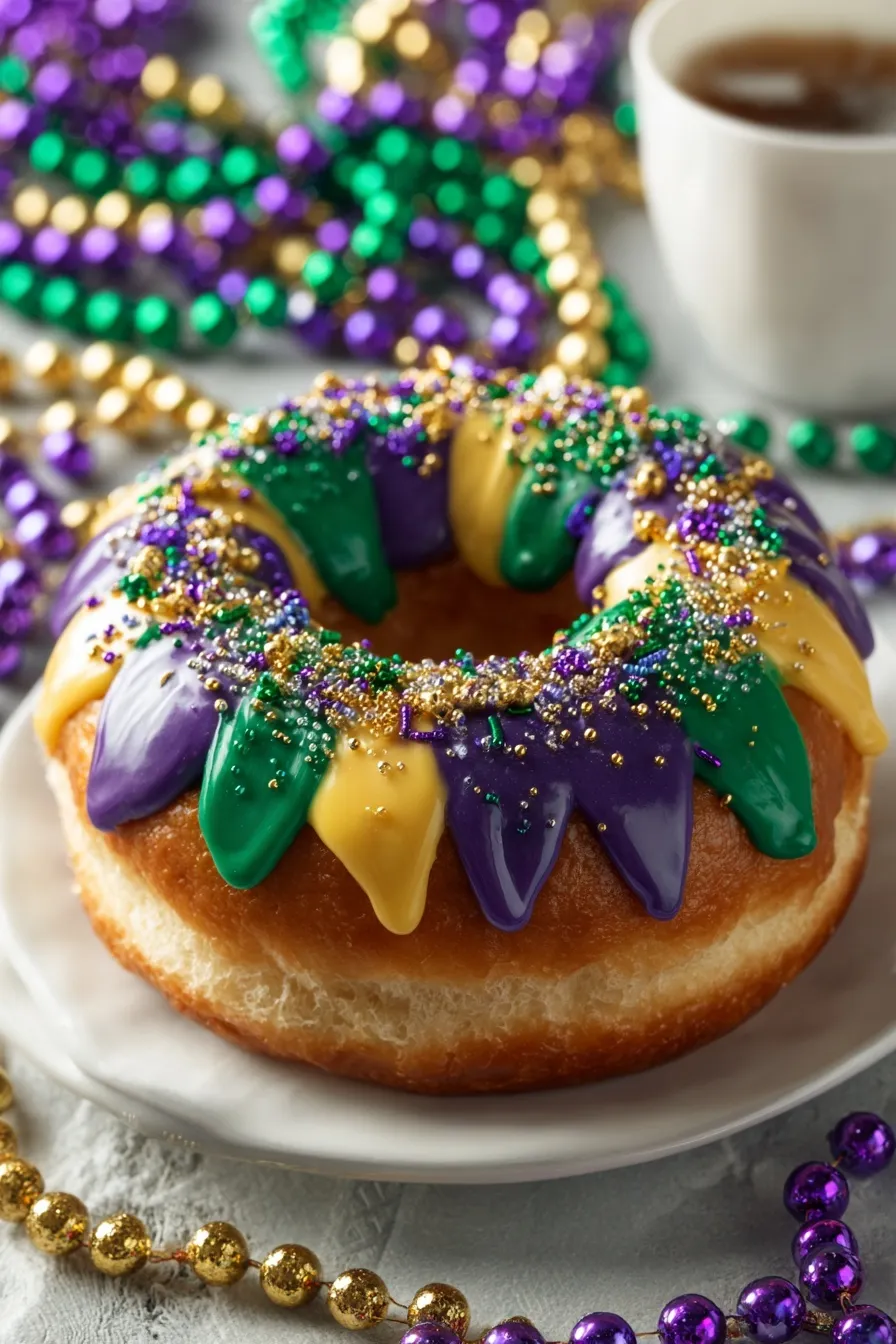
King cake delivers that authentic New Orleans Mardi Gras magic you’ve been craving! Soft, pillowy layers swirled with cinnamon sugar and crowned with purple, green, and gold sprinkles make every bite feel like a celebration.
Since you’re here, make sure to check out these related recipes:
- Cinnamon Roll Cheesecake Bars
- Christmas Cranberry Orange Cookies
- Pumpkin Cinnamon Roll Bake
- Apple Cider Donut Cake
- Gingerbread Crinkle Cookies
Why This King Cake Works
Ever wonder why bakeries charge $30 for a king cake? The secret’s in the yeast dough that creates those impossibly soft, airy layers. You’re getting authentic New Orleans flavor without leaving your kitchen.
The magic happens when cream cheese icing meets those traditional Mardi Gras colors. Here’s what makes this king cake special:
- Sour cream keeps the dough extra tender and moist
- Cinnamon sugar swirl adds warmth to every slice
- Cream cheese glaze balances sweetness perfectly
- Purple, green, and gold sprinkles signal the real deal
Ingredients
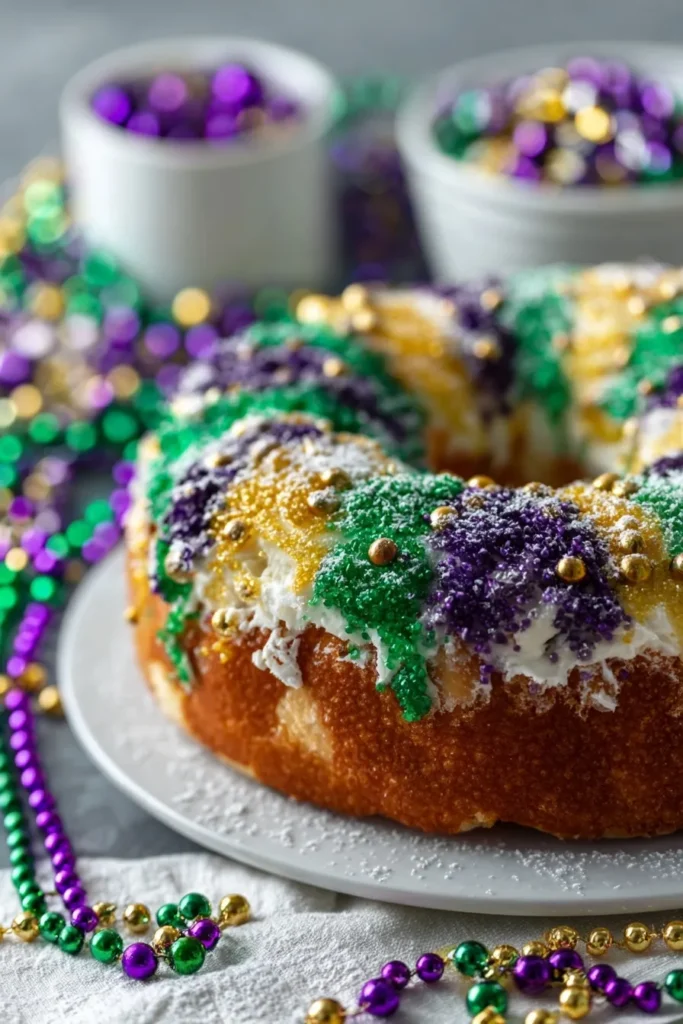
What goes into creating the best king cake? You’ll need basic baking staples plus a few special touches that make all the difference.
For the Dough:
- 1 packet (¼ oz) active dry yeast
- ¼ cup warm water (100-110°F)
- ½ tablespoon + 2 tablespoons granulated sugar
- 8 oz full-fat sour cream
- 2 tablespoons unsalted butter
- ½ teaspoon salt
- 1 large egg, lightly beaten
- 3 to 3½ cups bread flour
For the Filling:
- ⅓ cup unsalted butter, softened
- ½ cup granulated sugar
- 1½ teaspoons ground cinnamon
For the Glaze:
- 3 cups powdered sugar
- 3 tablespoons cream cheese, softened
- 2-4 tablespoons milk
- 2 tablespoons fresh lemon juice
- ¼ teaspoon vanilla extract
- Purple, green, and gold sprinkles
The sour cream is your secret weapon here. Full-fat sour cream creates that signature tender crumb you’ll find in authentic New Orleans king cake. Don’t skimp on the cream cheese for the glaze—that slight tang cuts through the sweetness beautifully.
Step-by-Step Instructions
1. Activate the yeast by stirring it with warm water and ½ tablespoon sugar in a small bowl. Let stand 5 minutes until foamy and bubbly.
2. Heat the sour cream mixture by combining sour cream, 2 tablespoons sugar, butter, and salt in a saucepan over low heat. Stir until butter melts, then cool to 100-110°F.
3. Mix the dough using a stand mixer with dough hook attachment. Add sour cream mixture, yeast mixture, egg, and half the flour. Start on medium speed, then reduce to low and gradually add remaining flour until soft dough forms.
4. Knead the dough on low speed for 10 minutes until smooth and elastic. Dough should release from bowl sides and feel soft without being sticky.
5. Let dough rise in a lightly greased bowl covered with a cloth. Place in a warm spot (75-78°F) for 1 hour until doubled in size.
6. Divide and roll the risen dough in half. Roll each portion into a 16×8-inch rectangle using a rolling pin.
7. Add the filling by spreading half the softened butter on each rectangle, leaving a 1-inch border. Mix sugar and cinnamon, then sprinkle half over each buttered rectangle.
8. Roll up the dough tightly from bottom to top, just like making cinnamon rolls. Pinch the seam firmly to seal.
9. Form the ring by placing both rolls seam-side down on a parchment-lined baking sheet. Twist the logs together, then connect the ends to form a circle and seal well.
10. Second rise happens when you cover the ring and let it rest in a warm place for 20-30 minutes until doubled.
11. Bake at 350°F for 25-35 minutes until golden brown. Check doneness with a thermometer—internal temperature should reach 190-195°F.
12. Make the glaze while cake cools by beating powdered sugar, cream cheese, milk, lemon juice, and vanilla until smooth and creamy.
13. Decorate generously by pouring glaze over the warm cake. Alternate purple, green, and gold sprinkles in bands around the ring.
Essential Equipment
Stand Mixer with Dough Hook
A powerful stand mixer makes kneading effortless and ensures even gluten development throughout. The dough hook attachment works the dough perfectly for 10 minutes without overheating it.
Heavy-Duty Baking Sheet
A thick, sturdy baking sheet prevents hot spots that could burn the bottom of your king cake. The large surface gives you plenty of room to shape and twist the dough ring without crowding.
Instant-Read Thermometer (PREMIUM)
Professional bakers rely on thermometers to nail perfect doneness every single time. Taking the internal temperature guarantees fully baked cake without any doughy pockets hiding in the braided layers.
What to Serve With King Cake
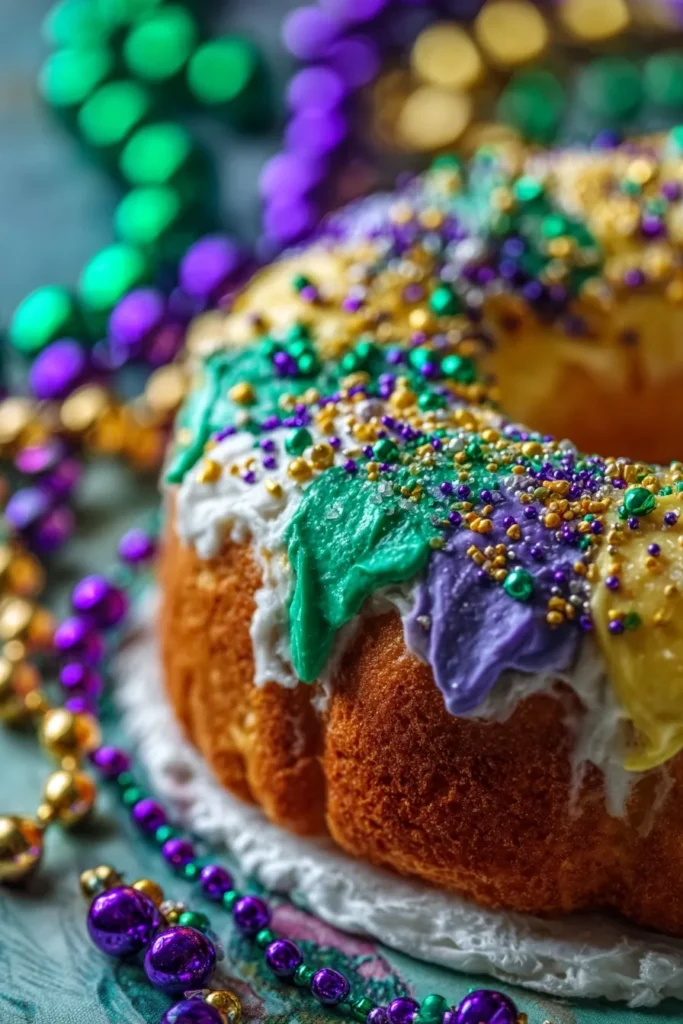
Want to turn your king cake into a proper Mardi Gras feast? Coffee is the traditional pairing—that slight bitterness balances the sweet glaze perfectly.
Try serving slices alongside Homemade Beignets for a full New Orleans breakfast spread. The combination of fluffy fried dough and tender cake creates a celebration-worthy brunch.
For afternoon celebrations, pair your king cake with Peppermint Christmas Float or Best Lemonade Ever for something refreshing. The citrus cuts through the richness beautifully.
Storage and Reheating Guide
Refrigerator Storage
Store your king cake covered at room temperature for 2-3 days maximum. The glaze and sprinkles may bleed slightly after day one, but the flavor stays delicious. Don’t refrigerate unless absolutely necessary—cold temps dry out the dough.
Freezer Storage
Freeze unglazed king cake tightly wrapped in plastic wrap, then foil, for up to 3 months. Let it thaw completely at room temperature before glazing and decorating. Frozen glazed cake works too, but expect the colors to bleed when thawed.
Reheating Instructions
Warm individual slices in the microwave for 10-15 seconds to revive that fresh-baked softness. Avoid overheating or the glaze will melt completely. Room temperature slices taste just as amazing without reheating.
King Cake Variations
Craving something different from traditional cinnamon? You’ve got options that still honor the Mardi Gras spirit.
Try a cream cheese filling by spreading softened cream cheese mixed with sugar and vanilla between the dough layers. Roll and bake as directed for a tangy twist on the classic.
Make it praline king cake by adding chopped pecans and brown sugar to the cinnamon filling. Drizzle with Salted Caramel before adding sprinkles for extra decadence.
Pro Tips & Tricks
Want to guarantee perfect results every single time? These baker-tested tricks make all the difference.
Warm water temperature matters because yeast dies above 120°F and won’t activate below 95°F. Use a thermometer to hit that sweet spot of 100-110°F.
Don’t skip the second rise even if you’re rushed—those 20 minutes create the pillowy texture that makes king cake special.
Seal the seams tightly by pinching firmly with your fingers. Gaps let filling leak out during baking and create messy puddles.
Check internal temperature instead of relying only on color. A reading of 190-195°F means perfectly baked cake with no doughy centers.
Frequently Asked Questions
Can you freeze king cake?
Yes, you can freeze king cake for up to 3 months! Wrap the unglazed cake tightly in plastic wrap, then aluminum foil. Thaw at room temperature before adding glaze and sprinkles for best results.
How long does king cake last?
King cake stays fresh at room temperature for 2-3 days when stored covered. The sprinkle colors may bleed into the icing after the first day, but it still tastes delicious. Refrigeration extends life to 5 days but dries out the texture.
Why is there a baby in king cake?
Tradition says whoever finds the tiny plastic baby figurine hidden in the cake either becomes “king for the day” or must buy next year’s king cake. The baby symbolizes luck and prosperity during Mardi Gras season.
Can you make king cake ahead of time?
You can prep the dough and shape it the night before, then refrigerate overnight for the first rise. Let it come to room temperature and complete the second rise before baking. Try this method with Overnight Croissant Breakfast Casserole too.
What do the king cake colors mean?
Purple represents justice, green symbolizes faith, and gold signifies power. These traditional Mardi Gras colors have decorated king cakes since the 1800s and make the dessert instantly recognizable.
Can you use all-purpose flour instead of bread flour?
Yes, all-purpose flour works perfectly fine in this king cake. Bread flour creates slightly chewier texture from extra protein, but all-purpose still delivers wonderfully soft, tender results.
Why You’ll Love This Recipe
Ready to bring New Orleans straight to your kitchen? This king cake delivers authentic Mardi Gras flavor with soft, pillowy layers and that signature cinnamon swirl everyone craves.
You’ll love how the cream cheese glaze balances sweetness while those festive sprinkles make every celebration feel special. One bite transports you right to the French Quarter.
📌 Save this king cake for Mardi Gras celebrations—it’s guaranteed to become your new February tradition!
Best King Cake – Mardi Gras
King cake delivers that authentic New Orleans Mardi Gras magic you've been craving! Soft, pillowy layers swirled with cinnamon sugar and crowned with purple, green, and gold sprinkles make every bite feel like a celebration.
- 1 packet (¼ oz) active dry yeast
- ¼ cup warm water (100-110°F)
- ½ tablespoon + 2 tablespoons granulated sugar
- 8 oz full-fat sour cream
- 2 tablespoons unsalted butter
- 1 large egg, lightly beaten
- 3 to 3½ cups bread flour
- ⅓ cup unsalted butter, softened
- ½ cup granulated sugar
- 1½ teaspoons ground cinnamon
- 3 cups powdered sugar
- 3 tablespoons cream cheese, softened
- 2-4 tablespoons milk
- 2 tablespoons fresh lemon juice
- Activate the yeast by stirring it with warm water and ½ tablespoon sugar in a small bowl. Let stand 5 minutes until foamy and bubbly.
- Heat the sour cream mixture by combining sour cream, 2 tablespoons sugar, butter, and salt in a saucepan over low heat. Stir until butter melts, then cool to 100-110°F.
- Mix the dough using a stand mixer with dough hook attachment. Add sour cream mixture, yeast mixture, egg, and half the flour. Start on medium speed, then reduce to low and gradually add remaining flour until soft dough forms.
- Knead the dough on low speed for 10 minutes until smooth and elastic. Dough should release from bowl sides and feel soft without being sticky.
- Let dough rise in a lightly greased bowl covered with a cloth. Place in a warm spot (75-78°F) for 1 hour until doubled in size.
- Divide and roll the risen dough in half. Roll each portion into a 16×8-inch rectangle using a rolling pin.
- Add the filling by spreading half the softened butter on each rectangle, leaving a 1-inch border. Mix sugar and cinnamon, then sprinkle half over each buttered rectangle.
- Roll up the dough tightly from bottom to top, just like making cinnamon rolls. Pinch the seam firmly to seal.
- Form the ring by placing both rolls seam-side down on a parchment-lined baking sheet. Twist the logs together, then connect the ends to form a circle and seal well.
- Second rise happens when you cover the ring and let it rest in a warm place for 20-30 minutes until doubled.
- Bake at 350°F for 25-35 minutes until golden brown. Check doneness with a thermometer—internal temperature should reach 190-195°F.
- Make the glaze while cake cools by beating powdered sugar, cream cheese, milk, lemon juice, and vanilla until smooth and creamy.
- Decorate generously by pouring glaze over the warm cake. Alternate purple, green, and gold sprinkles in bands around the ring.