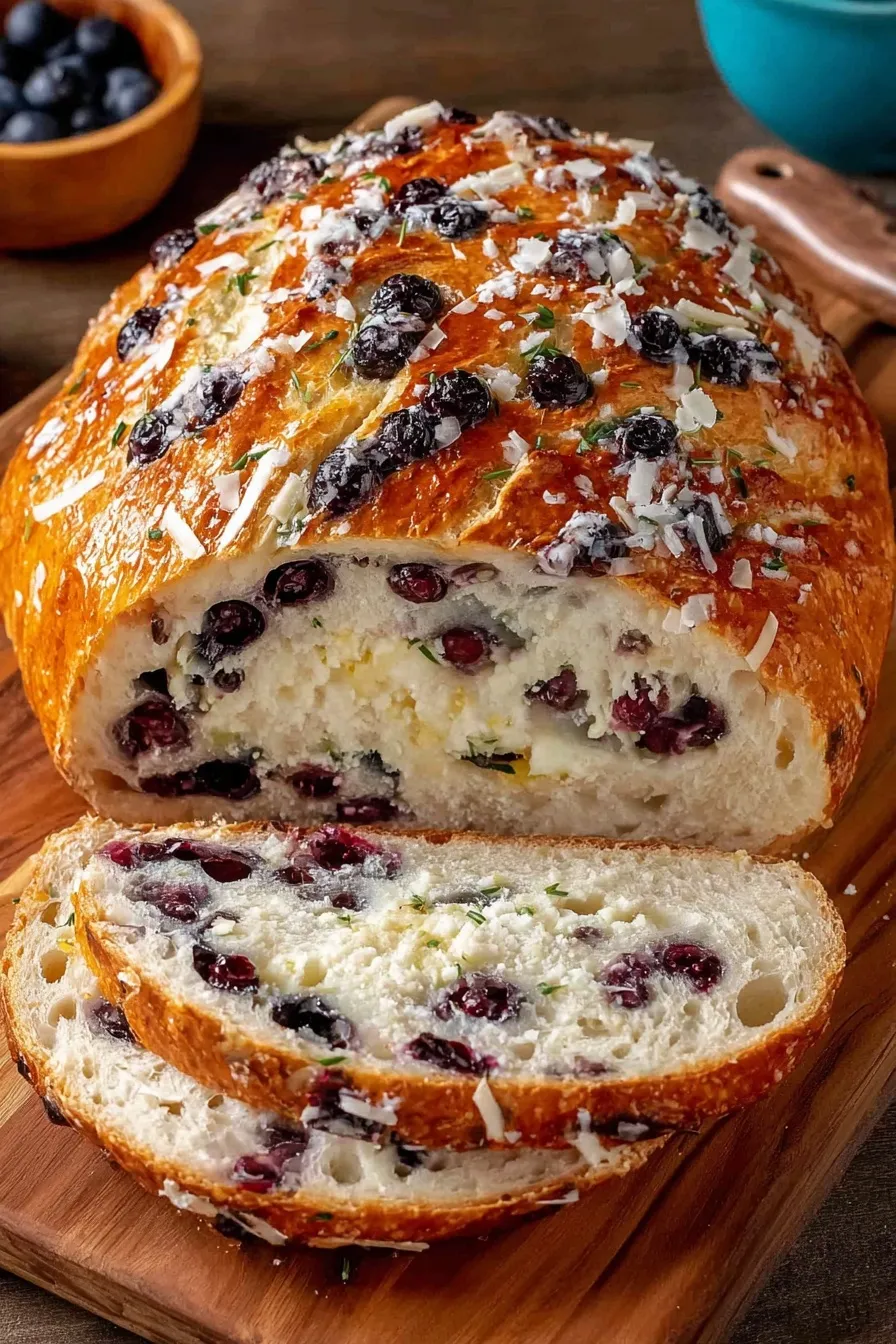
Spring just got a whole lot brighter with this lemon blueberry sourdough that combines tangy citrus, juicy berries, and that classic sourdough depth everyone craves. You’re getting bakery-level results using your active starter and a simple two-day process that fits perfectly into busy schedules.
Substitutions Table
| Original Ingredient | Substitution | Notes |
|---|---|---|
| Bread flour | All-purpose flour | Use 1:1 ratio, less chewy texture |
| Active sourdough starter | Starter + 1 tsp yeast | Mix together, proof 30 minutes |
| Fresh blueberries | Dried blueberries | Soak overnight, drain well before using |
| Caster sugar | Honey | Use same amount, deeper sweetness |
| Lemon zest | Orange zest | Same amount, different citrus profile |
| Water | Milk | Use 1:1 ratio, softer crumb |
Since you’re here, make sure to check out these related recipes:
- Perfect Sourdough French Toast
- Homemade Cheese Bread Recipe
- Cinnamon Swirl Banana Bread
- Ultimate Pumpkin Streusel Bread
- Perfect Cranberry Orange Cookies
Why This Lemon Blueberry Sourdough Works
You know that perfect balance between sweet and tangy that makes your taste buds sing? That’s exactly what happens when bright lemon zest meets juicy blueberries in naturally fermented sourdough.
The overnight cold fermentation develops incredible flavor complexity while the lamination technique distributes berries evenly throughout without turning your dough purple. Your active starter brings that signature tang while the fresh fruit adds natural sweetness and gorgeous color pockets.
Want the secret to success? The extended bulk fermentation at room temperature followed by cold proofing creates an open crumb structure that showcases those berry bursts perfectly.
Here’s what makes this bread special:
- Active sourdough starter creates complex tangy depth regular yeast can’t match
- Cold overnight proofing makes scoring easier and develops better flavor
- Lamination technique keeps berries whole and evenly distributed throughout
- Dutch oven baking creates that crispy golden crust with perfect oven spring
Ingredients
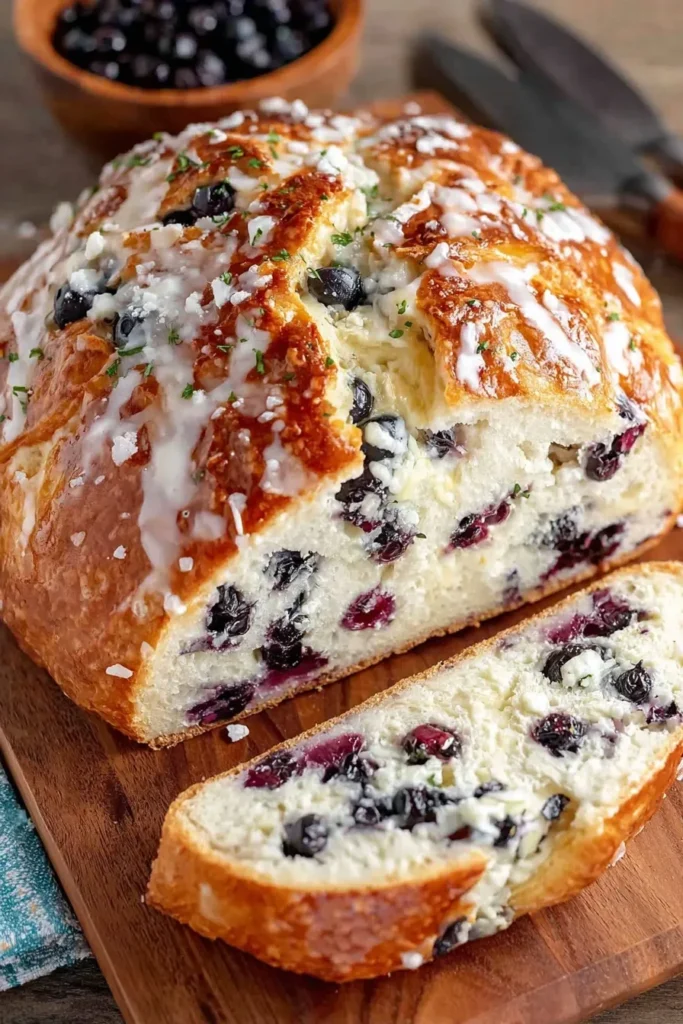
Looking for spring’s most refreshing bread without complicated techniques? You’ll need your bubbly active starter and just a handful of simple ingredients that transform into something spectacular.
For the dough:
- 400g strong white bread flour (at least 12.5% protein)
- 240ml water, room temperature
- 1 teaspoon salt
- 1 tablespoon caster sugar
- 160g active sourdough starter (100% hydration)
- 150g fresh blueberries
- Zest of 2 lemons
Your starter needs to be fed 4-5 hours before mixing and should double in size to ensure proper rise. Room temperature water maintains ideal dough temperature during fermentation, and fresh blueberries work better than frozen since they won’t release excess moisture into the dough.
Step-by-Step Instructions
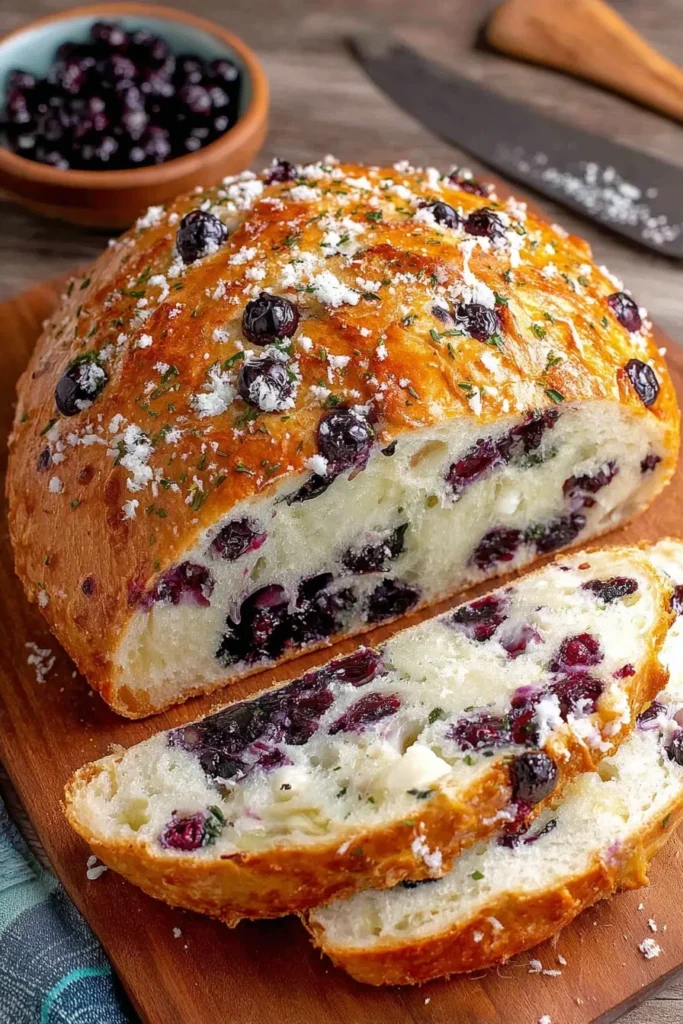
1. Feed your sourdough starter first thing in the morning and let it sit in a warm spot (70-75°F) loosely covered for 4-5 hours. The starter should double in size and show lots of bubbles before using.
2. Combine flour and water in your stand mixer bowl 30-60 minutes before your starter peaks, mixing for 1-2 minutes into a shaggy dough. Cover with a damp towel and let the flour hydrate completely during this autolyse period.
3. Add salt, sugar, and active starter to the hydrated flour and run your mixer with the dough hook for 10-15 minutes. The dough should become smooth and elastic but doesn’t need to pass the windowpane test yet.
4. Transfer to a large bowl and let rest 30 minutes in a warm place, then perform the first coil fold by lifting the dough from the sides and tucking under. Repeat coil folds every 30 minutes for a total of 4 sets.
5. Wet your work surface and gently stretch the dough as thin as possible without tearing, then scatter one-third of blueberries and lemon zest in the center. Fold like a letter, add more mix-ins, and repeat until all fruit is incorporated.
6. Return to the bowl and let bulk ferment for 1-3 hours watching closely since the added sugar speeds up fermentation. The dough should increase by about 50% and feel puffy when ready.
7. Shape into a tight boule by folding the four corners to the center, flipping seam-side down, and using circular motions with your bench scraper to create tension. Place seam-side up in a well-floured proofing basket.
8. Cover and refrigerate in a plastic bag for 12-36 hours for the cold proof which develops flavor and makes scoring easier. The dough will rise slightly even in the cold fridge.
9. Preheat Dutch oven at 475°F for 30 minutes, then invert dough onto parchment, score deeply at a 30-45 degree angle, and bake covered for 30 minutes. Remove lid, reduce to 400°F, and bake 20-25 more minutes until deep golden.
Essential Equipment
Stand Mixer with Dough Hook
The powerful motor kneads the dough thoroughly for 10-15 minutes without tiring your arms or overheating the dough. Consistent mixing develops gluten structure evenly which creates that perfect chewy texture sourdough is famous for.
Banneton Proofing Basket
The natural rattan shape supports the dough during the long cold proof while the ridges create beautiful spiral patterns. Well-floured baskets prevent sticking and wick away surface moisture for better scoring results. (PREMIUM)
Cast Iron Dutch Oven
The enclosed environment traps steam during baking which creates maximum oven spring and that crackly golden crust. Preheating for 30 minutes ensures even heat distribution that mimics professional steam-injected ovens.
Bench Scraper
The rigid straight edge helps shape dough cleanly while creating surface tension for better structure. Metal scrapers also work perfectly for portioning and cleaning flour from your work surface.
What to Serve With Lemon Blueberry Sourdough
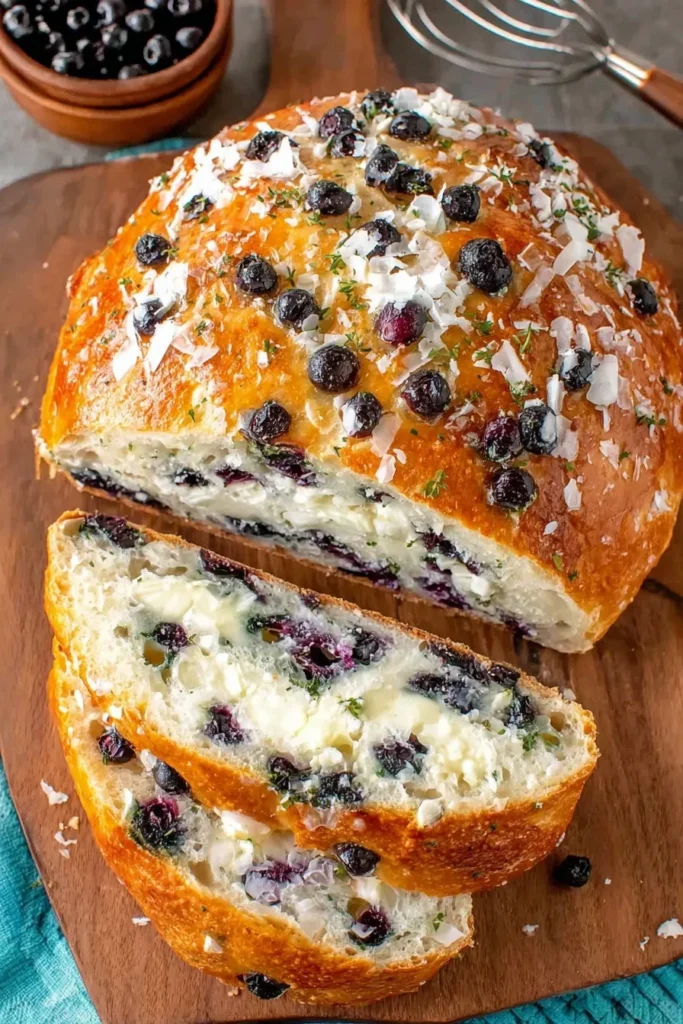
Ready to build the ultimate spring brunch around this incredible bread? The bright citrus and sweet berry flavors pair beautifully with both sweet and savory accompaniments that’ll impress every guest.
Serve toasted slices with Honey Butter Sweet Potatoes for a sweet and savory combo that balances richness with freshness perfectly. The natural sweetness complements the tangy lemon without overwhelming it.
Coffee lovers should pair this with strong espresso or fresh-brewed coffee that cuts through the fruit sweetness. Try it alongside Best Lemonade Ever Recipe for double citrus refreshment that’s perfect for warm afternoons.
For elegant brunches, serve with Strawberry Spinach Salad Honey Balsamic Vinaigrette to balance the rich bread with crisp greens. The combination gives you sweet, tangy, and fresh flavors in every bite.
Storage and Reheating Guide
Refrigerator Storage
Store cooled bread in a paper bag or bread box at room temperature for up to 3 days to maintain the crusty exterior. Plastic bags trap moisture and make the crust soft and chewy instead of crispy. After 3 days, move to freezer storage for best quality.
Freezer Storage
Slice the completely cooled loaf, wrap slices individually in plastic wrap, then place all wrapped slices in a freezer bag. Freeze for up to 3 months without losing texture or flavor. Individual slices thaw quickly for easy breakfast portions.
Reheating Instructions
Toast frozen slices directly from the freezer in a toaster or toaster oven for 3-4 minutes until warmed through. For whole loaf portions, wrap in foil and heat in a 350°F oven for 15 minutes until the center reaches room temperature.
Lemon Blueberry Sourdough Variations
Looking to switch up the flavors while keeping that incredible sourdough base? Small ingredient changes create completely different breads that’ll keep your family excited for every bake.
Try a Raspberry Lemon Version by replacing blueberries with fresh raspberries and adding an extra tablespoon of lemon zest. The raspberries are more tart and create beautiful pink swirls with a sharper flavor profile.
Make a Triple Berry Loaf using 50g each of blueberries, raspberries, and chopped strawberries for complex berry flavor. The combination gives you different fruit notes in every slice. Check out Best Strawberry Kiss Cookies for more berry inspiration.
Create an Orange Cranberry Version by swapping lemon for orange zest and using dried cranberries instead of blueberries. The tart cranberries balance beautifully with sweet orange for a holiday-worthy twist.
Pro Tips & Tricks
Want bakery-perfect results that’ll have everyone asking for your secret? These tips come from dozens of test bakes and figuring out what actually makes the difference.
Use bubbly active starter that’s doubled in size within 4-5 hours of feeding for guaranteed rise and proper fermentation. Sluggish starter creates dense bread with poor texture and disappointing oven spring.
Watch bulk fermentation closely since the added sugar from berries speeds up the process by 30-60 minutes. Over-fermented dough spreads flat instead of rising up when baked.
Be gentle during lamination or you’ll crush the berries and turn your entire dough purple instead of creating pretty swirls. Use light hands and stretch slowly to keep berries whole.
Score deeply and confidently with one swift 1cm-deep cut at a 30-45 degree angle for that gorgeous ear. Shallow hesitant cuts won’t open properly during oven spring.
Frequently Asked Questions
Can you use sourdough discard instead of active starter?
Sourdough discard won’t provide enough leavening power for this dough, resulting in a dense flat loaf. You need the active yeast and bacteria from a recently fed bubbly starter for proper rise and texture.
Why did my blueberries turn the dough purple?
The berries were probably crushed during lamination or mixing, releasing their juice throughout the dough. Handle them gently and add them during the final fold when gluten is fully developed.
How long should bulk fermentation take?
Typically 1-3 hours after laminating the mix-ins, but watch the dough instead of the clock. The added sugar speeds up fermentation, so it rises faster than plain sourdough.
Can you bake this without a Dutch oven?
Yes, but create steam by placing a metal pan on the bottom rack and adding 1 cup boiling water when loading the bread. The crust won’t be quite as crispy. Try Perfect Grilled Focaccia Bread Recipe for alternative methods.
What temperature should the dough be when baking?
Cold dough straight from the fridge scores more cleanly and creates better oven spring. Don’t let it warm up before baking—the temperature contrast helps create that dramatic rise.
Can you add lemon juice to the dough?
Small amounts (1 tablespoon) add nice tang, but too much acidity can inhibit yeast activity and deflate the dough. Stick with lemon zest for the safest, most consistent results.
Why You’ll Love This Recipe
Ready to make the most impressive spring bread that looks as stunning as it tastes? This lemon blueberry sourdough delivers bakery-quality results using your active starter and simple two-day timing.
You’ll love how those juicy berries stay perfectly intact while the bright lemon cuts through the sourdough tang. The overnight cold proof develops incredible depth that quick breads simply can’t match.
Make this weekend and slice into the most beautiful crumb filled with berry pockets. Save this recipe for spring brunches when you want something truly special!
Easy Lemon Blueberry Sourdough

Transform your active sourdough starter into stunning artisan bread bursting with juicy blueberries and bright lemon zest. This two-day fermentation process creates complex tangy flavor with crispy golden crust and tender open crumb that stays fresh for days—perfect for spring brunches and special occasions.
- 400g strong white bread flour (at least 12.5% protein)
- 240ml water, room temperature
- 1 teaspoon salt
- 1 tablespoon caster sugar
- 160g active sourdough starter (100% hydration)
- 150g fresh blueberries
- Zest of 2 lemons
- Feed your sourdough starter first thing in the morning and let it sit in a warm spot (70-75°F) loosely covered for 4-5 hours. The starter should double in size and show lots of bubbles before using.
- Combine flour and water in your stand mixer bowl 30-60 minutes before your starter peaks, mixing for 1-2 minutes into a shaggy dough. Cover with a damp towel and let the flour hydrate completely during this autolyse period.
- Add salt, sugar, and active starter to the hydrated flour and run your mixer with the dough hook for 10-15 minutes. The dough should become smooth and elastic but doesn’t need to pass the windowpane test yet.
- Transfer to a large bowl and let rest 30 minutes in a warm place, then perform the first coil fold by lifting the dough from the sides and tucking under. Repeat coil folds every 30 minutes for a total of 4 sets.
- Wet your work surface and gently stretch the dough as thin as possible without tearing, then scatter one-third of blueberries and lemon zest in the center. Fold like a letter, add more mix-ins, and repeat until all fruit is incorporated.
- Return to the bowl and let bulk ferment for 1-3 hours watching closely since the added sugar speeds up fermentation. The dough should increase by about 50% and feel puffy when ready.
- Shape into a tight boule by folding the four corners to the center, flipping seam-side down, and using circular motions with your bench scraper to create tension. Place seam-side up in a well-floured proofing basket.
- Cover and refrigerate in a plastic bag for 12-36 hours for the cold proof which develops flavor and makes scoring easier. The dough will rise slightly even in the cold fridge.
- Preheat Dutch oven at 475°F for 30 minutes, then invert dough onto parchment, score deeply at a 30-45 degree angle, and bake covered for 30 minutes. Remove lid, reduce to 400°F, and bake 20-25 more minutes until deep golden.